Live data from Hacker News

Hyperloop Gets Test Track in California

news.yahoo.com

111–116 of 116 posts

Re: Hyperloop Gets Test Track in California

#111
post #83

if we're going to build a 5 mile evacuated pipe while not try to use it as a prototype of a space launch? At modest 50G acceleration the exit speed would be 2.5km/s - not a production, but it would be a good test prototype to get real funding for the real deal to the top of Kilimanjaro.

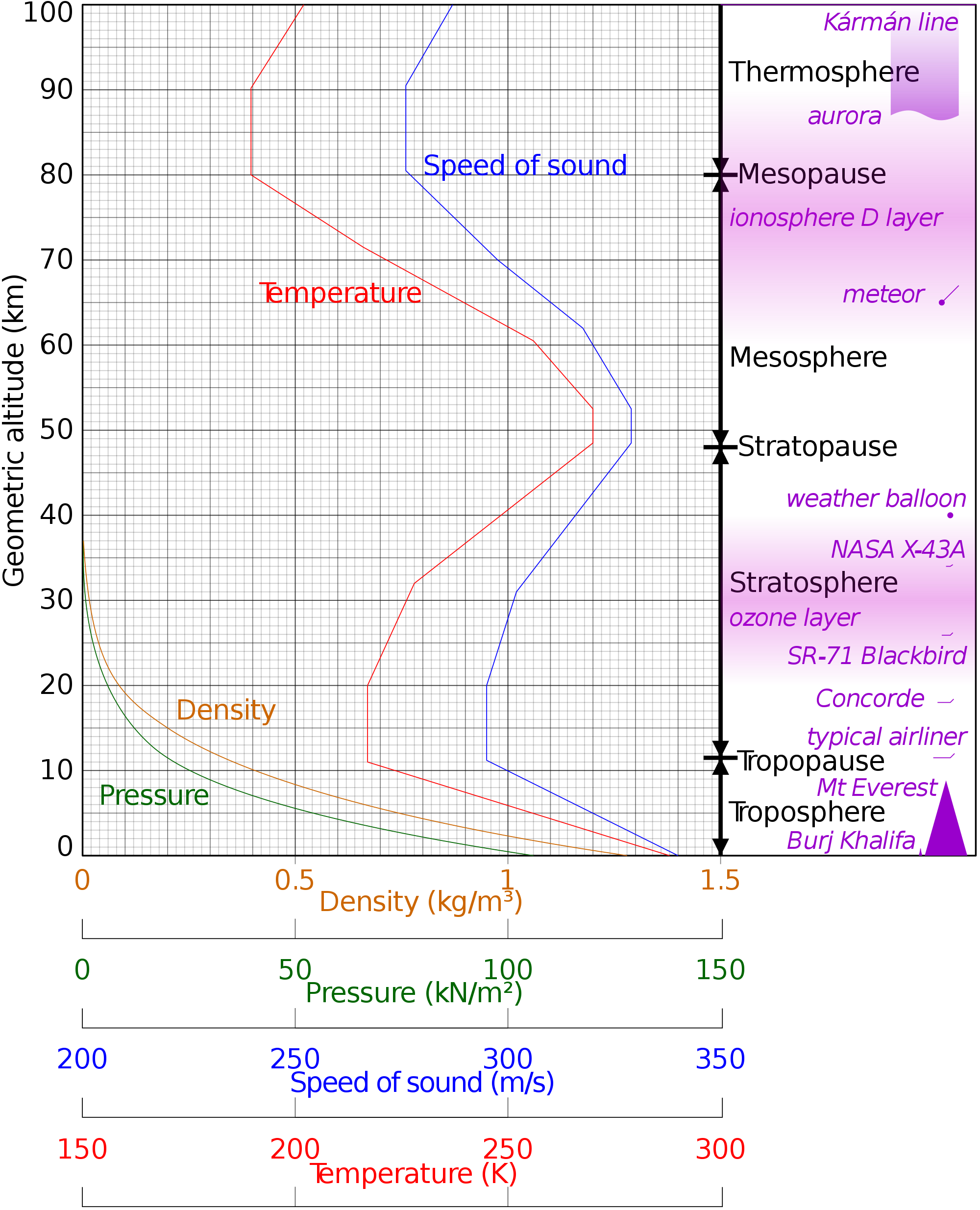
Because you'd still hit dense air at the top with 2.5km/s. You would need to go a about as high as the blackbird could fly to exit the tube with some sort of grace. (Or maybe even higher.)

http://upload.wikimedia.org/wikipedia/commons/thumb/9/9d/Com...

Re: Hyperloop Gets Test Track in California

#112
post #57
post #25

Earlier quoted context omitted.

No. Depending on the failure mode, maybe, but that is not the concern here. A slow leak that the high-vac pumps cannot deal with is a slow deceleration. A massive crack will cause quite the stir in the tube. Think of a balloon. When you inflate a balloon you put, maybe, 1.1 atms more into it. This is about 1/10th that of the hyperloop system. You know how loud even a simple party balloon can be, and the forces that y…

Hyperloop is based on a reduced air pressure tube, not an evacuated tube. Additionally, there's inlets in the front of the capsules to actively move air/pressure from in front to underneath/behind. I don't really know how that alters what you've stated, if at all, but it didn't seem to be addressed, so I figured I would throw it out there.

The Wikipedia mentions 1 milibar (1/1000 of atm). From a structural standpoint that's a complete vacuum.

Re: Hyperloop Gets Test Track in California

#113

Why would they build this in California? Why not pick a place in pretty much ANY other place in the US that has demonstrably cheaper land.

I was thinking it makes sense in that California, sort of following I-5, is where the Hyperloop would supposedly go... but no. There's no reason to construct a proof of concept track there. Go buy some flats in the middle of nowhere and get a working prototype going first.

Makes sense if you're Musk and want to jot down to Santa Monica to see your mistress Friday evening. (Come on seriously this is what this is all about, you know it, I know it) Not so good if you want to commute to your worker bee cubical job Monday morning.

Re: Hyperloop Gets Test Track in California

#114

Earlier quoted context omitted.

If you're dealing with bridges or buildings then you're right of course, you don't stress anything and you just let the stress dissipate through various movements. But thermal stresses are very small, for "normal" steel it's 13e-6 per degree C. If you figure that the temperature variations in CA aren't going to be more than say 40C (and that's probably too much) then you're looking at 520e-6 or basically 5e-4. As far…

Correct me if I'm wrong, but the linear elastic region usually ends somewhere around 0.2-5%, meaning 1% strain is not well within the linear elastic region. If you just do σ_y/E, you'll get the yield strain. Using rmxt's numbers you get 0.17% yield strain. Using [1] for 1018 steel you get 0.155% yield strain. The strains you calculated are not insignificant. [1] http://www.matweb.com/search/datasheet.aspx?matguid=3f2…

I guess it depends on the material you're looking at. The system designer would probably be the best person to ask. Are you going to make it out of 1018 or a36, or are you going to use something that's higher performance? Does the increased cost of the stronger steel get offset by the reduced weight?

You can get a36 for about $1/lb in small quantities. You can get corten (a588) for about $2/lb in small quantities. But the a588 has a yield strength about 50% higher than the a36, so strength-for-strength it's a pretty decent deal.

If you need 1" of a36 then you're going to need only 2/3" of a588 so it's only 33% more expensive. Combine that with the weathering properties which can reduce your maintenance intervals substantially (this is the same steel they make sea containers out of) and your lifetime cost might well be lower.

Further since your tubes now weigh less you might be able to get away with either smaller pylons or greater pylon spacing, both of which might be advantageous.

So you're right that the strain is non-trivial but that's only if you pick basically the toughest, least strong steel available. It's pretty easy to go stronger and to not lose too much toughness and gain other desirable features such as corrosion resistance, and in the process make the strain less significant relative to the elastic region.
Re: Hyperloop Gets Test Track in California

#115

Earlier quoted context omitted.

As long as the investment context is disclosed, why shouldn't there be long range, high-risk investments available in the market to interested buyers? Edit: I agree with you that the risk is very, very high. But, it at least gives a non-zero potential for investment return - which on that level is better than, say, Kickstarter.

This statement : "why shouldn't there be long range, high-risk investments available in the market to interested buyers?" Implies that they are not, and it is not true. Long range, high risk investments are available to any interested buyer. Generally the challenge that comes up is that the SEC has set standards for someone to meet in order to be a "qualified" investor. Some people interpret those standards as a way…

I'm no expert in this area, but when you mention qualified investors, I think you're describing private investment where qualified investors are required because those investments otherwise have a much lower bar of disclosure and analysis. The thought is investors there need additional protection and if you're qualified you can fend for yourself.

On the public market, the disclosure requirements are much higher, and you're more likely to find analysis, public articles and reports or other analysis you can buy. As far as I know, there's no qualified investor provision for buying stocks on the public market. In the end you can personally wish this company doesn't offer an IPO, but I don't think there's any systematic rule that prevents it as long as they file all the required disclosures and find a financial firm willing to do the administrative work of putting the shares on the public market. (Again though I'm no expert here... so it would be interesting to learn more.)

On the public market, one could class many tech companies in the long-term, high risk, show little to no profit category.

Re: Hyperloop Gets Test Track in California

#116

Earlier quoted context omitted.

This statement : "why shouldn't there be long range, high-risk investments available in the market to interested buyers?" Implies that they are not, and it is not true. Long range, high risk investments are available to any interested buyer. Generally the challenge that comes up is that the SEC has set standards for someone to meet in order to be a "qualified" investor. Some people interpret those standards as a way…

I'm no expert in this area, but when you mention qualified investors, I think you're describing private investment where qualified investors are required because those investments otherwise have a much lower bar of disclosure and analysis. The thought is investors there need additional protection and if you're qualified you can fend for yourself. On the public market, the disclosure requirements are much higher, and…

I think you've got a good understanding of it the difference between qualified an non-qualified.

The disclosure requirements will, I believe, kill any chance HLT has for doing an IPO. I would worry if they were able to get past that hurdle.

My response was more for people who complain they can't invest in pre-ipo companies when they don't meet the qualified investor criteria.

Post reply on HN