People are trying to bombard you, through every possible avenue, with advertising. They want your eyes and your mind and they won't waste a second or a flat surface when trying to get at them.
I find it abusive and exhausting.
111–120 of 537 posts
People are trying to bombard you, through every possible avenue, with advertising. They want your eyes and your mind and they won't waste a second or a flat surface when trying to get at them.
I find it abusive and exhausting.
Earlier quoted context omitted.
> necessary evil Whatever convinced you it was necessary? A few cities/states banned billboards, and as far as I'm aware, the sky didn't fall.
How many big content websites do you know that are doing well without ads?
Internet pre-advertising had plenty of useful and interesting sites. And Wikipedia is ad-free as well. And without the competition of zero-cost ad-supported commercial sites, other business models would rise to take their place.
Earlier quoted context omitted.
> necessary evil Whatever convinced you it was necessary? A few cities/states banned billboards, and as far as I'm aware, the sky didn't fall.
How many big content websites do you know that are doing well without ads?
This might sound harsh, but if people are unwilling to pay for something with any currency they don't implicitly count as worthless, maybe it shouldn't exist. The 20xx equivalent of checkout aisle gossip mags going quietly into that good night is a feature, not a bug.
Beyond that, think about how many of the ills of the modern internet can be traced back to advertising profit motive. Shitty clickbait journalism? Yep. Engagement-optimized filter bubbles and radicalization machines? Check. Fake news (of the traditional definition)? Practically the poster child. Indiscriminate data collection? Of course. I admit that I'm far from a typical internet user, but from my point of view the death of ad-supported services is an unalloyed good.
---
[1] Much of the funding from Wikipedia drives goes to other efforts of the foundation. The frequency and tone of drives might imply some precariousness, but taken alone Wikipedia is fairly firmly in the green.
my kids only watch netflix and shows/movies we buy on iTunes so basically they see virtually no ads, SO unlike my experience growing up watching network TV where every 12 minutes there was a series of 5 or 6 30-second ads
Earlier quoted context omitted.
I would not say it works that way for me. I see most advertising as a visual noice and/or annoying interruption. I think majority of the time I am not even aware what is being advertised.
Same, but (unfortunately) I suspect we are in the minority. Whenever I visit my parents' house, there are at least two separate TVs on, regardless of whether someone is actually in the room watching. There's probably a 50% chance that there's an ad playing in that house at any given moment. I ask my dad, "Why do you pay $300/month+ to have ads shoved down your throat?" He responded with some non sequitur like, "How e…
Have an in-law that does it (even when staying with us) and drives me insane...
To me, it is worrying how much human effort we're investing into advertising as a whole. The top minds of our generations, backed by billions of dollars in funding, are working on increasingly manipulative ways to capture people's attention and use it to generate profit. We're constantly getting better at it; who knows what path this will lead us down. I suspect it might not be the one we had wished for.
I don't care how much education they have, the minds who are focused on developing ways to capture people's increasingly fractured attention are disqualified from being considered the top minds of our generation.
I view advertising as a form of pollution. In many cases, it erodes the human experience. It is abusive to families with children creating strife where there was none. I spend a lot of time managing expectations and sharing philosophical ideas, like "less is more". I don't mind teaching my children, but I don't like feeling people are trying to take advantage of us all the time. I explain it to them as if it is a gam…
The biggest driver of people wanting more is peer actions or non ad entertainment (people with fancy things in movies).
You can't really just walk in and say "Well, no, guys, listen, let me tell you how it really is" and just dismiss the whole basic notion of the paper without giving sources.
Earlier quoted context omitted.
Well like it says there's two kinds. One is "Hey, did you know this thing exists? Check it out! Here are all the tests it passed, realistic cost of ownership, and locations where it is in stock". The other is "Look at this woman, isn't she fascinating? People like her will desire you more if you buy the thing she's lying on top of. Actual woman not included." Unfortunately, people have discovered type 2 is effective…
"We" had a chance to re-set this at the dawn of Internet Indexing and Search and discovery Optimization, but Overture (and then Google and later FB and TWTTR, at al) and "us" enabled and encouraged advertising to become the driving force of the internet. We could have had a different ad-free internet, but no one was willing to pay that bill.
The problem is that Type 2 ads are more effective than Type 1 ads for mainstream consumers, the ones that think with their emotions rather than carefully weighing competitive alternatives. So even though Google started as a Type 1 only company, the text ads on it have gradually been creeping back to Type 2 manipulation since, and they've expanded into more manipulative ad segments with the DoubleClick and YouTube acquisitions. They also face competition from Facebook (which has been manipulative from the start).
Manipulative ads became the face of the Internet because they work. For them to stop being the face of the Internet, they'd have to stop working. That either requires that 3B people take ownership of their emotions (which seems unlikely, given the general state of emotional education in the world) or that the Internet serve only the few million people in well-off, hyper-rational, educated professions (which also seems unlikely, and not even desirable).
The biggest offender in my opinion is not the web, where you can install ad blockers and avoid certain websites, but television, where you're forced to sit through something before you can get to the content you're trying to watch. I find it especially offensive on paid services like Hulu. I'm paying for the thing, just let me watch it! It's also pretty bad for F2P mobile games, although the solution there is easy (p…
I visited a family member last night who pays for a commercial streaming service. They described an interesting TV program and tried to pull it up, but it had vanished. After using search function, it said "this content has expired".
This morning I woke up and the first thing my mother (who is literally dying of cancer and wanted to listen to a song on the way to hospital where she will receive medical attention for her terminal illness) said to me was that two years of her songs (she is part of an organized choir) have vanished because of iTunes, so she can't access her music in the car.
I for one am never buying another Apple product, use Linux nearly everywhere (despite the hassle) and try to help and educate others where possible. As a society, we have to stop trading long term freedom, stability and efficiency for short term convenience and planned obsolescence / landfill. Contribute to Wikimedia projects, use open source for media creation, and contribute to open culture.
Earlier quoted context omitted.
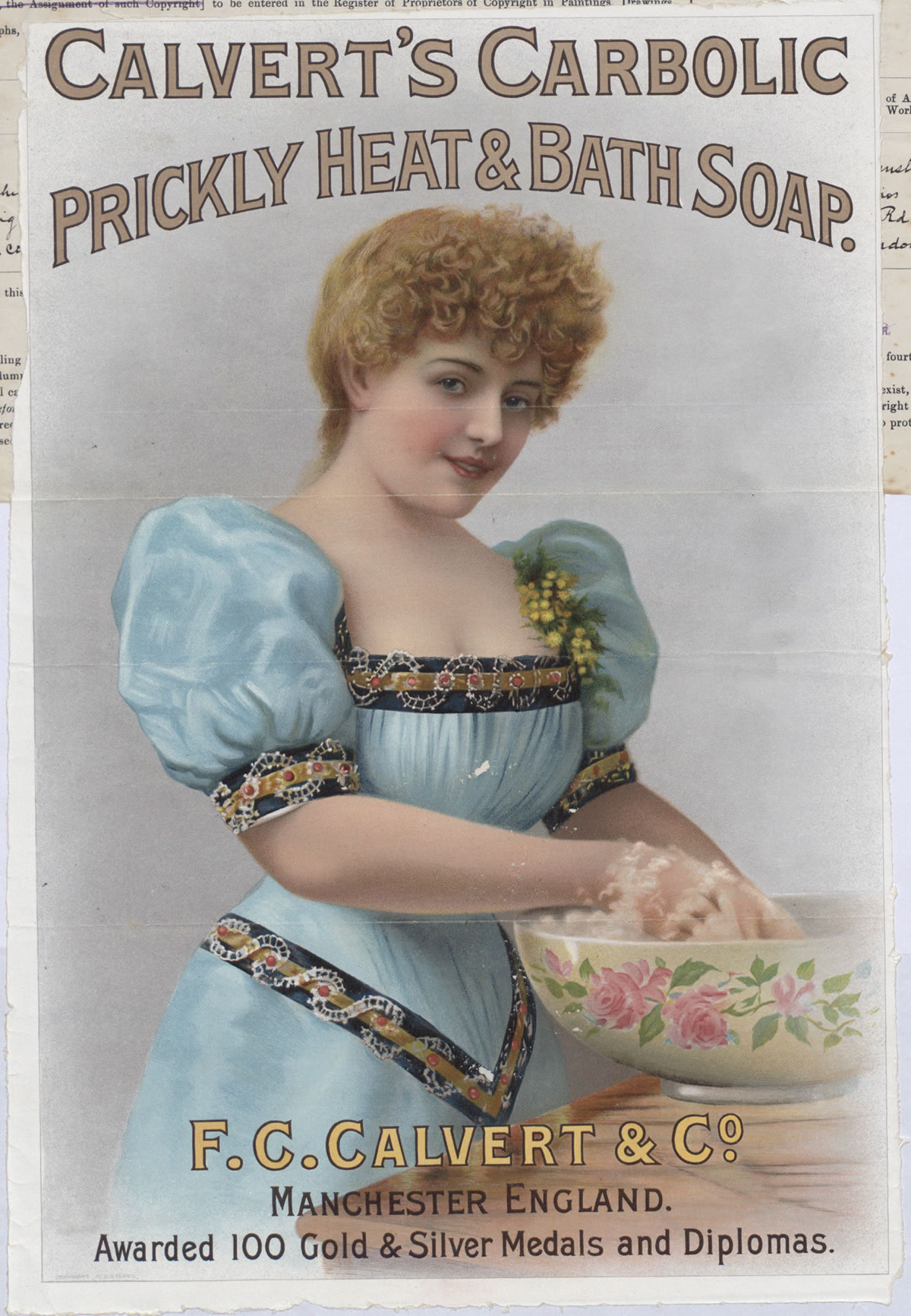
But can you point to a time in human history where type 2 wasn't the predominant form of advertising? This is not some modern discovery or exploit.
Some historians of advertising - probably most famously, Adam Curtis in "The Century of the Self" - argue that "type 2" directly fell out of World War-era propaganda research redirected towards consumerism.
http://christinetrent.com/wp-content/uploads/2017/02/cigs-10...
http://christinetrent.com/wp-content/uploads/2017/02/pills.j...
http://www.nationalarchives.gov.uk/wp-content/uploads/2014/0...
Industrial printed advertising started in the early 19th century with the first stirrings of printed mass media.
But flyers and noticeboards have been around since at least Roman times, and limited-run pamphlet and newspaper/gazette ads were already a thing as far as back as the 16th century.
The propaganda research is more Type 3 - tailored ads designed and monitored for effectiveness. Before Bernays ads were hit and miss, usually made by someone with a brush who could draw and set type.
After Bernays it became a huge industry of influence, and concepts like branding, image, narrative, demographics, and dramatisation began to be used consciously.