Live data from Hacker News

Making My Own USB Keyboard from Scratch

blakesmith.me

111–120 of 136 posts

Re: Making My Own USB Keyboard from Scratch

#111

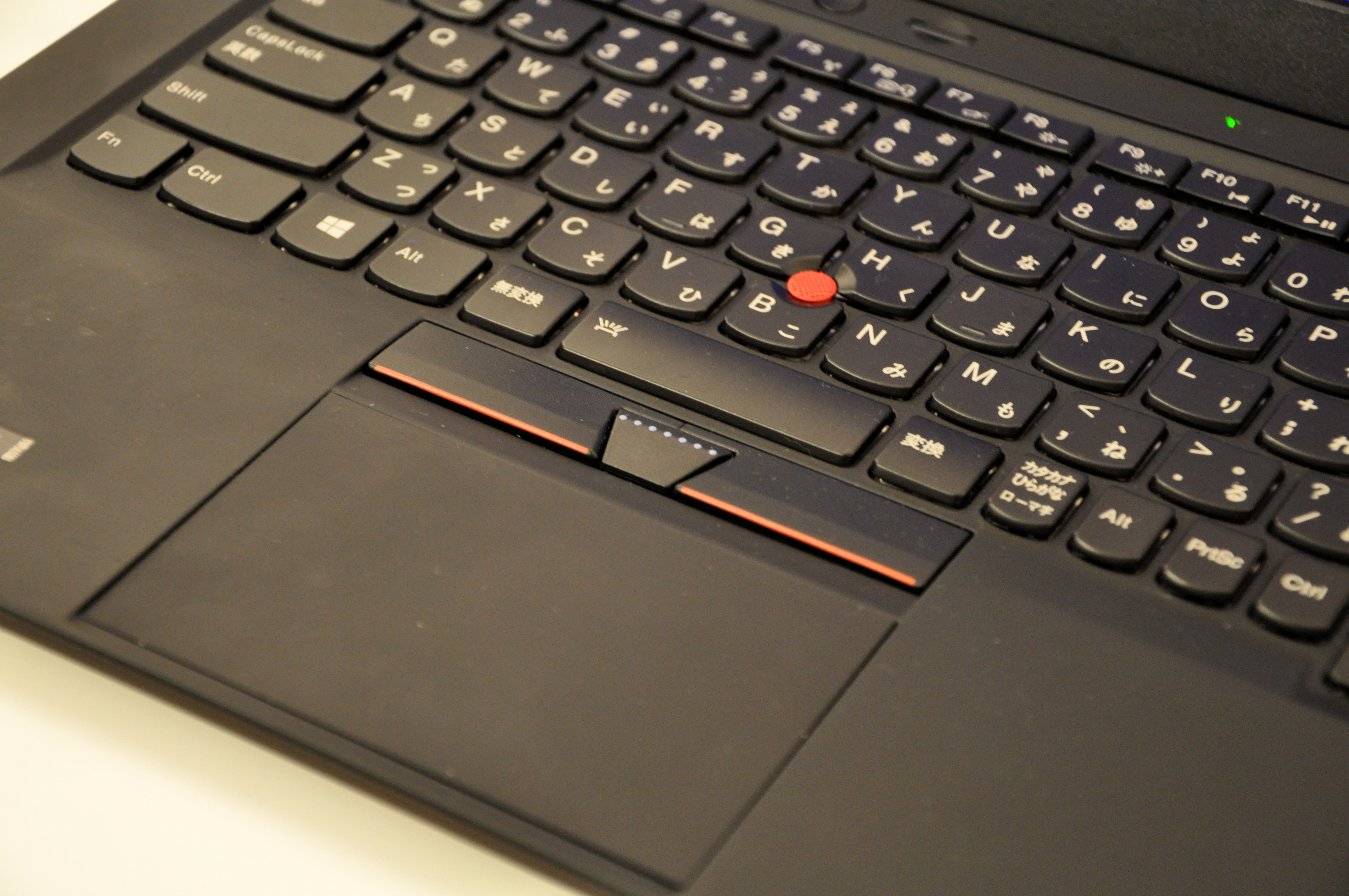
Has anyone seen keyboards with non-traditional touch surfaces? Such as trackpad keycaps? Backstory: My fingers slide smoothly across my ThinkPad laptop keyboard, so I was playing with optical hand tracking (with a surface mirror to better track touch) to make the entire keyboard (and surrounding laptop) into a multitouch surface. There were occlusion and jitter issues, even with fingernail markers, and I set it aside…

Previous thread on trackpoints: https://news.ycombinator.com/item?id=18811314

Oops, yes, s/touchpoint/TrackPoint/.

For those who have previously tried them, and been unimpressed, I note that driver configuration can make a _big_ difference. A new-linux-driver and old-firmware issue has me now at merely "it's ok", but switching to an older setup was an "OMG - how could I have forgotten this?!" experience.
Re: Making My Own USB Keyboard from Scratch

#112

Has anyone seen keyboards with non-traditional touch surfaces? Such as trackpad keycaps? Backstory: My fingers slide smoothly across my ThinkPad laptop keyboard, so I was playing with optical hand tracking (with a surface mirror to better track touch) to make the entire keyboard (and surrounding laptop) into a multitouch surface. There were occlusion and jitter issues, even with fingernail markers, and I set it aside…

The Blackberry Passport had a keyboard like that. You could glide over the keyboard to scroll and other gestures. I don't know if the new breed of Blackberries have it, but it was a great feature.

Re: Making My Own USB Keyboard from Scratch

#113

Has anyone seen keyboards with non-traditional touch surfaces? Such as trackpad keycaps? Backstory: My fingers slide smoothly across my ThinkPad laptop keyboard, so I was playing with optical hand tracking (with a surface mirror to better track touch) to make the entire keyboard (and surrounding laptop) into a multitouch surface. There were occlusion and jitter issues, even with fingernail markers, and I set it aside…

Yes. https://vimeo.com/258421095 It's possible to turn a single keycap into a touch surface with the mechanics of a TrackPoint, and mapping to VR. Look for a product this year.

Re: Making My Own USB Keyboard from Scratch

#114
post #55

Has anyone seen keyboards with non-traditional touch surfaces? Such as trackpad keycaps? Backstory: My fingers slide smoothly across my ThinkPad laptop keyboard, so I was playing with optical hand tracking (with a surface mirror to better track touch) to make the entire keyboard (and surrounding laptop) into a multitouch surface. There were occlusion and jitter issues, even with fingernail markers, and I set it aside…

Yeah, Apple got their multitouch technology in 2005 by buying Fingerworks, the startup that made Touchstream keyboards, which were sort of like a giant single trackpad with key areas on it. Now that every Android phone and tablet has this feature, you could maybe use a tablet or two as a reconfigurable keyboard. Myself, I really want more touch feedback from my keys, not less, but to each her own!

And there's currently the Lenovo Yoga Book C930 2-in-1 with an e-ink keyboard surface.

But as you say, not a high-end keyboard experience.

The optical hand tracking I mentioned was cameras on sticks perched on an existing laptop. So the multitouch was in addition to, not a replacement for, a niceish-for-a-laptop thinkpad keyboard. Well, except for modifier keys without the pinky exercise of actually pressing them (which may or may not be actually viable). If you ever say tactilely run your hands over your keyboard, and say drum your fingers, but all without sufficient pressure to press any key, it was that experience, added to the usual keyboard experience. With 3Dish hand pose and motion available, the two modalities might demultiplex fairly cleanly.

Even for programming in VR, I'd like to avoid UX regressions, and so start with a nice keyboard. Though I was happily surprised by being able to hold a chopstick without it much degrading typing. Providing a nice in-hand high-precision 6DOF controller. And potential 6DOF (pressure) stylus - ball on the end let it sort-of glide over keys... but jitter and pragmatics would need improvement to be viable.

Re: Making My Own USB Keyboard from Scratch

#117
post #55

Earlier quoted context omitted.

Yeah, Apple got their multitouch technology in 2005 by buying Fingerworks, the startup that made Touchstream keyboards, which were sort of like a giant single trackpad with key areas on it. Now that every Android phone and tablet has this feature, you could maybe use a tablet or two as a reconfigurable keyboard. Myself, I really want more touch feedback from my keys, not less, but to each her own!

I don't think OP is referring to a touch keyboard, but rather that the keycaps of each key would be one part of a larger multi-touch surface. As your finger left one key you could sort of "guess" the direction it was going and have something close to one big multi-touch panel that was composed of smaller surfaces. But I could be wrong as well.

Indeed. And with a keyboard like this[1], the gaps between keys are smaller than (my) finger width, so a sliding finger might provide continuous data.

Optical position tracking of fingers was actually ok (but not on a bus, and not so much for stylus), and with a look-along-the-keyboard-surface mirror, even optical height and touch was ok. But the touch wasn't great, and occlusion was a "keep it always in mind" problem. So I would have been delighted to find say a low-precision multitouch textile, to hopefully drape over the keys without too-much impairing typing. To decouple a fast low-precision-XY high-precision-Z touch, from simple and adequate camera XY. But crafting a capacitive grid... seemed a yak too far. All this was yak shaving - I actually wanted to be exploring VR IDEs catalyzing improved programming languages. :/

[1] https://upload.wikimedia.org/wikipedia/commons/c/ca/ThinkPad...

Re: Making My Own USB Keyboard from Scratch

#118
post #24
post #8

I have a design wish for people who make things like this: “row modules” Basically, as an example - i wouldnt be fond of the size of that spacebar, and would like other modules. What if each horizontal row of the standard length on a qwerty were its own module, and you can snap several together to make the board you want. Want a touchpad? Snap it to the base or side. Want a touchbar oled strip: snap it to the top. 9-…

It would be difficult to make this rigid. Keyboards need to be able to take a lot of abuse.

Make all modules magenetically sit atop a flat ridget baseplate.

I have something similar with my tiny bluetooth ipad keyboard which magnetically attaches to the ipad case

Re: Making My Own USB Keyboard from Scratch

#119
Once I pulled a prank on a colleague by setting up a 555 timer inside their keyboard so that alt+f4 would constantly get pressed (every ~1 second). Because that friend was a software hacker, I knew he would look for rootkits and all sorts of nefarious software issues that could lead to this behavior. Anyhow, he did eventually figure it out (not after he was sure his BIOS was infected - yes this was 2007).

What I learned during that prank was that keyboards are very complicated. A keyboard is essentially a giant switching system where pressing keys closes circuits, and a microprocessor looks to see what lines are high/low and infers which keys have been pressed. There's whole systems designed around avoiding "ghost keys", which arise because the number of combinations of possible simultaneous button presses of the switching system far outnumber the possible combinations of signals.

Re: Making My Own USB Keyboard from Scratch

#120

Earlier quoted context omitted.

I don't think OP is referring to a touch keyboard, but rather that the keycaps of each key would be one part of a larger multi-touch surface. As your finger left one key you could sort of "guess" the direction it was going and have something close to one big multi-touch panel that was composed of smaller surfaces. But I could be wrong as well.

I had this idea a while back as well. What brought it to mind was wishing I didn't have to take my hands away from the keyboard to mouse around. Anyway, Apple has patents covering this idea. I believe 9,041,652 is the one I'm thinking of.

Yes, patents have been amazingly toxic for HID progress.

Commercial HID innovation seems to be bimodal, DIY and bigco, with a patent-induced desert in between. Take multitouch. Years of crippled small companies, selling kits to dodge patents, to small DIY communities (DIY historically being much less of a thing than now). Speech-to-text and Nuance. Hand pose from webcam and colored glove research, becomes of-course-unsuccessful startup, bought by bigco, and thereby unavailable to support further innovation. Leap Motion's DIY Project North Star is an ongoing example - there's software, and you can buy parts, but not devices. So while there's an active small-company ecosystem around say keyboards, that falls off really fast. Small-scale markets of oem support for exploration and innovation... aren't an interesting niche for bigcos. So they produce patents and not products, and even proven too-small-just-a-distraction-for-us markets are abandoned.

As education innovation starts overlapping ML and tech, it looks to be picking up similar dysfunction. Ah well.

Post reply on HN