Live data from Hacker News

SpaceX Falcon rocket explodes on landing after delivering satellite to space

bbc.com

111–120 of 216 posts

Re: SpaceX Falcon rocket explodes on landing after delivering satellite to space

#111
post #94
post #61

Earlier quoted context omitted.

> like everyone else does Nobody else does this. I have absolutely no idea what you could possibly be referring to. SpaceX lands on land preferably when it is an option. > I don't understand why they won't keep landing them on the ground ... It's not like there's not enough space on Earth As a general rule, you not understanding the reason for something does not mean there is not a good reason. For reference, see the…

>Nobody else does this. I have absolutely no idea what you could possibly be referring to. Believe it or not, we've been landing spacecraft for decades. Does "space shuttle" ring a bell?

OK, that's one orbital rocket that's recovered on land. You said "everybody else" which implies at least several, so what other examples are there? (Hint: none.)
Re: SpaceX Falcon rocket explodes on landing after delivering satellite to space

#112
post #102

Earlier quoted context omitted.

Two main reasons I can think of: 1) Sea water is extremely corrosive. If your booster takes a dunk in the drink, it's going to be very hard to refurbish for another launch. Lots of components (electronics, valves, etc) would need to be replaced and the structural integrity of the tanks themselves may be compromised by rust. 2) Flotation devices attached to the booster = extra payload. It would be the canvas/dinghys A…

Flotation devices attached to the booster = extra payload Yes, but how much extra fuel does the rocket have to carry to land? That's a ton of extra payload as well.

Estimates I've heard say 15% loss of payload mass for a barge landing, 30% for land.

Re: SpaceX Falcon rocket explodes on landing after delivering satellite to space

#113
post #30

Earlier quoted context omitted.

Yeah, I don't understand why they won't keep landing them on the ground like everyone else does. It's not like there's not enough space on Earth.

So if you launch out of Cali going west and separate stage 2 300 miles out.... What is under you to land on?

Not to change your overall point, but you almost never launch west. When possible, you want to launch east, to gain the benefit of the Earth's rotational speed. Sometimes you launch north or south so you can go into a polar orbit which allows viewing more of the Earth. But there's pretty much no reason to launch west. One exception to this is if your launch site is located in a place where that's the only option, which is why Israel does it like this.

For American launch sites, you have KSC for launching east, and Vandenberg for launching south. (North and south are equivalent in terms of which orbits they can reach, so you don't need both.) Vandenberg can be used for launching west, but pretty much never is, unless you count ICBM tests and the like.

Re: SpaceX Falcon rocket explodes on landing after delivering satellite to space

#114
post #104

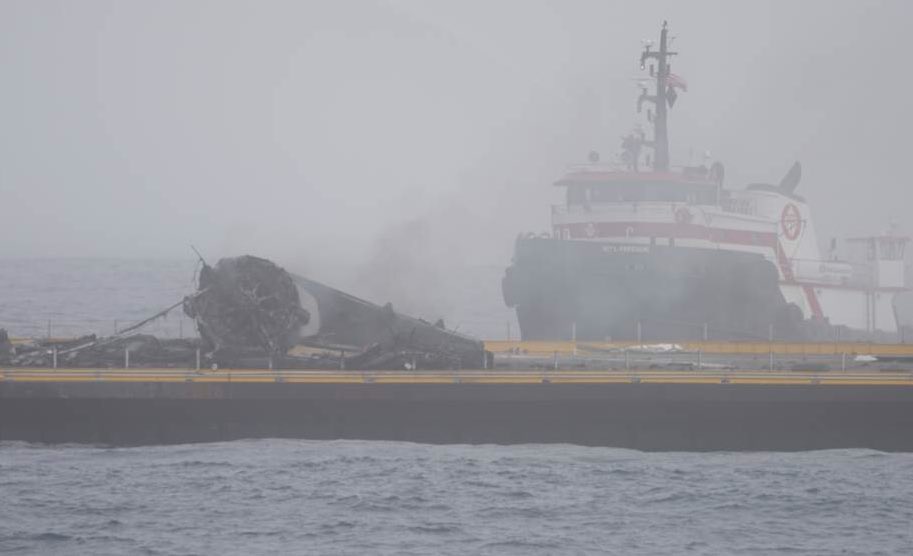
> explodes on landing This is a pretty unfair characterization. It actually made the landing for most purposes, then a specific failure occurred - a leg failed to lock and it fell over. And yes, when a rocket falls over it will often explode.

It's not an unfair headline. It did explode when it landed. This is not good, no way how you twist it.

It's actually quite good. It's not as good as if the rocket was recovered intact, certainly, but for the fourth landing attempt ever of a highly experimental test program, this is a very good result.

Re: SpaceX Falcon rocket explodes on landing after delivering satellite to space

#115
post #8

SpaceX actually got very close to sticking this landing. Sea conditions were reasonably rough, with 3-meter waves. It's also the first time SpaceX launches in fog, IIRC. Everything about the landing except the stuck leg seemed to be perfect. So IMHO, the fact that the rocket exploded is not the most pertinent fact about this experiment. The main piece of news is that SpaceX is exceedingly likely to be able to recover…

There's a pragmatic difference between recovering the booster over some period of time, vs literally parking the booster right where it took off & ready to re-launch within hours/minutes.

Re: SpaceX Falcon rocket explodes on landing after delivering satellite to space

#116
post #104

> explodes on landing This is a pretty unfair characterization. It actually made the landing for most purposes, then a specific failure occurred - a leg failed to lock and it fell over. And yes, when a rocket falls over it will often explode.

"Explodes after landing" would be more accurate, I think.

As a (student) pilot, I agree. You aren't landed until stationary and stable.

Re: SpaceX Falcon rocket explodes on landing after delivering satellite to space

#117
post #104

> explodes on landing This is a pretty unfair characterization. It actually made the landing for most purposes, then a specific failure occurred - a leg failed to lock and it fell over. And yes, when a rocket falls over it will often explode.

"Explodes after landing" would be more accurate, I think.

and the "explosion" is borderline, it's very close to just "burns really fast", especially when you see what's left after the fire goes out: https://pbs.twimg.com/media/CY8-PdyU0AABqaa.jpg:large (there's quite a lot of rocket left)

Re: SpaceX Falcon rocket explodes on landing after delivering satellite to space

#118

Could someone explain to me why they attempt this? Wouldn't inflating a set of floating devices when it goes down the ocean an easier way of retrieving it? Or something other than this REALLY HARD TO PULL OFF maneuver? Genuinely interested.

Salt water isn't good for rockets. Once you solve this really hard problem of landing a rocket on a barge on a dynamic ocean you have a real competitive advantage.

Is that the reason they've been using the barges for landing? I'd always assumed they were just being extra cautious since it could endanger civilians or crew if the reusable stage was supposed to land on solid earth.

I'd imagine that the barge landings introduce a lot of uncertainty and complicating factors that are impossible to completely nullify. High waves and (comparatively) strong open-ocean winds seem (to me at least) to make consistently successful lands much harder.

Re: SpaceX Falcon rocket explodes on landing after delivering satellite to space

#119
post #104

> explodes on landing This is a pretty unfair characterization. It actually made the landing for most purposes, then a specific failure occurred - a leg failed to lock and it fell over. And yes, when a rocket falls over it will often explode.

It's not an unfair headline. It did explode when it landed. This is not good, no way how you twist it.

It did not explode when it landed. It exploded after it landed. This is an important distinction, because the latter is a thousand times harder to accomplish.

Re: SpaceX Falcon rocket explodes on landing after delivering satellite to space

#120

Earlier quoted context omitted.

Salt water isn't good for rockets. Once you solve this really hard problem of landing a rocket on a barge on a dynamic ocean you have a real competitive advantage.

Is that the reason they've been using the barges for landing? I'd always assumed they were just being extra cautious since it could endanger civilians or crew if the reusable stage was supposed to land on solid earth. I'd imagine that the barge landings introduce a lot of uncertainty and complicating factors that are impossible to completely nullify. High waves and (comparatively) strong open-ocean winds seem (to me…

There was definitely a safety issue that lead to earlier landings taking place on a barge, but it also requires a lot less fuel to land somewhere downrange (which is always over the ocean) rather than boost all the way back to the launch site.
Post reply on HN