The Megahertz Wars were an exciting time. Going from 75 MHz to 200 MHz meant that everything (CPU limited) ran 2x as fast (or better with architectural improvements). Nothing since has packed nearly the impact with the exception of going from spinning disks to SSDs.
PC processors entered the Gigahertz era today in the year 2000 with AMD's Athlon
101–110 of 162 posts
Re: PC processors entered the Gigahertz era today in the year 2000 with AMD's Athlon
#102Earlier quoted context omitted.
Meh, avx is also just parallelism. That won't get you around Amdahl's law.
Not sure what you mean. It lets you do 64 operations with one instruction. Where's the diminishing returns?
Their purpose is to provide parallel execution at a lower cost in die area and at a better energy efficiency than by multiplying the number of cores. For instance, having 16 cores with 8-wide vector execution units provides the same throughput as 128 cores, but at a much lower power consumption and at a much smaller die area. However, both structures need groups of 128 independent operations every clock cycle, to keep busy all execution units.
The terms "single-thread" performance vs. "multi-threaded" performance are not really correct.
What matters is the 2 performance values that characterize a CPU when executing a set of independent operations vs. executing a set of operations that are functionally-dependent, i.e. the result of each operation is an operand for the next operation.
When executing a chain of dependent operation, the performance is determined by the sum of the latencies of the operations and it is very difficult to improve the performance otherwise than by raising the clock frequency.
On the other hand, when the operations are independent, they can be executed concurrently and with enough execution units the performance may be limited only by the operation with the longest duration, no matter how many other operations are executed in parallel.
For parallel execution, there are many implementation methods that are used together, because for most of them there are limits for the maximum multiplication factor, caused by constraints like the lengths of the interconnection traces on the silicon die.
So some of the concurrently executed operations are executed in different stages of an execution pipeline, others are executed in different execution pipelines (superscalar execution), others are executed in different SIMD lanes of a vector execution pipeline, others are executed in different CPU cores of the same CPU complex, others are executed in different CPU cores that are located on separate dies in the same package, others are executed in CPU cores located in a different socket in the same motherboard, others in CPU cores located in other cases in the same rack, and so on.
Instead of the terms "single-thread performance" and "multi-threaded performance" it would have been better to talk about performance for dependent operations and performance for independent operations.
There is little if anything that can be done by a programmer to improve the performance for the execution of a chain of dependent instructions. This is determined by the design and the fabrication of the CPU.
On the other either the compiler or the programmer must ensure that the possibility of executing operations in parallel is exploited at the maximum extent possible, by using various means, e.g. creating multiple threads, which will be scheduled on different CPU cores, using the available SIMD instructions and interleaving any chains of dependent instructions, so that the adjacent instructions will be independent and they will be executed either in different pipeline stages or in different execution pipelines. Most modern CPUs use out-of-order execution, so the exact order of interleaved dependent instructions is not critical, because they will be reordered by the CPU, but some interleaving done by the compiler or by the programmer is still necessary, because the hardware uses a limited instruction window within which reordering is possible.
Re: PC processors entered the Gigahertz era today in the year 2000 with AMD's Athlon
#103Earlier quoted context omitted.
In my experience, SSDs had a bigger impact. Thanks to Wirth's Law ( https://en.wikipedia.org/wiki/Wirth%27s_law ) the steady across-the-board increase in processing power didn't equate to programs running much faster, e.g. Discord running on a modern computer isn't any more responsive, if not less responsive than an ICQ client was running on a computer 25 years ago. SSDs provided a huge bump in performance to each in…
Anytime you upgraded from a 4 year old computer to a new one back then - from 16Mhz to 90Mhz, or 75Mhz to 333Mhz, or 333Mhz to 1Ghz, or whatever - it was immediate, it was visceral. SSDs booted faster and launched programs faster and were a very nice change, but they weren't that same sort of night-and-day 80s/90s era change. The software, in those days, was similarly making much bigger leaps every few years. 256 col…
The drag down of swapping became almost a non-issue with the SSD changeover.
I suppose going from a //e to a IIgs was that kind of leap but that was more about the whole computer than a cpu.
Now I have to say, swapping to an SSD on my windows machines at work was far less impressive than going to SSD with my macs. I sort of wrote that off as all the anivirus crap that was running. It was very disappointing compared to the transformation on mac. On my macs it was like I suddenly heard the hallelujah chorus when I powered on.
Re: PC processors entered the Gigahertz era today in the year 2000 with AMD's Athlon
#104The Megahertz Wars were an exciting time. Going from 75 MHz to 200 MHz meant that everything (CPU limited) ran 2x as fast (or better with architectural improvements). Nothing since has packed nearly the impact with the exception of going from spinning disks to SSDs.
Between IPC (~50 to 100-fold improvement) and clock speed increases (1000-fold alone), I estimated that single-thread performance has increased on the order of 50,000x - 100,000x since the 4.77 MHz 8088.
In human terms this is like one minute compared to one month!
Re: PC processors entered the Gigahertz era today in the year 2000 with AMD's Athlon
#105Earlier quoted context omitted.
"The era of exponentially rising clock speeds" was already over in 2003, when the 130-nm Pentium 4 reached 3.2GHz. All the later CMOS fabrication processes, starting with the 90-nm process (in 2004), have provided only very small improvements in the clock frequency, so that now, 23 years later after 2003, the desktop CPUs have not reached a double clock frequency yet. In the history of computers, the decade with the…
Sort of: The Pentium 4 was a strange chip. It had way too many pipeline steps, and was basically just chasing high clock speed marketing numbers instead of performance. In other words, it hit "3.2GHz" by cheating. I'd argue you'd need to use AMD's Athlon XP or 64 bit processors, or either Pentium 3 / Core 2 Duo to figure out when clock speeds stopped increasing.
Re: PC processors entered the Gigahertz era today in the year 2000 with AMD's Athlon
#106What a time to be a kid then. We had a hand-me-down DEC x86 desktop at home with a Pentium II running at 233 MHz until I want to say 2002? This was around the time I learned how to build a PC since doing that was cheaper than buying one and no-one in my family had the money for that! I saved whatever money I could to buy a 128MB stick of RAM from Staples (maybe it was 256MB?), a few other things from TigerDirect/Newe…
I remember my teen years, doing odd jobs to get some cash, buying a part at a time until the build was complete. Worrying that if you didn't scrap together enough parts soon there may be an architecture change. Finally getting it all together and the feeling of pure bliss installing the OS, troubleshooting drivers, installing this or that. Good times.
Re: PC processors entered the Gigahertz era today in the year 2000 with AMD's Athlon
#107Earlier quoted context omitted.
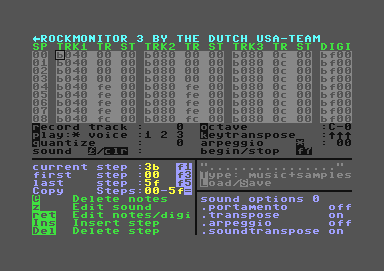
> That's my point, the software was getting bloated at least as fast as the CPUs were getting faster I think there's a difference between bloat and actually useful features or performance. For example, I started making music with computers in the early 90s. They were only powerful enough to control external equipment like synthesizers. Nowadays, I can do everything I could do with all that equipment on an iPad! I wou…
> in the early 90s. They were only powerful enough to control external equipment like synthesizers. Tell that to ScreamTracker!
https://www.c64-wiki.de/images/f/f1/rockmon3.png
Or also at https://www.youtube.com/watch?v=roBkg-iPrbw&t=400s in the video already linked below. And yes, I had to type in that listing.
Re: PC processors entered the Gigahertz era today in the year 2000 with AMD's Athlon
#108Earlier quoted context omitted.
In my experience, SSDs had a bigger impact. Thanks to Wirth's Law ( https://en.wikipedia.org/wiki/Wirth%27s_law ) the steady across-the-board increase in processing power didn't equate to programs running much faster, e.g. Discord running on a modern computer isn't any more responsive, if not less responsive than an ICQ client was running on a computer 25 years ago. SSDs provided a huge bump in performance to each in…
Anytime you upgraded from a 4 year old computer to a new one back then - from 16Mhz to 90Mhz, or 75Mhz to 333Mhz, or 333Mhz to 1Ghz, or whatever - it was immediate, it was visceral. SSDs booted faster and launched programs faster and were a very nice change, but they weren't that same sort of night-and-day 80s/90s era change. The software, in those days, was similarly making much bigger leaps every few years. 256 col…
Never witnessed anything before or after with that jump in specs
Re: PC processors entered the Gigahertz era today in the year 2000 with AMD's Athlon
#109Fun times. Coolers, paste, fans, supply watts, dip switches and jumpers. Quake, Voodoo 3dfx vs NVidia GForce. This is where it all started, kids. I was in high school and was running a "computer games club" (~ Internet cafe for games and kids) since 1998 when we got a place, renovated it ourselves, got custom built furniture (cheap narrow desks) and initially 6 computers - AMDs at 300Mhz. By 2000 we broke a wall in t…
Nah.. Cassettes, computers-in-a-keyboard, booting straight into BASIC.. THIS is where it all started, grandkids.
Re: PC processors entered the Gigahertz era today in the year 2000 with AMD's Athlon
#110Earlier quoted context omitted.
Anytime you upgraded from a 4 year old computer to a new one back then - from 16Mhz to 90Mhz, or 75Mhz to 333Mhz, or 333Mhz to 1Ghz, or whatever - it was immediate, it was visceral. SSDs booted faster and launched programs faster and were a very nice change, but they weren't that same sort of night-and-day 80s/90s era change. The software, in those days, was similarly making much bigger leaps every few years. 256 col…
For me, at 52, I recall the SSD transformation to be near miraculous. I never once felt that way about a CPU upgrade until getting an M1. I went from a cyrix 5x86 133 (which was effectively a fast 486) to a pentium II 266 and it just wasn't that impressive. The drag down of swapping became almost a non-issue with the SSD changeover. I suppose going from a //e to a IIgs was that kind of leap but that was more about th…