Live data from Hacker News

GPT‑5.3‑Codex‑Spark

openai.com

101–110 of 415 posts

Re: GPT‑5.3‑Codex‑Spark

#101
post #90
post #89

Earlier quoted context omitted.

The real question is what’s their perf/dollar vs nvidia?

Or Google TPUs.

TPUs don't have enough memory either, but they have really great interconnects, so they can build a nice high density cluster.

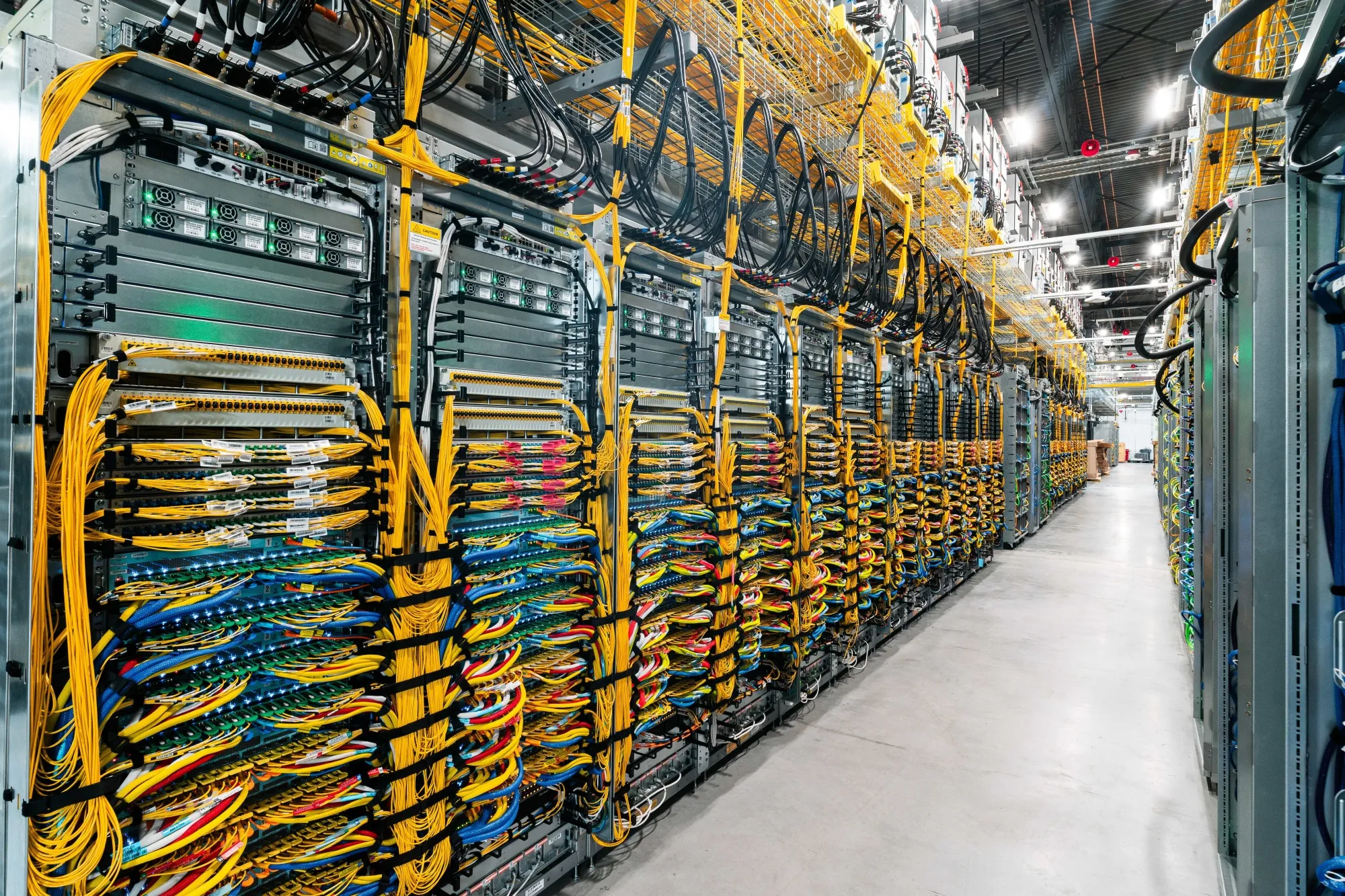
Compare the photos of a Cerebras deployment to a TPU deployment.

https://www.nextplatform.com/wp-content/uploads/2023/07/cere...

https://assets.bwbx.io/images/users/iqjWHBFdfxIU/iOLs2FEQxQv...

The difference is striking.

Re: GPT‑5.3‑Codex‑Spark

#102
post #92
post #66

Continue to believe that Cerebras is one of the most underrated companies of our time. It's a dinner-plate sized chip. It actually works. It's actually much faster than anything else for real workloads. Amazing

Cerebras is a bit of a stunt like "datacenters in spaaaaace". Terrible yield: one defect can ruin a whole wafer instead of just a chip region. Poor perf./cost (see above). Difficult to program. Little space for RAM.

[deleted]

Re: GPT‑5.3‑Codex‑Spark

#103
Anyone using OpenClaw to manage a bunch of coding agents so that you only set the high-level vision and leave all the prompting, testing, debugging, forking to agents? If yes, how did you glue it all together? Are you using local models? What is the SOTA for what I can run locally with a 512GB M3 Ultra, 2x DGX Spark, 2x RTX Pro 6000 Max-Q in one machine and 1x RTX Pro 6000 WS in another machine?

Re: GPT‑5.3‑Codex‑Spark

#104
post #92
post #66

Continue to believe that Cerebras is one of the most underrated companies of our time. It's a dinner-plate sized chip. It actually works. It's actually much faster than anything else for real workloads. Amazing

Cerebras is a bit of a stunt like "datacenters in spaaaaace". Terrible yield: one defect can ruin a whole wafer instead of just a chip region. Poor perf./cost (see above). Difficult to program. Little space for RAM.

[deleted]

Re: GPT‑5.3‑Codex‑Spark

#106
post #59

Does anyone want this? Speed has never been the problem for me, in fact, higher latency means less work for me as a replaceable corporate employee. What I need is the most intelligence possible; I don't care if I have to wait a day for an answer if the answer is perfect. Small code edits, like they are presented as the use case here, I can do much better myself than trying to explain to some AI what exactly I want do…

Yes, we want this.

Re: GPT‑5.3‑Codex‑Spark

#107

Earlier quoted context omitted.

The bigger the chip, the worse the yield.

This comment doesn't make sense.

Bigger chip = more surface area = higher chance for somewhere in the chip to have a manufacturing defect

Yields on silicon are great, but not perfect

Re: GPT‑5.3‑Codex‑Spark

#108
First thoughts using gpt-5.3-codex-spark in Codex CLI:

Blazing fast but it definitely has a small model feel.

It's tearing up bluey bench (my personal agent speed benchmark), which is a file system benchmark where I have the agent generate transcripts for untitled episodes of a season of bluey, perform a web search to find the episode descriptions, and then match the transcripts against the descriptions to generate file names and metadata for each episode.

Downsides:

- It has to be prompted to do actions in my media library AGENTS.md that the larger models adhere to without additional prompting.

- It's less careful with how it handles context which means that its actions are less context efficient. Combine that with the smaller context window and I'm seeing frequent compactions.

  Bluey Bench* (minus transcription time):

  Codex CLI
  gpt-5.3-codex-spark low        20s
  gpt-5.3-codex-spark medium     41s
  gpt-5.3-codex-spark xhigh   1m 09s (1 compaction)

  gpt-5.3-codex low           1m 04s
  gpt-5.3-codex medium        1m 50s

  gpt-5.2 low                 3m 04s
  gpt-5.2 medium              5m 20s

  Claude Code
  opus-4.6 (no thinking)      1m 04s

  Antigravity
  gemini-3-flash              1m 40s
  gemini-3-pro low            3m 39s

  *Season 2, 52 episodes

Re: GPT‑5.3‑Codex‑Spark

#109
post #66

Continue to believe that Cerebras is one of the most underrated companies of our time. It's a dinner-plate sized chip. It actually works. It's actually much faster than anything else for real workloads. Amazing

Nvidia seems cooked.

Google is crushing them on inference. By TPUv9, they could be 4x more energy efficient and cheaper overall (even if Nvidia cuts their margins from 75% to 40%).

Cerebras will be substantially better for agentic workflows in terms of speed.

And if you don't care as much about speed and only cost and energy, Google will still crush Nvidia.

And Nvidia won't be cheaper for training new models either. The vast majority of chips will be used for inference by 2028 instead of training anyway.

Nvidia has no manufacturing reliability story. Anyone can buy TSMC's output.

Power is the bottleneck in the US (and everywhere besides China). By TPUv9 - Google is projected to be 4x more energy efficient. It's a no-brainer who you're going with starting with TPUv8 when Google lets you run on-prem.

These are GW scale data centers. You can't just build 4 large-scale nuclear power plants in a year in the US (or anywhere, even China). You can't just build 4 GW solar farms in a year in the US to power your less efficient data center. Maybe you could in China (if the economics were on your side, but they aren't). You sure as hell can't do it anywhere else (maybe India).

What am I missing? I don't understand how Nvidia could've been so far ahead and just let every part of the market slip away.

Re: GPT‑5.3‑Codex‑Spark

#110

Earlier quoted context omitted.

The bigger the chip, the worse the yield.

This comment doesn't make sense.

Sure it does. If it’s many small dies on a wafer, then imperfections don’t ruin the entire batch; you just bin those components. If the entire wafer is a single die, you have much less tolerance for errors.
Post reply on HN