One can also watch a boat leaving shore descend "under" the horizon with a telescope
You don't even need a boat or a telescope. Just watch the sun set on the ocean while lying down at the beach just in front of the water. The moment it disappears completely, stand up. You'll see part of it again. If you measure the time it takes disappear completely again and know your own height, you can even get a rough estimate of earth's radius.
Unless I'm picturing it wrong, wouldn't this still happen even if the world were flat?
Thanks for this explanation; quite interesting. But it still seems to me that there might be a gravitational/inertial effects at play as well. At a (hypothetical) infinite altitude, it can no longer be said the the plane is moving perfectly in lock-step with the gravity/rotational acceleration of the earth. This implies the inertia of the plane relative to the rotation of the earth still has an effect at lower altitu…
What gravity/rotational acceleration ? Something like this does exist under general relativity : https://en.m.wikipedia.org/wiki/Frame-dragging However, > This does not happen in Newtonian mechanics for which the gravitational field of a body depends only on its mass, not on its rotation.
Yes frame-dragging seems to be the name of the concept I was thinking of. Cool.
A sphere is only locally approximable by flat surfaces, but it's nowhere actually flat, which was a requirement in the previous post.
Eh, the original post wanted a convex disk that would have a uniform gravitational pull, flatness was already thrown out as a design requirement. Once convex disks are allowed, a specific category of convex disk that provides a uniform perpendicular gravitational field comes to mind. The sphere. The very object we were trying to avoid. It is one of those it's funny because of the irony things.
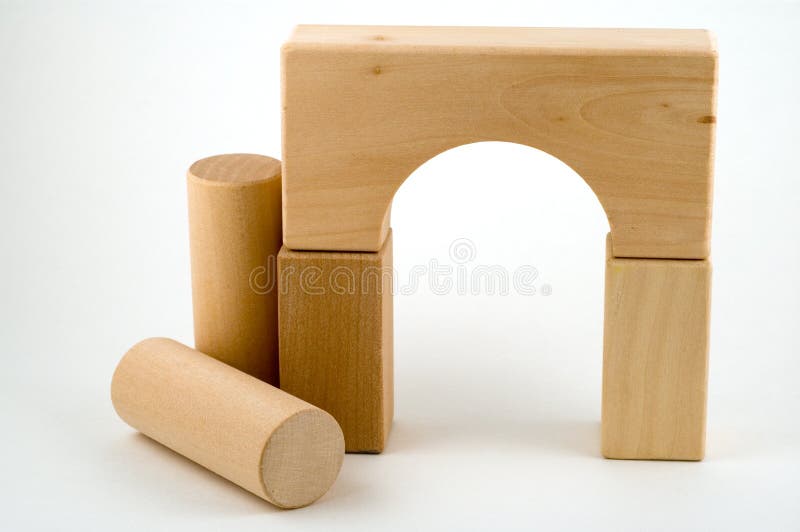
You misunderstood, I mean for the top to be flat but the "underground" to have some kind of shape to compensate for the gravitational pull at all points on the flat surface. For a 2Dish example in the ballpark, you could think of one of these wooden toy bridge blocks: https://thumbs.dreamstime.com/b/natural-wood-blocks-364582.j...
I think you could construct a curve such that the mass's gravitational pull on the right cancels out the pull on the left, for any point on the surface.
Nah, when you move that fast, further acceleration stops increasing speed and starts squishing time instead, so you asymptotically approach C. So I guess what I'm saying is I see absolutely no problem with the flat earth arguments?
We should see this as all the celestial bodies traveling "down" at relativistic speeds by now. Unless maybe they are also experiencing 1 G in the same direction as us in addition to whatever other accelerations.
I imagine whatever magical force has been constantly accelerating the disc Earth for 4,000+ years also magically accelerates everything else uniformly in the exact same direction, at the exact same speed, and also magically solves every other hole in the theory.
Just to point out here what's different between "space" and "not space": "Space" assumes no "height control",i.e. ways to exert force "down or up" along the earth-object direction. That's obviously not true for a plane. If you can exert force in that direction, you can change speed and keep the shape of the trajectory around earth constant.
Wait, why wouldn't an orbiting satellite not be able to apply its thrusters "down"?
They could. The point is that if you allow for that (and it they would need to be constant on), the more speed -> either higher orbit or more elliptic orbit doesn't hold. But no satellite has enough fuel to keep its thrusters on indefinitely.
A sphere is only locally approximable by flat surfaces, but it's nowhere actually flat, which was a requirement in the previous post.
Eh, the original post wanted a convex disk that would have a uniform gravitational pull, flatness was already thrown out as a design requirement. Once convex disks are allowed, a specific category of convex disk that provides a uniform perpendicular gravitational field comes to mind. The sphere. The very object we were trying to avoid. It is one of those it's funny because of the irony things.
The post clearly described a non-convex shape, and "flat-surfaced shape" should be a pretty clear instruction as well. The shape described may be visualized as a cylinder with a cone cut out, where the base of the cone aligns with one of the bases of the cylinder, and its tip with the center point of the other cylinder base. Except that the cylinder may be modified so that, seen in a cross-section, the line going from the base to the tip on either side may be a (convex or concave) curve. It makes sense as a starting point in the search for a shape with the desired properties. And it can immediately be seen to be non-convex in both described configurations, given that there's a cavity cut out.
> And things move down. It's not a bad way to look at it for a start. Things move down because it is their nature to move downwards. And this kind of empirical law is what we rely upon for most thought. It takes a lot of work to get to a theory that makes more general predictions. And even after having that, 98% of the time my thought is effectively just "things move down." Another 1.5% it's "things move down at 9.8…
"with a force proportional to their masses and inversely proportional to the square of their distances" ... if you ask me why, it's because "uh, they just do that?"" To be fair, that is somewhat the current scientific consensus on gravity. It just is. We can meassure it and determine a general constant and calculate with it (and even though some people claim to have understood way more, it is highly debated terrain a…
A huge thing about flat earthers is that they don't care if their explanations are self-consistent. They happily accept explanations for one thing that directly contradict their explanations for another thing.
Standard flat-earther response is to scornfully deny the existence of gravity. It's all density/buoyancy you see... Gravity is a hoax promulgated by the notorious cabalist Newton, in service to his Illuminati/Papal masters, etc, etc.
Why do we still talk about these people? The more we stand in awe of their calculated ignorance, the more satisfied they are. I feel like there are better things to do with my time than be as fascinated by it as some people.
I periodically suffer the delusion that some of the nonsense-adjacent people may benefit from seeing that sensible answers can be found. Of course there's effectively no chance of reaching the proudly loudly ignorant, wearing their refusal of any good-faith discussion as a shibboleth, but perhaps their recruitment can be stayed.