Live data from Hacker News

The Influence of Bell Labs

construction-physics.com

101–110 of 139 posts

Re: The Influence of Bell Labs

#101
post #99
post #36

Earlier quoted context omitted.

> the only avenues I see for curiosity-driven researchers are becoming independently wealthy, living like a monk I came to the same conclusion. This is the path I'm following (trying to set up a company and lean FIRE). It's sad in a way because those efforts and years could have been directed to research but we have to adapt.

I've seen that many times over by now, sort of done it myself. It doesn't really work. You end up replacing one problem for another. There is also a heavy dose of procrastination and escapism related to it. Think about how many could, and does, do it and but how few results there are.

All it took was one bored patent clerk spending idle time thinking about something that he couldn't just let go and now we have General Relativity and black holes.
Re: The Influence of Bell Labs

#102
post #61
post #28

Earlier quoted context omitted.

Something that just dawned on me is the downstream effects of United States’ policy regarding science during WWII and the Cold War. The Manhattan Project, NASA, the NSA and all of its contributions to mathematics and cryptography, ARPA, DARPA, and many other agencies and programs not only directly contributed to science, but they also helped form a scientific culture that affected not only government-ran and governme…

>It’s not that technology isn’t revered; far from it. It’s just that “stopping Hitler,” “beating the Soviets,” and grand visions for society have been replaced with visions of creating lucrative businesses Universities are tripping over themselves to create commercialization departments and every other faculty member in departments that can make money (like CS) has a private company on the side. Weird that when these…

[dead]

Re: The Influence of Bell Labs

#103
post #34

Earlier quoted context omitted.

I have come to realize that over the years, though I still believe that wealthier companies like Apple, NVIDIA, Facebook, and the like could fund curiosity-driven research, even if it’s not at the scale of Bell Labs or Xerox PARC. On a smaller scale, there is The Institute for Advanced Study where curiosity-driven research is encouraged, and there is the MacArthur Fellowship where fellows are granted $150,000 annual…

If Zuck's obsession with VR isn't curiosity driven research than nothing is. 10 billion yearly losses for something that by all accounts isn't close to magically becoming profitable. It honestly just seems like something he thinks is cool and therefore dumps money in.

What about Musk and push to reach Mars? While I haven't liked Musk from long ago, SpaceX has given some steely eyed rocket men/women a pretty successful playground.

Re: The Influence of Bell Labs

#104
post #36
post #10

During my teenage and college years in the 2000s, I was inspired by what I’ve read about Bell Labs, and I wanted to work as a computer science researcher in industry. I’ve also been inspired by Xerox PARC’s 1970s and 1980s researchers. I pursued that goal, and I’ve worked for a few industrial research labs before I switched careers to full-time community college teaching a few months ago. One thing I lament is the de…

> the only avenues I see for curiosity-driven researchers are becoming independently wealthy, living like a monk I came to the same conclusion. This is the path I'm following (trying to set up a company and lean FIRE). It's sad in a way because those efforts and years could have been directed to research but we have to adapt.

That was mostly how the big scientific breakthroughs came in the 1800-1900s .. independent wealth.

That’s what a “scholar” is and Universities provided the perfect environment for that to thrive, which is no longer the case.

Re: The Influence of Bell Labs

#105

Okay, I'm really in a sad mood, so: tell me there will be places like that, again, somewhere, ever ? We need this. Like, really, we need someone to have created the xerox part of the 21st century, somewhere about 20 years ago. I honestly though Google would be that - but apparently it's easier to fund R&D on "selling copying machines" than "selling ads". Maybe "selling ads" earn _too much_ money ? I don't know. I kno…

Extreme ultraviolet lithography originated with paper out of Bell Labs in 1991, then US government funded multiple research efforts via national nuclear research labs that came up with a potential method to implement but it took 20 more years of trial and error by ASML to make a practical machine they could sell. Other companies tried and gave up because of the technical challenges. This advance is responsible for modern chip fabs fastest chips.

Re: The Influence of Bell Labs

#106
post #28

Earlier quoted context omitted.

Something that just dawned on me is the downstream effects of United States’ policy regarding science during WWII and the Cold War. The Manhattan Project, NASA, the NSA and all of its contributions to mathematics and cryptography, ARPA, DARPA, and many other agencies and programs not only directly contributed to science, but they also helped form a scientific culture that affected not only government-ran and governme…

> It’s not that technology isn’t revered; far from it. It’s just that “stopping Hitler,” “beating the Soviets,” and grand visions for society have been replaced with visions of creating lucrative businesses. Any kind of societal grand vision we had has been falling apart since about 1991. Slowly at first (all the talk about what to do with the "peace dividend" we were going to get after the fall of the Soviet Union)…

[deleted]

Re: The Influence of Bell Labs

#107
"Unpacking the reasons for this increase goes beyond the extent of this essay, and it certainly wasn’t just because of AT&T and Bell Labs. But Bell Labs’ achievements, particularly the invention of the transistor in 1947, seem to have prompted the decisions of many companies to start their own R&D labs, and influenced how those labs were structured."

1947 was a magical year. That announcement had profound implications. They effectively invented something that would replace the huge existing base of vacuum tube components with miniaturized transistors. This miniaturization phase significantly influenced Von Nuemann's recommendation for the ballistic missile program. Many of the discrete component systems manufactured during this time remained in service into the 1980's.

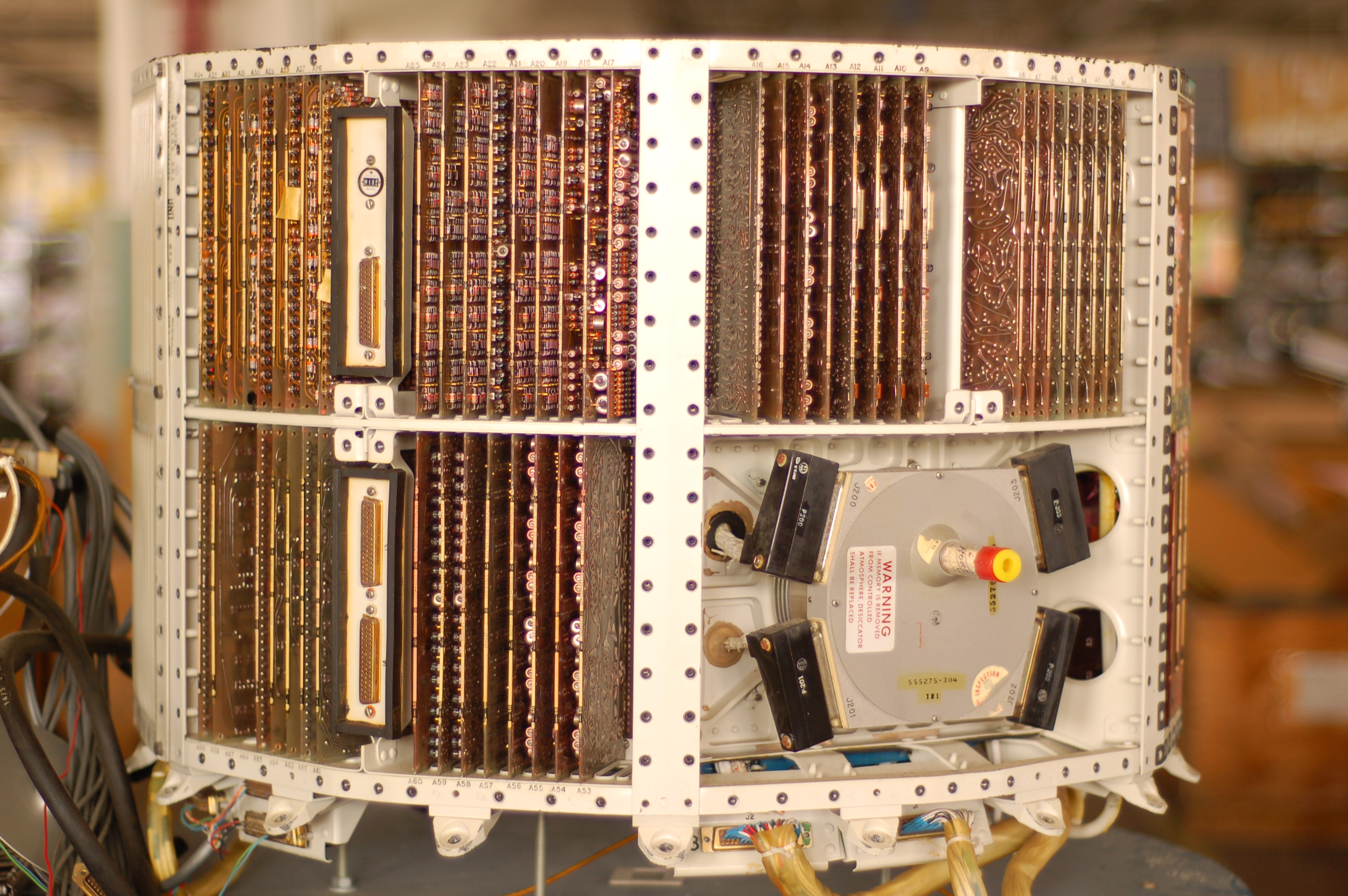
This is a photo of a D-17B guidance computer that deployed on the Minuteman Missile in 1962, 15 years after creating the transistor, and was typical of military printed circuitry at the time for general purpose computers, disk/drum storage drives, and printers.

https://upload.wikimedia.org/wikipedia/commons/3/38/Autoneti...

"The D-17B weighed approximately 62 pounds (28 kg), contained 1,521 transistors, 6,282 diodes, 1,116 capacitors, and 5094 resistors. These components were mounted on double copper-clad, engraved, gold-plated, glass fiber laminate circuit boards. There were 75 of these circuit boards and each one was coated with a flexible polyurethane compound for moisture and vibration protection."

Re: The Influence of Bell Labs

#108
post #34

Earlier quoted context omitted.

I have come to realize that over the years, though I still believe that wealthier companies like Apple, NVIDIA, Facebook, and the like could fund curiosity-driven research, even if it’s not at the scale of Bell Labs or Xerox PARC. On a smaller scale, there is The Institute for Advanced Study where curiosity-driven research is encouraged, and there is the MacArthur Fellowship where fellows are granted $150,000 annual…

I thought I had read somewhere that 2 weeks vacation is more common in USA, at least for software companies, before things like "unlimited vacation". which is right, 3-4 or 2 weeks?

I’ve had anywhere from three to six weeks depending on seniority.

Re: The Influence of Bell Labs

#109

What were the other major R&D labs, corporate or otherwise of this era (roughly: 1880s through 1980s)? I can think of: AT&T, DuPont, Kodak, Xerox PARC, Westinghouse, IBM, GE, the original Edison labs (best as I can tell acquired by Western Union), Microsoft, Rockefeller University, Google Research. Of notable industries and sectors, there's little I can think of in automobile, shipping, aircraft and aviation (though…

MIT's AI Lab with Lisp, ITS and such. They were far ahead of Unix, Bell Labs and Berkeley.

Re: The Influence of Bell Labs

#110

Earlier quoted context omitted.

I was going to make a snarky remark like “Researchers are just going to have to write on Substack”. Then I read this: http://mmcthrow-musings.blogspot.com/2020/10/interesting-opi... I think the alt-economy that you describe may turn up soon. at least the one that I’m imagining that doesn’t involve registering for Substack.

> Our economy promotes short-term gains and not long-term initiatives; I blame over 30 years of artificially-low interest rates for this. Don't low interest rates promote long-term thinking, perhaps to an absurd degree (e.g. the "it's okay that we hemorrhage money price dumping for 10 years as long as we develop a monopoly" playbook)? Bigger interest rate = bigger discount for present value of a future reward.

I'm guessing that they're referring to the practice of investors borrowing with low interest rates to buy large amounts of stock in a company, then milking the company of all its value for short term gains. Unless there's a significant plan in place, many companies can't really get away with long term playbooks if they are responsible to shareholders using ownership for short term gains (so they can quickly move to the next money making asset).
Post reply on HN