Live data from Hacker News

The Lobster Programming Language

strlen.com

101–110 of 171 posts

Re: The Lobster Programming Language

#101

Earlier quoted context omitted.

I suggest people might pick up on that pretty quick, maybe no need to rename given some random comment. That said, maybe you want to have a gander through the various languages and see what words are used for what, and if there's a 'standard' go with that :) Cool language though. I love everything except for the name, sorry :)

Well, every time Lobster surfaces somewhere, I am always surprised how quickly people can superficially reject it because of some syntax issue, so yes, I agree, using predictable keywords where it makes no real difference matters. I've already made quite a few such changes. The name.. I think people will quickly forget about the original meaning. Think of all the languages you know, and how you associate the name wit…

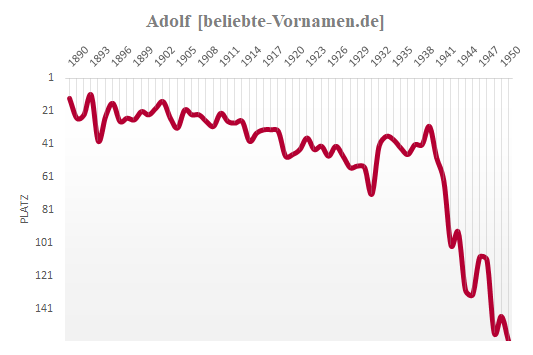
Because they got third degree burns by the harmless word. Adolf used to be one of the most common German names, obviously now it isn't. [0]

[0] https://www.beliebte-vornamen.de/wp-content/uploads/adolf-1....

Re: The Lobster Programming Language

#102

Earlier quoted context omitted.

Sigh...Python indentation? I thought we'd moved beyond that as an industry...

Why would you think that? As an industry we’ve been moving more toward automatic formatting, enforced formatting via lint, and a move toward more standardization with white space. What would be the reason to not have it required by the language itself?

Because it is a sufficiently divisive decision that it limits the audience. The threshold before I'd consider working with a language with significant indentation for example, is huge. And for my part at least, I've yet to see an automatic formatting tool that formats how I find things most readable.

Re: The Lobster Programming Language

#103
post #86

Hi, author of the language here. Not a great time for HN exposure, as I just added a lot of new functionality, but none of that is documented yet :) But hey, all publicity is good publicity? For those interested, some recent things that have been happening: - Compile time reference counting. This does an analysis similar to the Rust borrow checker to infer lifetimes, but unlike Rust doesn't make the programmer jump t…

I have never understood why people create entire programming language when just creating a nice C++ library would been more than sufficient, desirable, integratable and adaptable. You can always export bindings for any target language and users would be saved from learning yet another beast that would be unmaintained in few years. I'm not saying never developing new language... If you have radically new thought, go a…

Because the language affects how you think about things, and how productive you are. It matters.

And in this case, this is someone with a 20+ year background of experimenting with new languages, ranging from production-ready (e.g. I used AmigaE a lot back in the 90's) to crazily experimental ones.

Re: The Lobster Programming Language

#104
post #102

Earlier quoted context omitted.

Why would you think that? As an industry we’ve been moving more toward automatic formatting, enforced formatting via lint, and a move toward more standardization with white space. What would be the reason to not have it required by the language itself?

Because it is a sufficiently divisive decision that it limits the audience. The threshold before I'd consider working with a language with significant indentation for example, is huge. And for my part at least, I've yet to see an automatic formatting tool that formats how I find things most readable.

>Because it is a sufficiently divisive decision that it limits the audience.

Considering Python is the 2nd or 3rd top popular language in indexes like TIOBE and job entries, and within the top-5 for over a decade, that's empirically false.

It might put off some insignificant minority (that's superficial like that), but not enough people not to be hugely successful.

Re: The Lobster Programming Language

#106
post #102

Earlier quoted context omitted.

Because it is a sufficiently divisive decision that it limits the audience. The threshold before I'd consider working with a language with significant indentation for example, is huge. And for my part at least, I've yet to see an automatic formatting tool that formats how I find things most readable.

> Because it is a sufficiently divisive decision that it limits the audience. Considering Python is the 2nd or 3rd top popular language in indexes like TIOBE and job entries, and within the top-5 for over a decade, that's empirically false. It might put off some insignificant minority (that's superficial like that), but not enough people not to be hugely successful.

Some things can be popular despite their shortcomings.

Re: The Lobster Programming Language

#107
post #86

Hi, author of the language here. Not a great time for HN exposure, as I just added a lot of new functionality, but none of that is documented yet :) But hey, all publicity is good publicity? For those interested, some recent things that have been happening: - Compile time reference counting. This does an analysis similar to the Rust borrow checker to infer lifetimes, but unlike Rust doesn't make the programmer jump t…

I have never understood why people create entire programming language when just creating a nice C++ library would been more than sufficient, desirable, integratable and adaptable. You can always export bindings for any target language and users would be saved from learning yet another beast that would be unmaintained in few years. I'm not saying never developing new language... If you have radically new thought, go a…

C++ is a complex beast and while I quite like working in it, I'm finding that the latest versions (17 and 20) are filled with features that I'm having trouble understanding. The surface for errors is also huge. I've been programming in C++ since about 2002 and I feel quite proficient in it, but, if given the option, I'll use something that is both safer/less error prone and more productive (and I say that as someone whose argued right here that C++11 and beyond is a very productive language).

Beyond that and what sibling comment said, the author is known for creating various languages, so he clearly enjoys doing it and is making this language for himself.

I have never understood why there's always somebody complaining that new languages are unnecessary when a new language is shown on HN. I personally love seeing new languages. I also recently went on a language hunt for something that met a specific need for a side project I'm working on and I came away empty handed because I couldn't find something that met my criteria[1], so I'm always on the lookout for something that might.

[1] In case somebody has any suggestions for me, I want something with Clojure-like immutable data structures as a default (or something similar, at least), is native compiled to reasonably efficient and low footprint binaries (but is not as complex as Rust or Haskell), is a functional language (but with prettier syntax than OCaml, which was almost my choice, but when I started reading example code, its a complex mess of symbols ). And... it needs reasonable library support... (at a minimum I need to be able to respond to HTTP requests, make HTTP requests, parse and generate JSON and talk to postgres, ideally using SQL and not an ORM). Haskell is probably my best bet, but I don't have the energy to learn all of its complex features.
Re: The Lobster Programming Language

#108

Did you create a VM that is several times faster than Python's, for a static typed language thats as productive as a dynamic language, with true multithreading? How did you outdo entire language communities?

I'm a huge proponent of typed languages, but there's no way that a statically typed language could be as productive as Python (with current type systems technology). For example, just the Pandas library offers incredible flexibility (often dynamically based on the arguments that different functions get) that I've yet to see replicated in a static language.

Re: The Lobster Programming Language

#109

Earlier quoted context omitted.

Would you mind elaborating on the "compile time reference counting"? Is this new? How does it handle cycles?

It is so new I haven't even documented it yet.. hence why I said the timing for this HN post isn't great. So imagine the current implementation does a lifetime analysis somewhat similar to Rust, but then where Rust would error out, this implementation simply inserts a runtime refc increase. This gets rid of most runtime refc overhead without the programmer needing to be clever about it. Then, I intend to add an optio…

This at first glance actually looks similar to http://liu.diva-portal.org/smash/get/diva2:20899/FULLTEXT01....

And this style of static analysis has been taken even further by Luc Blaeser: http://concurrency.ch/Content/publications/Blaeser_Component...

The cycle checker I'll have to have a look at - I'd like to crib parts of it for an OS I'm trying to cobble together. Your project looks very interesting, thanks!

Re: The Lobster Programming Language

#110

Hi, author of the language here. Not a great time for HN exposure, as I just added a lot of new functionality, but none of that is documented yet :) But hey, all publicity is good publicity? For those interested, some recent things that have been happening: - Compile time reference counting. This does an analysis similar to the Rust borrow checker to infer lifetimes, but unlike Rust doesn't make the programmer jump t…

Pretty cool.

How does it compare to Dyon?

https://github.com/PistonDevelopers/dyon

Post reply on HN