Live data from Hacker News

1984 v. Brave New World

lettersofnote.com

11–20 of 204 posts

Re: 1984 v. Brave New World

#11

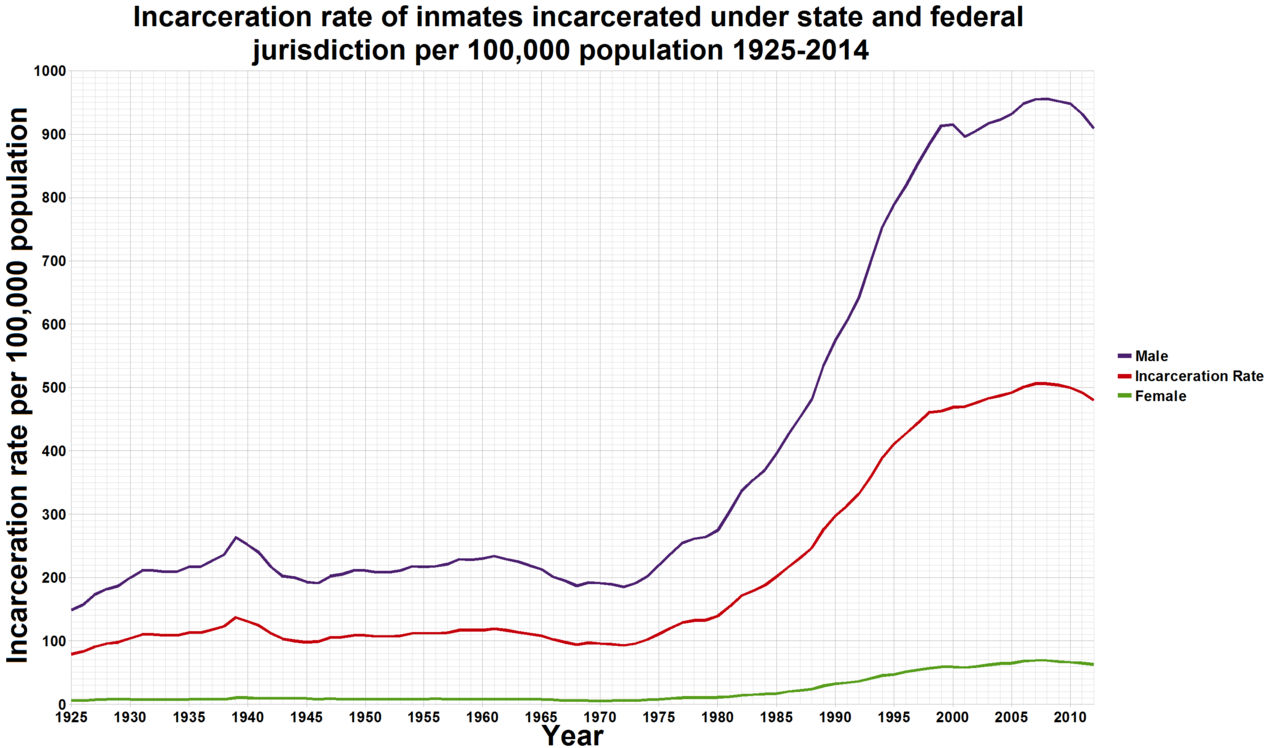
Right now it rather seems Orwell had it closer to right on the predictions in the letter: http://upload.wikimedia.org/wikipedia/commons/5/54/US_incarc... Some of this stuff is expanded on in Huxley's forword to BNW[1], btw, written in 1947. I have always been fascinated by this assertion in it: As political and economic freedom diminishes, sexual freedom tends compensatingly to increase. He doesn't support this axiom…

I think both sides of it go hand in hand. The government is only having such an easy time of going Orwellian on us because we've become so Huxlian and easily distracted.
Re: 1984 v. Brave New World

#13
I never quite understood was was 'dystopian' about Brave New World. A world in which everybody is happy and content with who they are and the circumstances they live in, how is that dystopian? He threw in some bad things (the people in the reserves, the people who didn't take their meds, the 'conditioning' of the children) but never really justified why they'd be necessary. All of them (and the 'orgy-porgies') were, I felt, added to be able to make the argument that the society he was portraying was morally wrong.

Re: 1984 v. Brave New World

#14
post #6

Illustrates it well: http://postimg.org/image/ue0pdq56r/

That illustrates it very well.

It's a shame that recombinantrecords.net has removed that from his site, even though it's original work, because lawyers sued him for using the title of a (good) book "Amusing Ourselves to Death". Then, 9GAG & other sites have no problems copying the content. It just goes to show you that you can't stop information flow. All you can do it stop legitimate players from controlling it.

Re: 1984 v. Brave New World

#15

Right now it rather seems Orwell had it closer to right on the predictions in the letter: http://upload.wikimedia.org/wikipedia/commons/5/54/US_incarc... Some of this stuff is expanded on in Huxley's forword to BNW[1], btw, written in 1947. I have always been fascinated by this assertion in it: As political and economic freedom diminishes, sexual freedom tends compensatingly to increase. He doesn't support this axiom…

IMO Huxley's predictions are much harder to appreciate given the relativity of cultural norms to what we grew up experiencing. While it's certainly possible to be desensitized to totalitarian oppression, I think it's harder to really appreciate the a more gradual cultural shift wrt acceptance of mood-altering prescription drugs, sexuality, mass market entertainment, etc. Not scientific in the slightest, I just think…

One of the issues I have with Huxley's view of things is that I think it makes a massive leap from the idea of people being content to that being pathologized into being oppressed.

Part of that is that I'm not sure there's ever been a point in history in which the majority of people actively contribute to the political sphere on a regular basis. They have always been distracted by something (often mere survival). Even revolutions have usually been driven by top-down movements led by discontent elites.

Given that, I don't find the argument that a state in which most people are content and non-participant (somewhat the current state of most western nations) is worse than one in which most people are discontent and non-participant (the previous state of most western nations, and the extreme form of which is presented in 1984).

Even more fundamentally, there's a distinct air of moralism to Huxley's arguments. Anti-sex, pro-marriage, body-is-temple kind of stuff. These positions are taken as given, and given very little support, in all of his writing. I think it taints his entire premise.

Re: 1984 v. Brave New World

#16

Right now it rather seems Orwell had it closer to right on the predictions in the letter: http://upload.wikimedia.org/wikipedia/commons/5/54/US_incarc... Some of this stuff is expanded on in Huxley's forword to BNW[1], btw, written in 1947. I have always been fascinated by this assertion in it: As political and economic freedom diminishes, sexual freedom tends compensatingly to increase. He doesn't support this axiom…

While I probably agree with you about the prison system, I dislike your graph. Using the absolute incarceration count is misleading, as the population has grown threefold since the 1920s. To put it differently, I could say that the there are 200 million more Americans out of prison now than there were in the 20s, so we must be better off now than before.

The next graph down on the wiki page is far more representative:

http://upload.wikimedia.org/wikipedia/commons/thumb/4/48/U.S...

It actually makes your case stronger by showing a relatively flat line from the 20's through the 70's, indicating that this is really a recent trend. The other graph made it look like a historical inevitability, since the prison population is always increasing.

Re: 1984 v. Brave New World

#17
I've always believed that Huxley was closer in regards to the wealthy and upper middle class of society, whereas Orwell's predictions appear to line up better with the experiences of the poor and lower middle.

Re: 1984 v. Brave New World

#18

Right now it rather seems Orwell had it closer to right on the predictions in the letter: http://upload.wikimedia.org/wikipedia/commons/5/54/US_incarc... Some of this stuff is expanded on in Huxley's forword to BNW[1], btw, written in 1947. I have always been fascinated by this assertion in it: As political and economic freedom diminishes, sexual freedom tends compensatingly to increase. He doesn't support this axiom…

While I probably agree with you about the prison system, I dislike your graph. Using the absolute incarceration count is misleading, as the population has grown threefold since the 1920s. To put it differently, I could say that the there are 200 million more Americans out of prison now than there were in the 20s, so we must be better off now than before. The next graph down on the wiki page is far more representative…

Yes, I didn't notice the better graph before I posted. This one is indeed better.

Re: 1984 v. Brave New World

#19
post #13

I never quite understood was was 'dystopian' about Brave New World. A world in which everybody is happy and content with who they are and the circumstances they live in, how is that dystopian? He threw in some bad things (the people in the reserves, the people who didn't take their meds, the 'conditioning' of the children) but never really justified why they'd be necessary. All of them (and the 'orgy-porgies') were,…

I just logged in to ask a similar question and would like to hear what others thoughts are on this. I don't support the ideas or situation described in BNW but what is the alternative that we should hope to achieve?

How do we draw the line between "helping people live happier lives" and "tricking the masses into contented servitude"?

What is the ultimate goal of humanity and our global society? What should it be? How do we reconcile differing opinions on this question?

A frequent answer for me is "to reduce suffering as best we can for the greatest number of people" but if taken to the extreme... a sedated and distracted society might be the one with the least amount of suffering? I can't support that idea but it is the unfortunate logical extension which reminds me of the sci-fi dystopias in which AI is tasked with ensuring the best for humanity...

Re: 1984 v. Brave New World

#20
post #13

I never quite understood was was 'dystopian' about Brave New World. A world in which everybody is happy and content with who they are and the circumstances they live in, how is that dystopian? He threw in some bad things (the people in the reserves, the people who didn't take their meds, the 'conditioning' of the children) but never really justified why they'd be necessary. All of them (and the 'orgy-porgies') were,…

[deleted]
Post reply on HN