Just reread this[0] classic piece that captures Viking life. It holds up so well. [0] https://www.amazon.com/Long-Ships-Review-Books-Classics/dp/1...
England Runestones
11–20 of 41 posts
Re: England Runestones
#12Re: England Runestones
#13The voyages and sagas of the vikings are very interesting, but something I find to also be fascinating is the economic and cultural history that brought about the viking age and then several centuries later ended it. It does seem kind of sudden; there was a niche that suddenly caused vikings to travel everywhere, and then it was just over.
I think mainly it was, that they became civilized/baptized and christians were still free to plunder and enslave non christians, but not fellow christians. So the vikings did not just stop, but rather became crusaders: "In 1107, Sigurd I of Norway sailed for the eastern Mediterranean with Norwegian crusaders to fight for the newly established Kingdom of Jerusalem; the kings of Denmark and Sweden participated actively…
Re: England Runestones
#14The voyages and sagas of the vikings are very interesting, but something I find to also be fascinating is the economic and cultural history that brought about the viking age and then several centuries later ended it. It does seem kind of sudden; there was a niche that suddenly caused vikings to travel everywhere, and then it was just over.
Re: England Runestones
#15The voyages and sagas of the vikings are very interesting, but something I find to also be fascinating is the economic and cultural history that brought about the viking age and then several centuries later ended it. It does seem kind of sudden; there was a niche that suddenly caused vikings to travel everywhere, and then it was just over.
I think mainly it was, that they became civilized/baptized and christians were still free to plunder and enslave non christians, but not fellow christians. So the vikings did not just stop, but rather became crusaders: "In 1107, Sigurd I of Norway sailed for the eastern Mediterranean with Norwegian crusaders to fight for the newly established Kingdom of Jerusalem; the kings of Denmark and Sweden participated actively…
I do not think its entirely true to say Christians were "free to plunder and enslave non-Christians". Even against non-Christians war required justification (OK, you can make something up, but there is an extra barrier) and slavery (and slave trading in particular) was increasingly discouraged (until its revival in early modern times, of course).
One of the big examples of a formerly Viking people participating in the crusades was Norman Sicily which was one of the most enlightened (religious freedom, for example) societies of its time.
The Normans also settled down in Normandy and England and stopped raiding.
Re: England Runestones
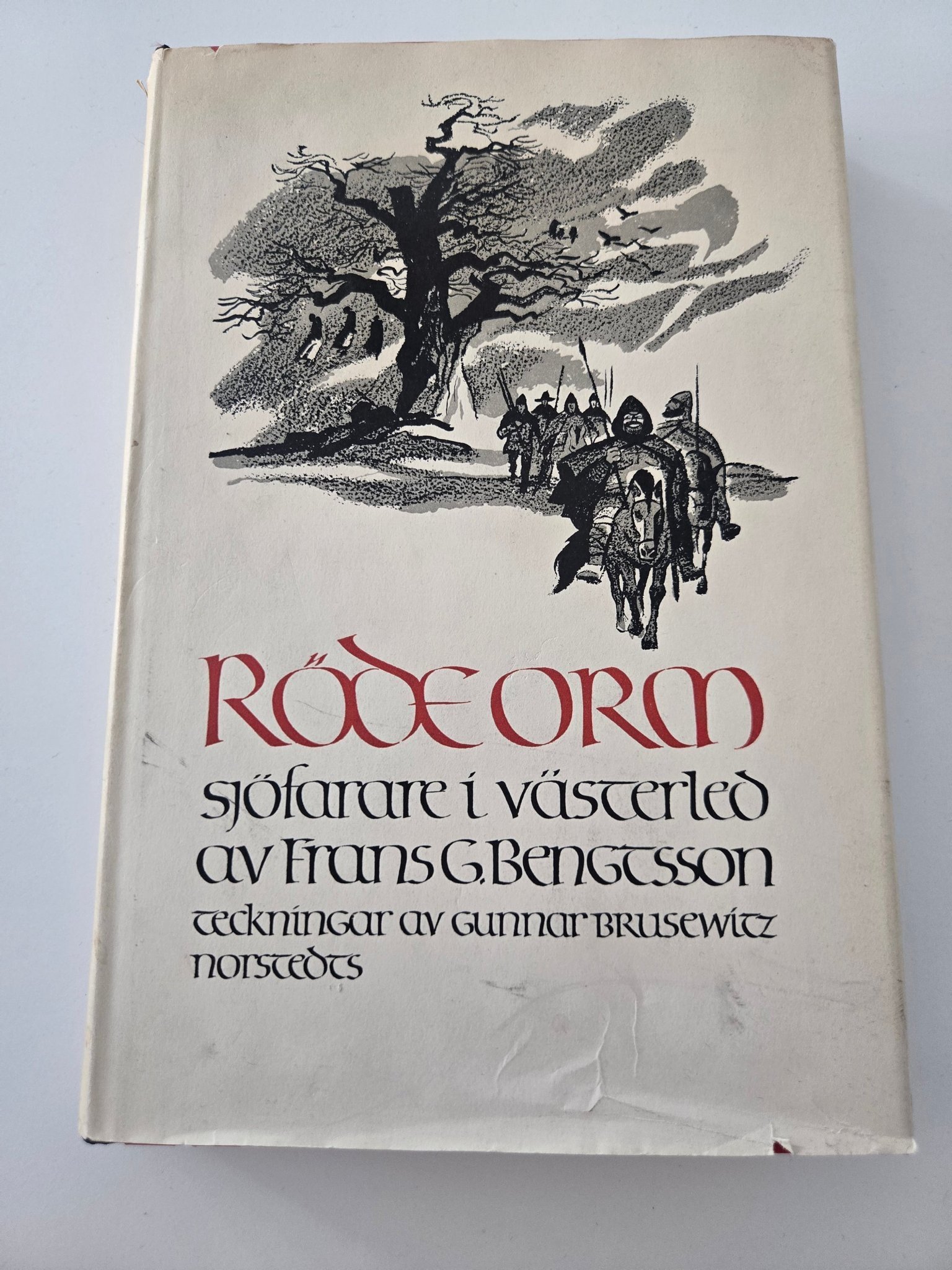
#16Just reread this[0] classic piece that captures Viking life. It holds up so well. [0] https://www.amazon.com/Long-Ships-Review-Books-Classics/dp/1...
The cover with the viking in a horned helmet does not hold up so well for me. The text is more historically accurate?
It's a great book, I highly recommend it.
Re: England Runestones
#17Wikipedia is amazing. The Swedish articles are even longer.
Like on https://en.wikipedia.org/wiki/Jelling_stones (ᚼᛅᚱᛅᛚᛏᚱ᛬ᚴᚢᚾᚢᚴᛦ᛬ᛒᛅᚦ᛬ᚴᛅᚢᚱᚢᛅ etc).
Re: England Runestones
#18The voyages and sagas of the vikings are very interesting, but something I find to also be fascinating is the economic and cultural history that brought about the viking age and then several centuries later ended it. It does seem kind of sudden; there was a niche that suddenly caused vikings to travel everywhere, and then it was just over.
Re: England Runestones
#19Earlier quoted context omitted.
I think mainly it was, that they became civilized/baptized and christians were still free to plunder and enslave non christians, but not fellow christians. So the vikings did not just stop, but rather became crusaders: "In 1107, Sigurd I of Norway sailed for the eastern Mediterranean with Norwegian crusaders to fight for the newly established Kingdom of Jerusalem; the kings of Denmark and Sweden participated actively…
I do not think that stacks up as an explanation. The crusades were not financially remunerative - the crusaders mostly lost money. They might have made money if they were hired as mercenaries though - the famous example of that being the Varangian guard. I do not think its entirely true to say Christians were "free to plunder and enslave non-Christians". Even against non-Christians war required justification (OK, you…
Well, I am not a historian, but was there any war against pagans, that was stopped by the church or individual priests?
(talking about medieval times, modern christianity is a bit different, but the old tradition seems to get a revival in certain circles)
The most I know of, is individual priests who for example criticize the acts of the conquistadores. But crusades to "spread" christianity were rather pushed as a sure way to get into heaven as far as I know.
"The crusades were not financially remunerative - the crusaders mostly lost money."
That is probably why they stopped doing it. Before christianity they had all the coasts of europe to blunder. After their kings turned christians who made treaties with the mainland christian empires - that was not possible anymore and raiding, even under the disguise of crusade, much harder and therefore less attractive (apart from that I did not claim that my explanation is the explanation, just a contributing factor)
Re: England Runestones
#20Earlier quoted context omitted.
The cover with the viking in a horned helmet does not hold up so well for me. The text is more historically accurate?
That's just poor taste by the publisher of the translation. I think this is the original cover of the first part from 1941, which is a bit more subtle: https://img.tradera.net/images/363/614895363_bd12c6ee-75d3-4... It's a great book, I highly recommend it.