Live data from Hacker News

Berkeley Humanoid Lite – Open-source robot

lite.berkeley-humanoid.org

11–20 of 40 posts

Re: Berkeley Humanoid Lite – Open-source robot

#11
I think this is a great idea. It seems like we are entering the phase where the core hardware problems are solved and we now need to:

A) bring down cost and expand the design space for the hardware and

B) minimise the barriers to working on the "software" problems where there still seem to be huge areas of mostly unaddressed challenges.

An open source platform seems like a good thing for both.

Re: Berkeley Humanoid Lite – Open-source robot

#12
post #5

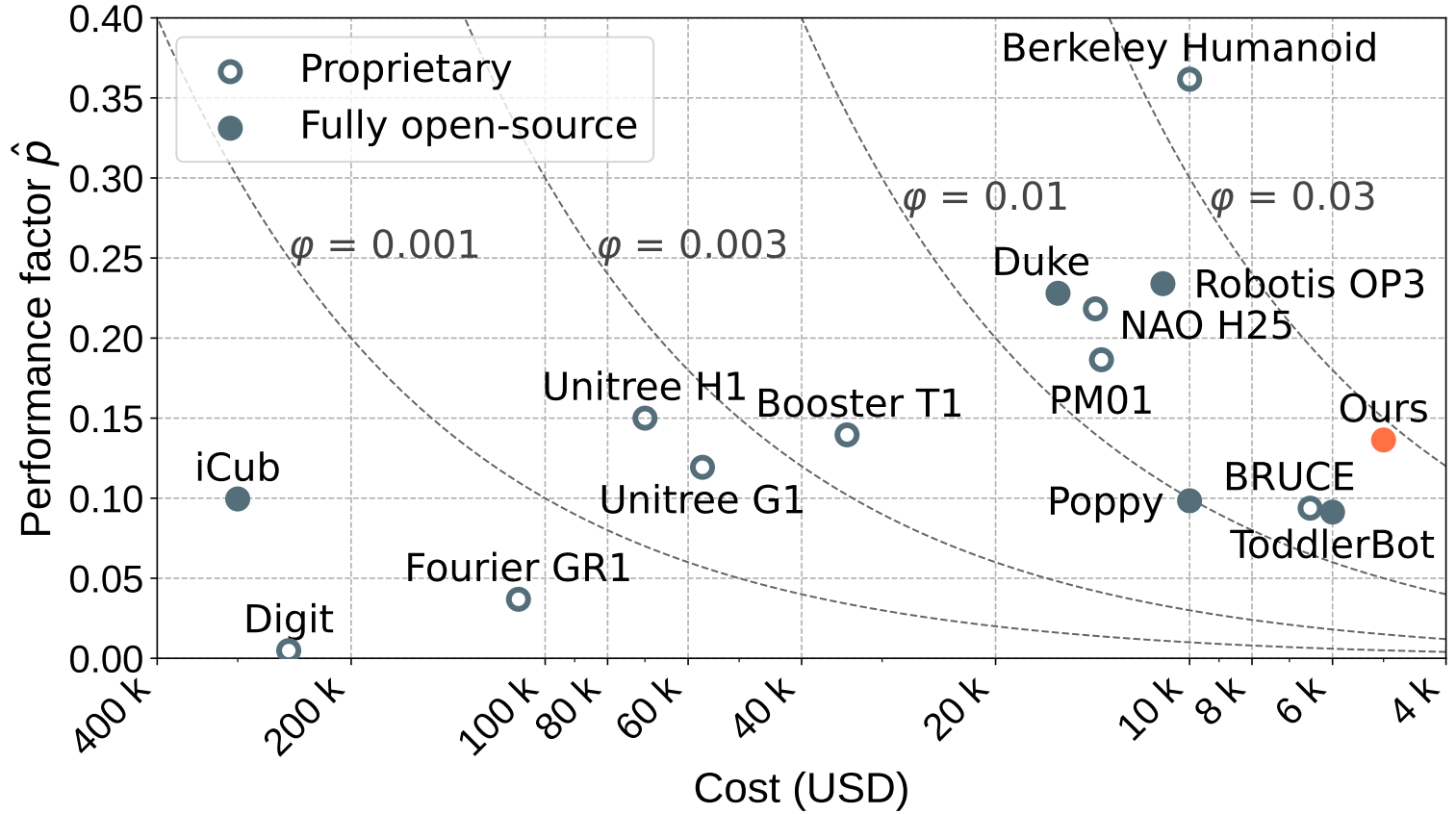
The performance factor vs. torque vs. DOFs is the most silly thing as a licensed mechanical engineer I have ever seen. And I was around for Kony 2012.

Can you explain why to the layman?

https://chatgpt.com/share/680cb5ae-10d8-8007-a580-b7c3266138...

The comment criticizes a chart or metric comparing "performance factor" to torque and degrees of freedom (DOFs) in robotics, calling it "the most silly thing" the commenter, a licensed mechanical engineer, has seen. By referencing "Kony 2012"—a widely mocked internet campaign—they emphasize their point about the chart's perceived absurdity. ([The performance factor vs. torque vs. DOFs is the most silly thing as ...](https://news.ycombinator.com/item?id=43801052&utm_source=cha...))

The critique likely stems from the idea that combining performance factor, torque, and DOFs into a single comparison oversimplifies complex engineering concepts. Torque and DOFs are distinct mechanical properties, and "performance factor" is a vague term without a clear definition. Such a chart might misleadingly suggest direct correlations where none exist, leading to confusion or misinterpretation.

In essence, the commenter is expressing frustration over what they see as a technically flawed and potentially misleading representation of robotic performance metrics.
Re: Berkeley Humanoid Lite – Open-source robot

#13
As much as I like the concept, 3D printing everything is not the way to lower cost.

Mass-produced (stamped / extruded / whatever) mechanical parts + hackable 'brains' is.

Robots do lend themselves well w/ respect to that last part. Worst case is rip out its control electronics wholesale & replace with your own motor drivers etc.

Re: Berkeley Humanoid Lite – Open-source robot

#16

As much as I like the concept, 3D printing everything is not the way to lower cost. Mass-produced (stamped / extruded / whatever) mechanical parts + hackable 'brains' is. Robots do lend themselves well w/ respect to that last part. Worst case is rip out its control electronics wholesale & replace with your own motor drivers etc.

Hm, perhaps not - but maybe give the users an option to print such parts, and warn that they may affect longevity of said parts if they do decide to go full manufacturing route.

My potential concern is the "Apple" gatekeeping of parts.

Re: Berkeley Humanoid Lite – Open-source robot

#17
post #12

Earlier quoted context omitted.

Can you explain why to the layman?

https://chatgpt.com/share/680cb5ae-10d8-8007-a580-b7c3266138... The comment criticizes a chart or metric comparing "performance factor" to torque and degrees of freedom (DOFs) in robotics, calling it "the most silly thing" the commenter, a licensed mechanical engineer, has seen. By referencing "Kony 2012"—a widely mocked internet campaign—they emphasize their point about the chart's perceived absurdity. ([The perform…

Why do you think this excessively verbose bit of LLM vomit contributes to the conversation?

Re: Berkeley Humanoid Lite – Open-source robot

#18

As much as I like the concept, 3D printing everything is not the way to lower cost. Mass-produced (stamped / extruded / whatever) mechanical parts + hackable 'brains' is. Robots do lend themselves well w/ respect to that last part. Worst case is rip out its control electronics wholesale & replace with your own motor drivers etc.

It depends what you're doing. High volume parts, absolutely. It's one of the things that bugs me about the "3D printers printing printers" type projects. 3D printing is terrible for mass producing parts. If you're making 1000+ of something, injection mold it.

Low volume, probably customized parts like R&D robotics tends to need? 3D printing is great, especially if the design files are available so you can modify the parts as required before printing. And then if you break something you can print another one off overnight instead of stalling your project for weeks waiting for new parts to arrive.

Re: Berkeley Humanoid Lite – Open-source robot

#19
I have long assumed that we won’t be getting robot butlers partly because it’s really really hard, but also because most of not all things we want robots for it’s easier to reconfigure the environment than make a flexible humaniod

So factories are obvious but the real mass uptake is the home - and honestly I think something that cleans and tidies an hour a day might actually be achievable

Re: Berkeley Humanoid Lite – Open-source robot

#20
post #14

https://lite.berkeley-humanoid.org/static/comparision.png why does it say the Berkeley Humanoid is closed source here? Is it a typo, was this paper peer-reviewed?

The "Berkeley Humanoid" is a distinct robot (they have the "Berkeley Humanoid Lite" named "ours" and colored in orange as the rightmost point on their graph).
Post reply on HN