Live data from Hacker News

How to Learn Emacs (2012)

david.rothlis.net

11–20 of 47 posts

Re: How to Learn Emacs (2012)

#11

The install section is out of date, at least for macos homebrew. The emacs-plus package on homebrew ( https://github.com/d12frosted/homebrew-emacs-plus ) is the best for macos.

I disagree! It's railwaycats emacs because of the SVG support, unless I'm out of date.

Re: How to Learn Emacs (2012)

#13
In vi (which apparently is vim by default I was told?) I know open, save, quit, go to line, go to begin/end of line, find, insert, delete line.

We used emacs in college and that was the last time I used any text editor serverside besides vi. Am I missing out?

Re: How to Learn Emacs (2012)

#14

My learning path was 1) use vim/nvim for a couple years 2) use Doom Emacs. I was shocked at how intuitive Doom is for me. Of course not everyone would agree but it’s worth checking out

A coworker turned me on to emacs a long time ago but it wasn't until I found Spacemacs that I really started to use it heavily. Now I basically live in emacs and I love it!

Re: How to Learn Emacs (2012)

#15

My learning path was 1) use vim/nvim for a couple years 2) use Doom Emacs. I was shocked at how intuitive Doom is for me. Of course not everyone would agree but it’s worth checking out

Looking back, the main value of super-customized Emacs distros (really) was to show me what's possible. Spacemacs blew me away, yet overwhelmed me when I tried to customize it; so I started with vanilla Emacs and then added things, package by package; magit is every bit as good as I'd heard, and Treemacs makes exploring a big source tree pleasant.

More recently I've been reading the Org manual (1), which like Spacemacs opened my eyes to Org mode's capabilities: literate programming and code blocks that modify the source document captured my interest, along with table and spreadsheet capabilities.

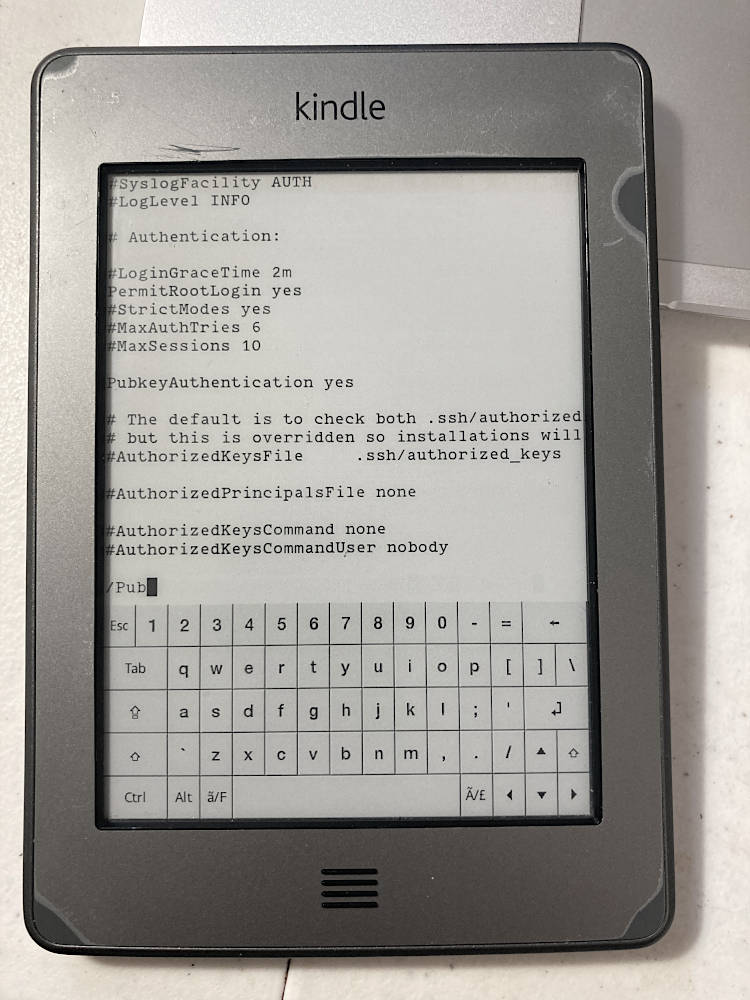
I still use nvim all the time in the terminal; vi knowledge is essential, as it's the best editor you can be sure to have on a UNIX-like system. Case in point: Today I used vi in kterm on my jailbroken Kindle Touch to edit usbnet's SSHD config (2) and I can't imagine a more efficient editor (3) for an eInk device.

P.S. My favorite thing about Emacs is the help system. Being able to look up a function or what a key does with a few keypresses is fantastic!

1: https://orgmode.org/org.pdf

2: Now I can use `scp` or SFTP from my laptop and or iPhone to add books to my Kindle while it's connected to my iPhone hotspot

3: https://nexus.armylane.com/files/k5-kterm-and-vi.jpeg

Re: How to Learn Emacs (2012)

#16
post #13

In vi (which apparently is vim by default I was told?) I know open, save, quit, go to line, go to begin/end of line, find, insert, delete line. We used emacs in college and that was the last time I used any text editor serverside besides vi. Am I missing out?

If you only care about the features you listed - no, you're not missing out on anything.

Emacs is a great extensible platform for writing textual applications that happens to come with a mediocre text editor. If you like automating things or enjoy having development environments that fit you like a glove, you'll want to learn Emacs - it'll pay off in a few years. (this describes me)

But not everyone fits that description, and that's totally fine. I know many software engineers who have been working for decades in vanilla vim, and they're still incredibly productive. VSCode, too, comes with sane out of the box defaults and a large extension ecosystem.

There's probably an analogy to be made here between flexible languages (Lisp, Haskell, C++ kind-of) and inflexible languages (Python, Java) - some people really want to develop DSLs to perfectly express their problem, but others are ok with a slightly awkward mismatch due to a rigid language, and are still incredibly productive and happy.

(however, aside from practical use, I find the design of Emacs to be quite beautiful and inspiring, and encourage you to take a look at it anyway when you have some time)
Re: How to Learn Emacs (2012)

#17
This tutorial is painfully out of date, and I would argue a very bad way to learn emacs today. As an example, don't learn to use ETags unless you are going to specifically be working with a C project where other developers use them. You would be better served these days learning LSP and treesitter, which is now built-in. I would also strongly suggest using Doom Emacs, and working your way backward to a minimalist configuration once you are comfortable. There are so many useful packages excluded from default emacs that any beginner learning emacs would walk away with the impression that emacs is old outdated software, and not useful for real work. That couldn't be farther from the truth, but if you follow tutorials from 2012 you wouldn't necessarily figure it out.

Re: How to Learn Emacs (2012)

#18

This tutorial is painfully out of date, and I would argue a very bad way to learn emacs today. As an example, don't learn to use ETags unless you are going to specifically be working with a C project where other developers use them. You would be better served these days learning LSP and treesitter, which is now built-in. I would also strongly suggest using Doom Emacs, and working your way backward to a minimalist con…

> don't learn to use ETags

> You would be better served these days using LSP and treesitter

Could you elaborate? How do I transition from etags to treesitter? Suppose I'm working on a dynamic C or C++ project where I might need to regenerate the tags daily.

Re: How to Learn Emacs (2012)

#19
I wish I had read this article in 2012. Unfortunately, I was introduced to Emacs in 2016 and only started using it in 2021. I lost 9 years! It is my favorite piece of software :)

This article has an interesting perspective. But, beyond Emacs built-in documentation, my favorite content to learn Emacs is the book Mastering Emacs and the System Crafters' YouTube Channel.

Re: How to Learn Emacs (2012)

#20

My learning path was 1) use vim/nvim for a couple years 2) use Doom Emacs. I was shocked at how intuitive Doom is for me. Of course not everyone would agree but it’s worth checking out

Legitimately asking, not trying to start a holy war - what did you find lacking in vim that you found in emacs? I've been using vim for barely a year, and have yet to find anything I can't do in it that I want to do.
Post reply on HN