I wonder what supercavitation sounds like
I looked it up and if the video is accurate, it sounds like static. About what I expected a large stream bubbles to sound like. (Imagine a shaken soda bottle can overflowing.)
11–20 of 179 posts
I wonder what supercavitation sounds like
Earlier quoted context omitted.
Search and rescue authorities very much do not want people just showing up with equipment based on what they heard on the news---if you are involved in search and rescue, disaster response, or related areas, one of the first things drilled into you is that you must never "self-activate." It puts an enormous workload on the people in charge of the incident if you expect them to keep the entire world informed about the…
How does this interact with the norm of commercial vessels responding to distress calls at sea? I know distress calls aren't at all the same as search and rescue, but in some incidents both phases must occur.
I recall some comments saying that operators of a submersible that could hypothetically rescue a sub stranded on the bottom being discouraged from deploying for the Titan by the coast guard, which perhaps means they already knew the fate of the vessel. Although it could be that they already had a suitable submersible arranged already and didn’t want more in the area causing complications with coordination etc.
>Much more appealing is passive sonar, which works by listening for the sounds naturally created by underwater vehicles. Experts in marine biology. Reminds me of the night vision camera the british military were showing off on BBC Countryfile program. Who would have thought the military are experts in biology, but probably explains why the brits took off sunglasses in Iraq when talking to people, but the US didnt. Yo…
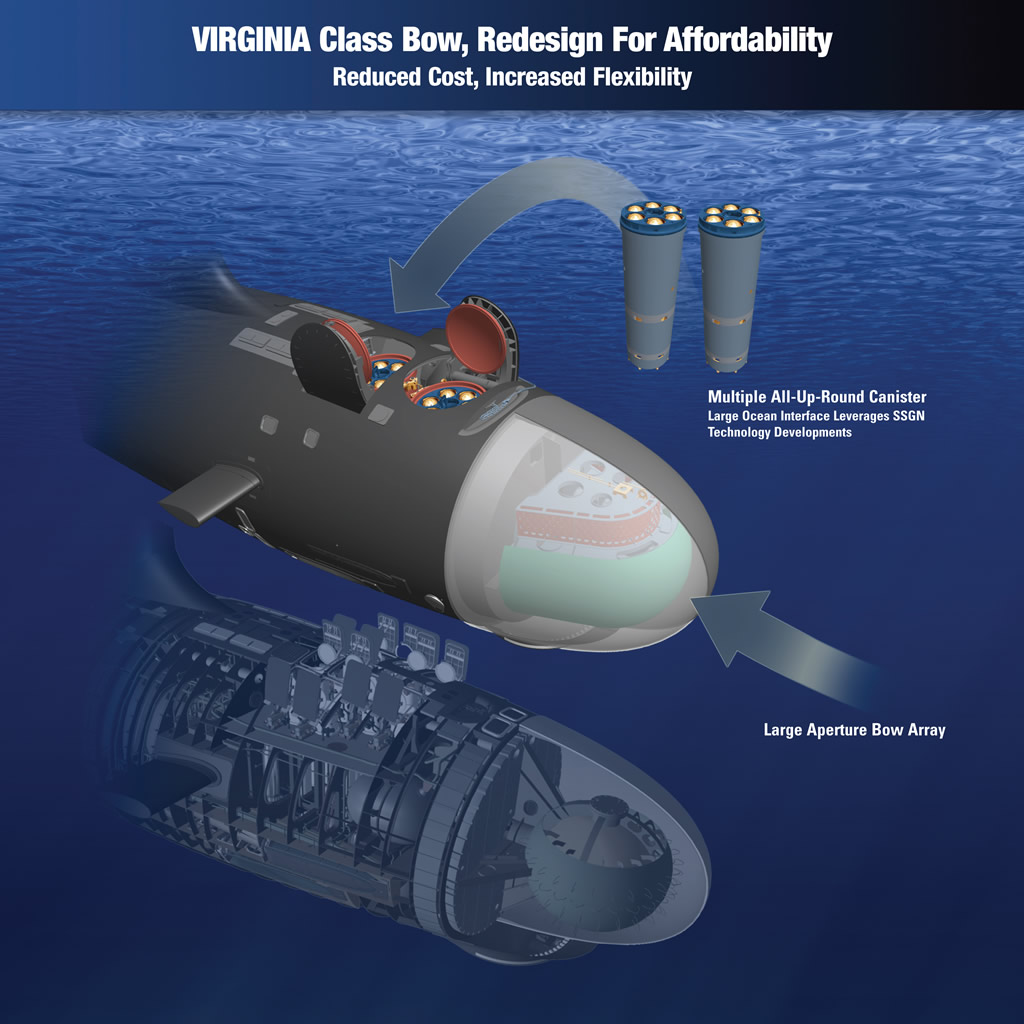
In a typical attack sumbarine, a substantial amount of the ship's volume is dedicated to acoustic sensors: https://media.defenceindustrydaily.com/images/SHIP_SSN_Virgi...
This arms race is very old, and the state of the art even 20 years ago is pretty impressive.
> The Navy did not withhold information on the detection for four days out of some concern for secrecy.
I think it's more likely than not that the statement is correct, but what gives the author the authority to make the claim so definitively? The author's bio indicates he's a consultant and there is no indication of direct involvement in this or any other SAR effort.
While the workings of the SOSUS and IUSS systems may be declassified, the deployments and capabilities (mostly range and computation related) of such systems most likely are not. And there is always the possibility that there is yet another system the author simply isn't aware of.
IMO, it isn't negligence to value the secrecy of systems used for defense above some number of lives, in some situations.
This writing is so clear and good. I can't tell you how many NYT articles I read where the paragraphs feel out of order, chopped up and there is no consistent flow. This reads very enjoyably.
Earlier quoted context omitted.
Search and rescue authorities very much do not want people just showing up with equipment based on what they heard on the news---if you are involved in search and rescue, disaster response, or related areas, one of the first things drilled into you is that you must never "self-activate." It puts an enormous workload on the people in charge of the incident if you expect them to keep the entire world informed about the…
How does this interact with the norm of commercial vessels responding to distress calls at sea? I know distress calls aren't at all the same as search and rescue, but in some incidents both phases must occur.
>Much more appealing is passive sonar, which works by listening for the sounds naturally created by underwater vehicles. Experts in marine biology. Reminds me of the night vision camera the british military were showing off on BBC Countryfile program. Who would have thought the military are experts in biology, but probably explains why the brits took off sunglasses in Iraq when talking to people, but the US didnt. Yo…
An excellent read but one thing caught my attention: > The Navy did not withhold information on the detection for four days out of some concern for secrecy. I think it's more likely than not that the statement is correct, but what gives the author the authority to make the claim so definitively? The author's bio indicates he's a consultant and there is no indication of direct involvement in this or any other SAR effo…
But they confirmed it 4 days later - which would be admitting to its capabilities. The entire talk track of: "they kept it secret because of conspiracy theory X" makes no sense when they didn't actually keep it secret, they simply didn't make it public until AFTER the team was there to search - for the fairly obvious reasons the author stated. Mainly it creates unnecessary publicity that is hurtful to the relatives of the folks that are at the bottom of the ocean, and political pressure to "not spend money on the search" which was already coming from some circles even without the Navy's information.
An excellent read but one thing caught my attention: > The Navy did not withhold information on the detection for four days out of some concern for secrecy. I think it's more likely than not that the statement is correct, but what gives the author the authority to make the claim so definitively? The author's bio indicates he's a consultant and there is no indication of direct involvement in this or any other SAR effo…
Many aspects of IUSS are still classified, and for example we can assume that the actual data will never be released because of sensitivity of the collection system. But the news that the Navy detected the implosion is nothing new, it would probably be more surprising if the Navy didn't (I don't know that the sound levels associated with a vessel of this type imploding are well known, maybe it could be explained away as the implosion having somehow produced almost no acoustic signature). We know that in the '60s the Navy detected submarine implosions (admittedly of larger submarines) further afield, and we also know that IUSS has seen major upgrades including new sensor arrays since then.
Amazing read, convincingly explains a lot of confusion around the aftermath of the search operation. And kind of mind blowing that IUSS exists primarily to detect submarine movements around the world. I would love to learn more about the technology — are these wireless transmitters? Undersea cables all around the oceans of the world?
As I understand it most of the original SOSUS arrays are still in operation, but I think they're more useful for scientific research than submarine surveillance at this point just because the newer arrays are much more sensitive. The locations of the original SOSUS arrays aren't totally public but you can put together some pretty good inferences about a lot of them, for example based on the NAVFACs that had similar cover stories and then closed at around the same time. Each one would have been the landing station and control point for a '60s array.