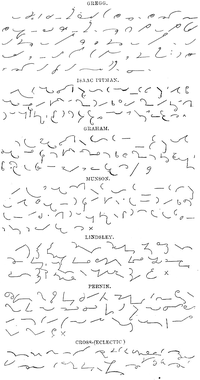
Is this what is needed?:
1. Assign ascii to the symbols in the code
2. Transcribe the code to ascii
3. Solve the code in ascii using techniques from Snyder and Barzilay
11–20 of 23 posts
1. Assign ascii to the symbols in the code
2. Transcribe the code to ascii
3. Solve the code in ascii using techniques from Snyder and Barzilay
Earlier quoted context omitted.
A simple substitution cipher is of course a good guess, but I suspect a homophonic one is more likely if the author knew anything about cryptography and thought it might come under attack. It's simple enough to come up with a number of homophones to complicate frequency analysis.
> I suspect a homophonic one is more likely if the author knew anything about cryptography How likely is it, that he had a deeper knowledge of cryptography in the 1860ies? But of course, if he had, it's still likely, that he used something more sophisticated. http://en.wikipedia.org/wiki/History_of_cryptography#Cryptog... Given the fact, that "12345" is still a common password in 2012, I would at least give it a shot…
Earlier quoted context omitted.
A simple substitution cipher is of course a good guess, but I suspect a homophonic one is more likely if the author knew anything about cryptography and thought it might come under attack. It's simple enough to come up with a number of homophones to complicate frequency analysis.
> I suspect a homophonic one is more likely if the author knew anything about cryptography How likely is it, that he had a deeper knowledge of cryptography in the 1860ies? But of course, if he had, it's still likely, that he used something more sophisticated. http://en.wikipedia.org/wiki/History_of_cryptography#Cryptog... Given the fact, that "12345" is still a common password in 2012, I would at least give it a shot…
The reason I suggest a homophonic cipher (or similar) rather than something like the much more secure Vignere in use for telegraph messages (only recently broken for the time) is because the Vignere system is more complicated, and requires more working out than I would expect someone writing a private message to tolerate.
Homophonic systems, on the other hand, are fairly easy to invent and remember on a personal basis, and can offer some security against amateur analysis. Though the technique for solving them was known, they could still prove robust - the partially homophonic cipher of Lous XIV was still unbroken at this point, despite being over a century old.
I'm very much an amateur (though I have read that book) but it doesn't seem that ridiculous to suggest a homophonic cipher. At any rate, It's only something to consider if it turns out to be something more complex than a simple substitution cipher.
Since he was using very uncommon symbols and the cipher is old, it's not so unlikely, that the author used a simple letter replacement table. Something like: a -> #, b -> *, c -> =, ... and so on. Unfortunately the handwriting is a bit messy and hard to read, but I'd try to make a frequency table for every symbol and compare that to a frequency table of letters in the english language: http://en.wikipedia.org/wiki/Le…
http://upload.wikimedia.org/wikipedia/commons/thumb/e/ef/Ecl...
Is this what is needed?: 1. Assign ascii to the symbols in the code 2. Transcribe the code to ascii 3. Solve the code in ascii using techniques from Snyder and Barzilay
:::: image 1, left:
s-tac-toe equals minus-dot seven ex comma slash-slash-backslash gamma capital-l lower-j ex slash
:::: image 1, right, downward
capital-t capital-i equals four parallel-lines slash-slash-backslash equals-slash comma s-tac-toe slash-slash-backslash slash-slash-backslash-backslash comma
:::: image 1, left, upper
capital-l divided-by capital-i comma equivalent comma lower-j comma capital-f slash-slash-backslash capital-i squared-capital-n zee slash-slash-backslash-backslash comma divided-by slash-slash comma slash-backslash-backslash slash-slash minus-dot slash-slash-backslash
:::: image 2
plus-dot plus leaning-heart upsidedown-t minus vertical-line ex comma
leaning-heart capital-m capital-i capital-a minus three-peaks comma vertical-line crap capital-b close-bracket plus script-j script-s lower-d comma
u-bar three-peaks capital-i
:::: image 3
capital-l backslash divided-by c-slash-slash capital-i comma capital-i equivalent divided-by slash-slash-backslash-backslash comma capital-i minus-dot three-horizontal-two-vertical ex comma equals zee capital-l
l-in-l 11-over-1 comma y-slash-slash slash-slash-backslash-backslash comma capital-i divided-by comma minus-lower-dot c-omega slash-slash slash-i 11-over-1 slash-slash square-c equals capital-l equivalent slash-slash comma
capital-l slash-slash slash comma l-on-l plus slash-backslash-backslash slash-slash-backslash-backslash comma 1-slash-1 11-over-1 capital-z comma capital-i equals ex comma j divided-by c-slash-slash slash-slash capital-l divided-by slash-slash ex comma
:::: image 4 (repeats image 2)
plus-dot plus leaning-heart upsidedown-t minus vertical-line ex comma
leaning-heart capital-m capital-i capital-a minus three-peaks comma vertical-line crap capital-b close-bracket plus script-j script-s lower-d comma
u-bar three-peaks capital-i
Here's the first four images... ready for parsing by your program: :::: image 1, left: s-tac-toe equals minus-dot seven ex comma slash-slash-backslash gamma capital-l lower-j ex slash :::: image 1, right, downward capital-t capital-i equals four parallel-lines slash-slash-backslash equals-slash comma s-tac-toe slash-slash-backslash slash-slash-backslash-backslash comma :::: image 1, left, upper capital-l divided-by c…
(23, 'comma') (10, 'capital-i') (8, 'slash-slash') (7, 'divided-by') (7, 'capital-l') (6, 'ex') (5, 'slash-slash-backslash-backslash') (5, 'slash-slash-backslash') (5, 'equals') (3, 'plus') (3, 'minus-dot') (3, 'equivalent') (3, '11-over-1') (2, 'zee') (2, 'vertical-line') (2, 'three-peaks') (2, 'slash-backslash-backslash') (2, 'slash') (2, 's-tac-toe') (2, 'minus') (2, 'lower-j') (2, 'leaning-heart') (2, 'c-slash-slash') (1, 'y-slash-slash') (1, 'upsidedown-t') (1, 'u-bar') (1, 'three-horizontal-two-vertical') (1, 'squared-capital-n') (1, 'square-c') (1, 'slash-i') (1, 'seven') (1, 'script-s') (1, 'script-j') (1, 'plus-dot') (1, 'parallel-lines') (1, 'minus-lower-dot') (1, 'lower-d') (1, 'l-on-l') (1, 'l-in-l') (1, 'j') (1, 'gamma') (1, 'four') (1, 'equals-slash') (1, 'crap') (1, 'close-bracket') (1, 'capital-z') (1, 'capital-t') (1, 'capital-m') (1, 'capital-f') (1, 'capital-b') (1, 'capital-a') (1, 'c-omega') (1, 'backslash') (1, '1-slash-1')