Will it make you a better React dev tho?
Author here, I actually think so. The rendering of the virtual DOM as well as hooks are fairly interesting mathematical constructs. A pattern I use a lot in web applications is the state reducer, which is really a fold over events and state. Seeing the functional nature of it (and reactive programming in general) can make for quite composable react code, while it is easy to make either a verbose mess of propdrilling…
Why I am learning category theory
11–20 of 224 posts
Re: Why I am learning category theory
#12Honestly, this is a waste of time and is not going to help as much as the author thinks it is. There is no secret from category theory that will make one's design 10x better. Not everything is even applicable. >I hope that category theory will allow me to formalize my intuitive understanding of abstraction, put words to it, and use those words (or, better, words others have written) to explain my thinking. Note how t…
Learning almost anything is useful in some capacity. Is everything you learn equally important? Maybe, maybe not, but you never know in advance how things might end up useful.
Of all the things one can study, math seems to be a pretty safe bet in terms of ROI.
Re: Why I am learning category theory
#13Honestly, this is a waste of time and is not going to help as much as the author thinks it is. There is no secret from category theory that will make one's design 10x better. Not everything is even applicable. >I hope that category theory will allow me to formalize my intuitive understanding of abstraction, put words to it, and use those words (or, better, words others have written) to explain my thinking. Note how t…
author here, the way I see it is that nothing about my software per se will change. I do indeed like to write things in a "plain" fashion instead of littering my code with high-level constructs that only a few people understand. However, it is "generative" knowledge. Having a good intuition for monads is what allows me to break down a fair amount of the mundane tasks I have to do (say, breaking down and migrating inf…
Does it for everybody? Most certainly not.
Re: Why I am learning category theory
#14As someone with a maths degree, yet who admittedly hasn't looked into category theory beyond some basic notions, I still don't quite understand why anyone would want to learn category theory before e.g. abstract algebra or even just fundamental mathematical reasoning (definition, theorem, proof). Maybe I'm missing something but it seems to me that all you can study monads in programming languages without having to al…
Because people think “category theory” means “abstract math” in general, due to cargo-culting in and around the Haskell community.
Re: Why I am learning category theory
#15Earlier quoted context omitted.
Author here, I actually think so. The rendering of the virtual DOM as well as hooks are fairly interesting mathematical constructs. A pattern I use a lot in web applications is the state reducer, which is really a fold over events and state. Seeing the functional nature of it (and reactive programming in general) can make for quite composable react code, while it is easy to make either a verbose mess of propdrilling…
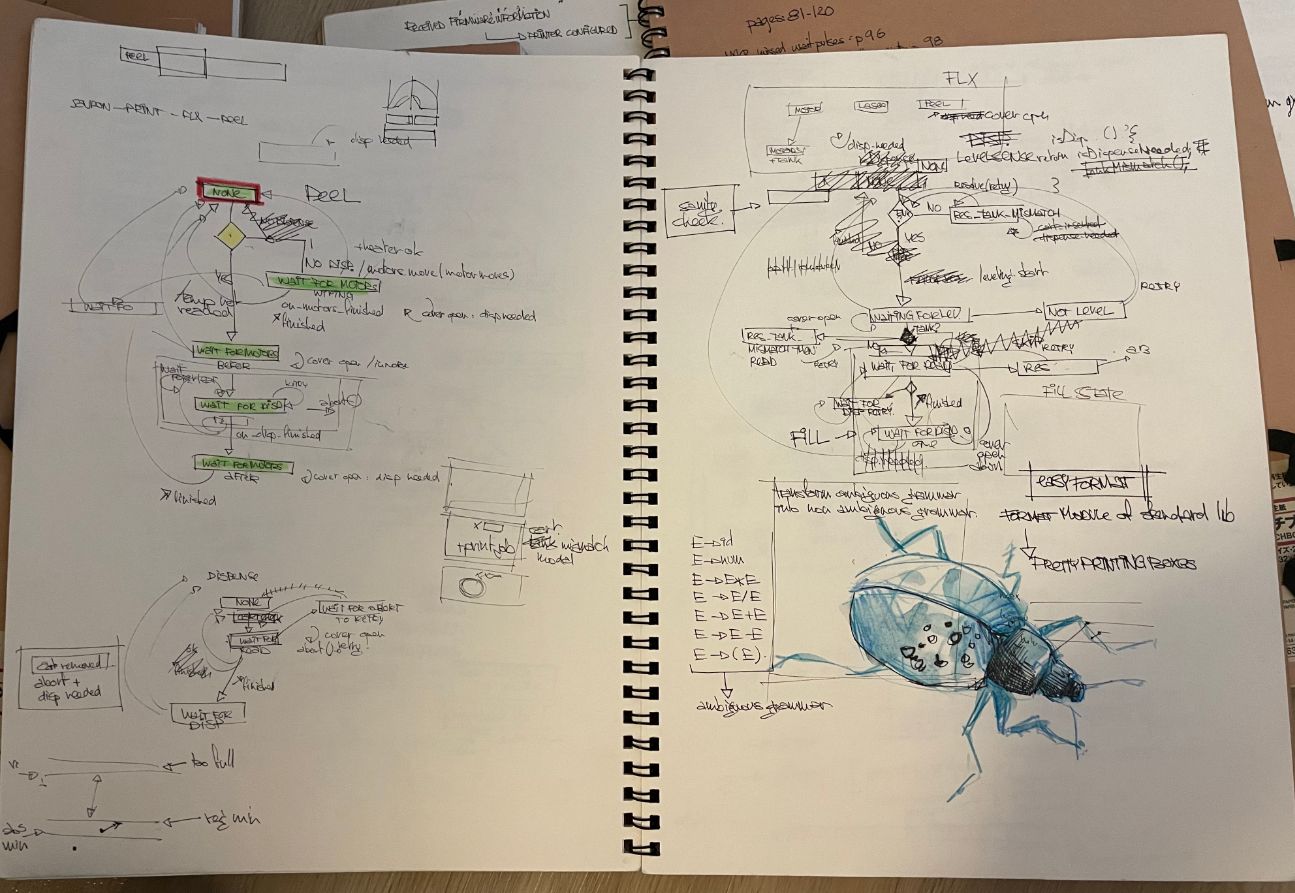
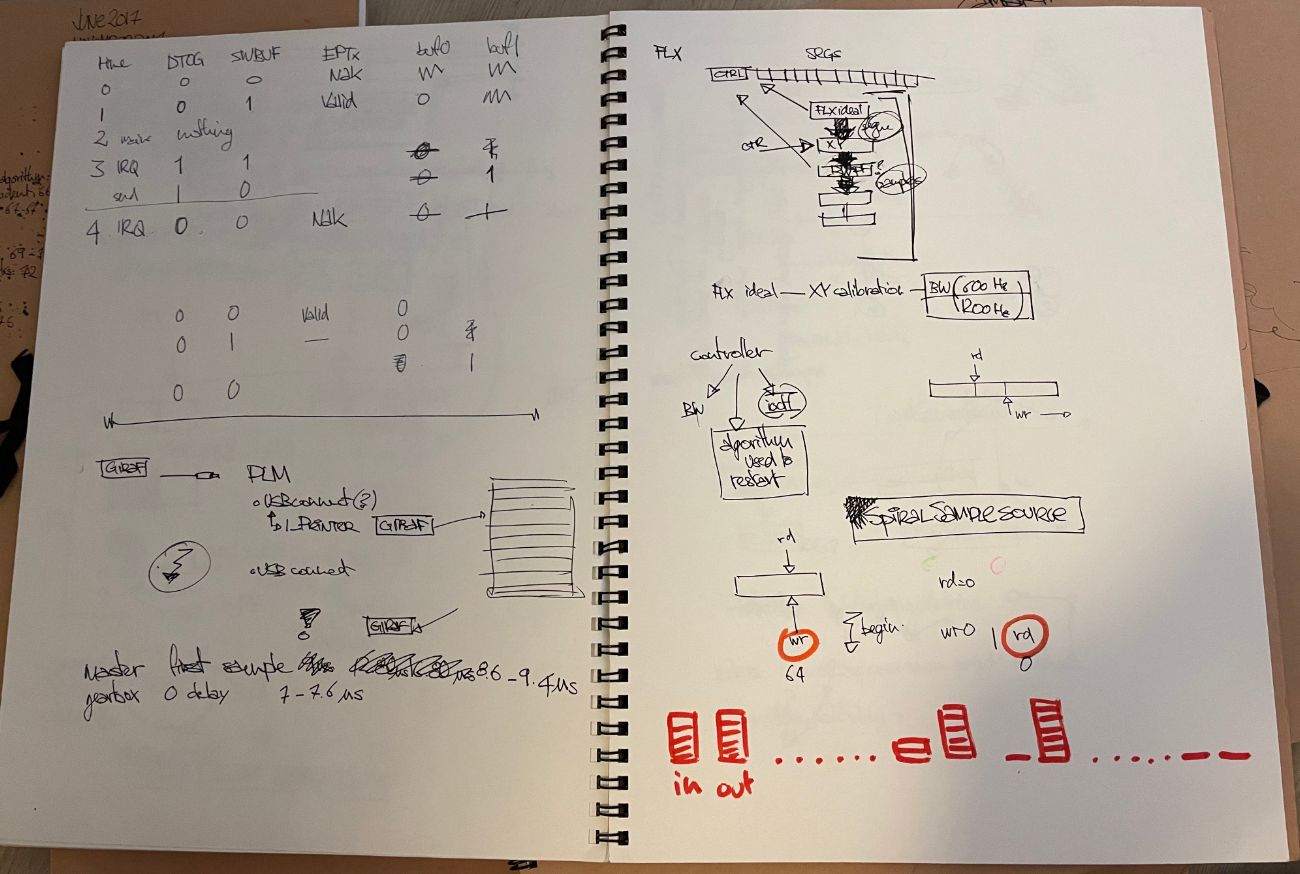
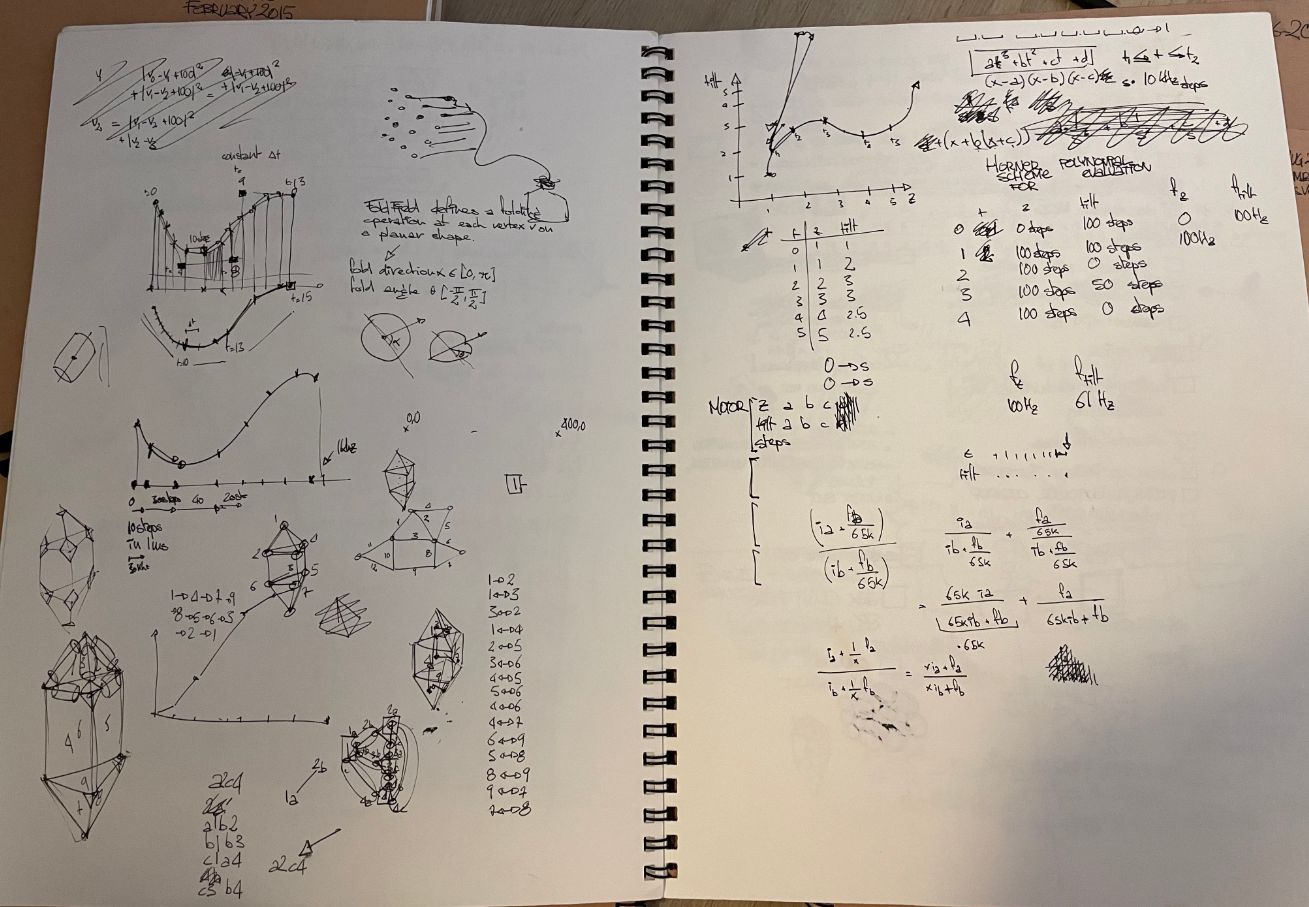
I'd love to see some examples of your diagrams. Are they all hand-written or do you use online tools for them? I do quite a bit of graph diagramming but not for detailed planning of implementation. Best example I've seen along those lines are the xState tools for state charts ( https://stately.ai/viz ).
https://publish-01.obsidian.md/access/017fdca1a82df1fa88d36b...
Re: Why I am learning category theory
#16It will be a lot less rewarding than you expect RE: your engineering ability/understanding.
Re: Why I am learning category theory
#17I find her YouTube talks and lectures to be easier to follow.
Re: Why I am learning category theory
#18As someone with a maths degree, yet who admittedly hasn't looked into category theory beyond some basic notions, I still don't quite understand why anyone would want to learn category theory before e.g. abstract algebra or even just fundamental mathematical reasoning (definition, theorem, proof). Maybe I'm missing something but it seems to me that all you can study monads in programming languages without having to al…
Re: Why I am learning category theory
#19As someone with a maths degree, yet who admittedly hasn't looked into category theory beyond some basic notions, I still don't quite understand why anyone would want to learn category theory before e.g. abstract algebra or even just fundamental mathematical reasoning (definition, theorem, proof). Maybe I'm missing something but it seems to me that all you can study monads in programming languages without having to al…
Logic and proof theory is actually one of the areas in math where category theory is most clearly useful. Intuitively, this is because reflexivity ("A leads to A") and transitivity ("A leads to B and B leads to C, hence A leads to C") are well-known rules of any kind of proof writing or indeed of argumentation in general, and they exactly describe a category.
Re: Why I am learning category theory
#20Earlier quoted context omitted.
Author here, I actually think so. The rendering of the virtual DOM as well as hooks are fairly interesting mathematical constructs. A pattern I use a lot in web applications is the state reducer, which is really a fold over events and state. Seeing the functional nature of it (and reactive programming in general) can make for quite composable react code, while it is easy to make either a verbose mess of propdrilling…
I'd love to see some examples of your diagrams. Are they all hand-written or do you use online tools for them? I do quite a bit of graph diagramming but not for detailed planning of implementation. Best example I've seen along those lines are the xState tools for state charts ( https://stately.ai/viz ).
This looks very mundane but I do think about it very mathematically as well: user interaction with a search engine. The "encode" arrow for example is very much about NLP and tokenizing, which is a functor from the "category" of natural language to the functor of "lucene tokens" which then has a functor to "lucene queries". This is of course the very mundane typing of functions as:
function parseQuery(query: NaturalLanguageString): LuceneQuery
nothing spectacular, but the abstract approach means I know I can cache/batch/precompute/distribute/pipeline/modularize it.
Similar mathematical concepts apply to all the other arrows, even if some are a bit wild (how does a search result influence a person's ideas?) But it means I can try to model the "wildness", and create say a probabilistic model to exercise and understand how my search engine actually performs (see for example click models and probabilistic graphical models)
I hope that makes sense?
edit: forgot picture link