Live data from Hacker News

Living closer together

aeon.co

11–20 of 35 posts

Re: Living closer together

#11
post #8
post #2

I dont know, the frenetic rebound of tourism this year tells me that people don't want to live closer together unless they have to

It's been noted that American tourists absolutely love the charm and density of European cities when they visit but somewhere over the Atlantic, they forget that they could have that at home too, if it were legal to build.

Or perhaps they realize they only enjoy visiting such places because they couldn't have their larger houses, yards, cars, and whatever else they want.

There are plenty of places that would I would be interested in visiting but have no interest in moving to.
Re: Living closer together

#12
post #8
post #2

I dont know, the frenetic rebound of tourism this year tells me that people don't want to live closer together unless they have to

It's been noted that American tourists absolutely love the charm and density of European cities when they visit but somewhere over the Atlantic, they forget that they could have that at home too, if it were legal to build.

Would American high density look like charming antique cities, or would it look like China's modern made high density? Shanghai was cool to visit but I definitely wouldn't want to live there. Or would it look like something else? Changing zoning is not going to suddenly create charming 300-1000 year old walking cities highly curated and subsidized by tourist dollars to make tourist destinations but that sure gets pushed on every one of these HN stories.

American's go on cruises (a super high density vacation) that are very communal. Do you want to recreate the 'cruise' experience in every American city? American's go to Disneyland for vacation, does that mean American's love waiting in long lines and we should design cities around long lines and overpriced fast food?

Re: Living closer together

#13
post #9
post #5

Earlier quoted context omitted.

Cities are completely unaffordable right now. If you raised concerns about a sudden glut of empty and available homes, you'd be laughed out of the room.

Not if that room was full of REIT managers. They sometimes hold empty units to boost the prices of the others. Essentially constricting the supply side for larger margins. It seems prices have risen just about everywhere. Even rural raw land has gone up substantially in the past couple years (what I'm interesed). It should be no surprise with inflation, the increase in the money supply, and some increase in wages, th…

Housing vacancy rates are lower than they have been in a long time. That’s not it.

https://www.census.gov/library/stories/2022/05/housing-vacan...

Re: Living closer together

#14
post #8
post #2

I dont know, the frenetic rebound of tourism this year tells me that people don't want to live closer together unless they have to

It's been noted that American tourists absolutely love the charm and density of European cities when they visit but somewhere over the Atlantic, they forget that they could have that at home too, if it were legal to build.

https://twitter.com/culdesac/

Re: Living closer together

#15
post #3

Living close together does not seem to be optimal for mental health. Quite the opposite. Physical proximity to other humans is not the same thing as community. One can be very alone and feel anxious whilst been surrounded by other humans.

Absolutely this. I was a huge fan of living in cities ages 18-24ish (Chicago, Vancouver, Seattle) and couldn't picture myself elsewhere - but the pandemic, my own mental health, and just generally a desire in life to be at peace while the world around me gets crazier, drove me out to the woods and (soon, for a change of pace) the sea. I have a few close friends I see when I need in-person interaction, I volunteer with an important education-adjacent org when I need to feel connected to a deeper cause and community, and otherwise, I am so tired of constantly having to hear other humans, be subjected to unending car pollution (air quality and the less-discussed one: tire and engine noise pollution), pay exorbitant and extortionate rent, and many of the other concerns that come from living in dense places.

There's no right answer for everyone. Some folks will only thrive in one environment or the other, and that's fine. But as for me? You'll catch me continuing to peruse listings for acreage in far-flung places where I can be left alone.

Re: Living closer together

#16
post #9

Earlier quoted context omitted.

Not if that room was full of REIT managers. They sometimes hold empty units to boost the prices of the others. Essentially constricting the supply side for larger margins. It seems prices have risen just about everywhere. Even rural raw land has gone up substantially in the past couple years (what I'm interesed). It should be no surprise with inflation, the increase in the money supply, and some increase in wages, th…

Housing vacancy rates are lower than they have been in a long time. That’s not it. https://www.census.gov/library/stories/2022/05/housing-vacan...

"...characteristics of units available for occupancy."

Those numbers don't include unavailable units, such as the one's REITs might make unavailable.

Re: Living closer together

#17
post #8

Earlier quoted context omitted.

It's been noted that American tourists absolutely love the charm and density of European cities when they visit but somewhere over the Atlantic, they forget that they could have that at home too, if it were legal to build.

Would American high density look like charming antique cities, or would it look like China's modern made high density? Shanghai was cool to visit but I definitely wouldn't want to live there. Or would it look like something else? Changing zoning is not going to suddenly create charming 300-1000 year old walking cities highly curated and subsidized by tourist dollars to make tourist destinations but that sure gets pus…

>Changing zoning is not going to suddenly create charming 300-1000 year old walking cities

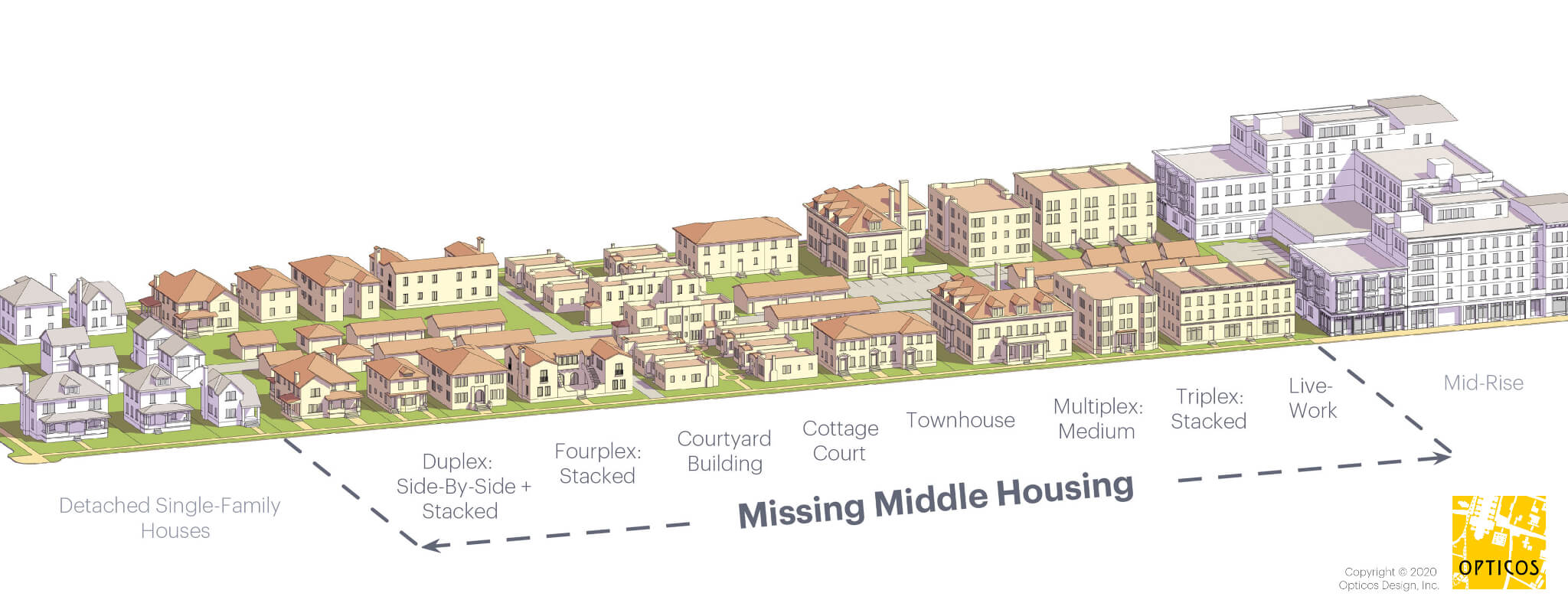
No, nothing is sudden. It's always transitional; everything is a gradient. You have a gradient that starts at least dense all the way up to most dense. The problem is polarized American thought that immediately imagines mixed zoning to be someone building a mega skyscraper next to a single family home. In reality, someone will build a duplex. Further down someone might build a multilevel quadplex. Further down someone might build townhomes, then further down residential on top with business on bottom. This takes decades on time scale, but this is what people are advocating for.

>Do you want to recreate the 'cruise' experience in every American city?

Sure, in some places at the end of the gradient where things are most dense (and land is most expensive) it would make sense. There are people who absolutely want this experience for every day life.

>American's go to Disneyland for vacation, does that mean American's love waiting in long lines and we should design cities around long lines and overpriced fast food?

In my suburb, people love to wait in long drive-thru lines for overpriced fast food, so based on my experience, yes. But to answer your questions, should we design cities around one specific way of building and make it homogenous? No. There is a whole variety of different structures to be built before the cruise ship: https://missingmiddlehousing.com/wp-content/uploads/2020/07/...

Re: Living closer together

#18
post #8

Earlier quoted context omitted.

It's been noted that American tourists absolutely love the charm and density of European cities when they visit but somewhere over the Atlantic, they forget that they could have that at home too, if it were legal to build.

Would American high density look like charming antique cities, or would it look like China's modern made high density? Shanghai was cool to visit but I definitely wouldn't want to live there. Or would it look like something else? Changing zoning is not going to suddenly create charming 300-1000 year old walking cities highly curated and subsidized by tourist dollars to make tourist destinations but that sure gets pus…

Plenty of Europe is brand new and still high density and walkable. It’s not a historical accident, but an actual urban design preference.

I live on the very edge of the city. The farms start right after my townhouse. The urban environment stops at my doorstep, but I am fully in the city and have a convenient electric trolley bus line, walkable shops and restaurants and a great bike infrastructure. A new neighborhood of flats is going in, replacing the farms across the street which is about 800 units in 40 densely packed buildings, similar density to the city center. You would have to be in the center of NYC to see that density in the US.

Re: Living closer together

#19
post #16

Earlier quoted context omitted.

Housing vacancy rates are lower than they have been in a long time. That’s not it. https://www.census.gov/library/stories/2022/05/housing-vacan...

"...characteristics of units available for occupancy." Those numbers don't include unavailable units, such as the one's REITs might make unavailable.

I was curious so I clicked through to the Census definitions:

> Vacant Housing Units. A housing unit is vacant if no one is living in it at the time of the interview, unless its occupants are only temporarily absent. In addition, a vacant unit may be one which is entirely occupied by persons who have a usual residence elsewhere. New units not yet occupied are classified as vacant housing units if construction has reached a point where all exterior windows and doors are installed and final usable floors are in place. Vacant units are excluded if they are exposed to the elements, that is, if the roof, walls, windows, or doors no longer protect the interior from the elements, or if there is positive evidence (such as a sign on the house or block) that the unit is to be demolished or is condemned. Also excluded are quarters being used entirely for nonresidential purposes, such as a store or an office, or quarters used for the storage of business supplies or inventory, machinery, or agricultural products. Vacant sleeping rooms in lodging houses, transient accommodations, barracks, and other quarters not defined as housing units are not included in the statistics in this report. (See section on "Housing Unit.")

Unless they’re actually demolishing the houses (and they’re not) then it counts regardless of whether it’s currently on the market or not.

EDIT: Though sure, those might not be reflected in the rental or homeowner vacancy rates. So I looked this up and it has indeed not dropped lately... it also hasn't particularly gone up lately either though: https://fred.stlouisfed.org/series/EOFFMARUSQ176N

Re: Living closer together

#20
post #3

Living close together does not seem to be optimal for mental health. Quite the opposite. Physical proximity to other humans is not the same thing as community. One can be very alone and feel anxious whilst been surrounded by other humans.

Close together != closer together. People usually don't deal well with isolation as proximity. It is thus not opposite, but a function with a personal optimum. I can certainly see how for some people some more proximity would be instructive and thus beneficial for them.
Post reply on HN