Live data from Hacker News

Microbiome-driven effects of non-nutritive sweeteners on human glucose tolerance

cell.com

11–20 of 75 posts

Re: Microbiome-driven effects of non-nutritive sweeteners on human glucose tolerance

#11
post #5

Earlier quoted context omitted.

As someone that is relying on a single high school chemistry class as a base of knowledge, why would Cl here give you pause? In other words why is the Cl here bad, but ok in say salt?

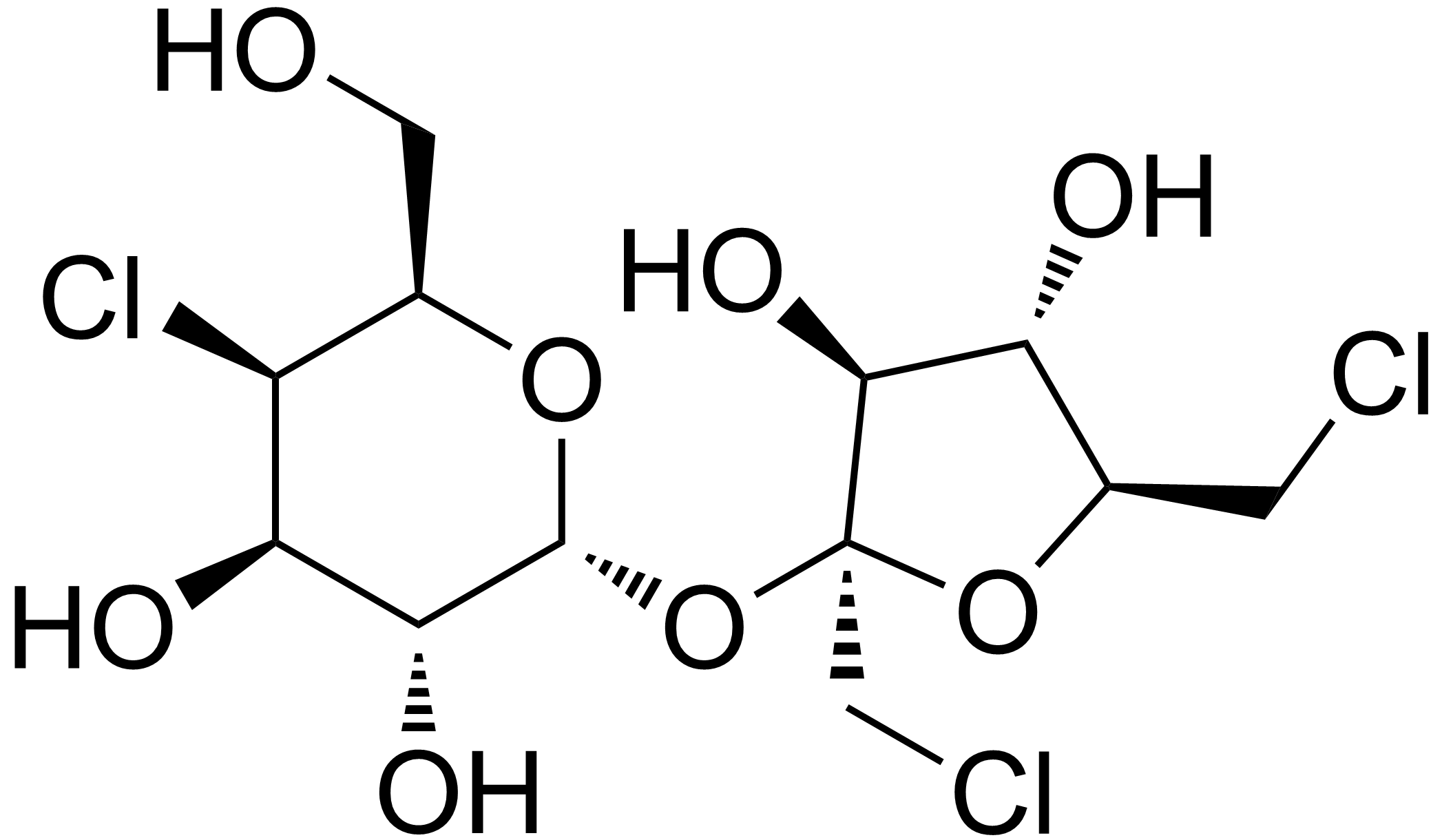
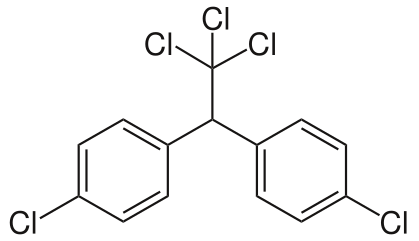
As another person with only high school chemistry, sucralose does look a bit like DDT. https://en.m.wikipedia.org/wiki/DDT https://en.m.wikipedia.org/wiki/Sucralose

I saw someone who looked like my brother. But it was not my brother.

Re: Microbiome-driven effects of non-nutritive sweeteners on human glucose tolerance

#12
post #2

A glance suggests that Saccharine and Sucralose may be problematic. The others may be “complicated” but the effect also looks close to noise. They should have included some non-sweetener molecules of a similar nature as controls. Sucralose was an instant no to me when I saw the molecule. “Here let’s hang a chlorine off this here sugar.” Nope. I recall seeing similar sentiments in a thread over at Reddit where a bioch…

Everyone always with this "noise"! Of course there is noise! They are looking at the "noise" and telling you what it is from! Genetics! If you average any trial out in a large population there will be "noise", but these people who live with the "noise" are the ones affected and suffering. Does everyone have microbiome-driven effects of non-nutritive sweeteners? Probably not, but what about the ones that do?

If you manage to model the "noise" and make it somewhat deterministic then it's not noise any more. If genetic variations really are the reason for these variations and some people are indeed measurably harmed by these compounds then it would be a very interesting and somewhat alarming result, but that's not what the study says or what we can conclude from it.

Re: Microbiome-driven effects of non-nutritive sweeteners on human glucose tolerance

#13
post #5

Earlier quoted context omitted.

As someone that is relying on a single high school chemistry class as a base of knowledge, why would Cl here give you pause? In other words why is the Cl here bad, but ok in say salt?

As another person with only high school chemistry, sucralose does look a bit like DDT. https://en.m.wikipedia.org/wiki/DDT https://en.m.wikipedia.org/wiki/Sucralose

Am I supposed to find that this https://upload.wikimedia.org/wikipedia/commons/e/e9/Sucralos... looks like this https://upload.wikimedia.org/wikipedia/commons/0/0b/P%2Cp%27... ?

Because I'm not seeing it.

Re: Microbiome-driven effects of non-nutritive sweeteners on human glucose tolerance

#14
post #2

A glance suggests that Saccharine and Sucralose may be problematic. The others may be “complicated” but the effect also looks close to noise. They should have included some non-sweetener molecules of a similar nature as controls. Sucralose was an instant no to me when I saw the molecule. “Here let’s hang a chlorine off this here sugar.” Nope. I recall seeing similar sentiments in a thread over at Reddit where a bioch…

Everyone always with this "noise"! Of course there is noise! They are looking at the "noise" and telling you what it is from! Genetics! If you average any trial out in a large population there will be "noise", but these people who live with the "noise" are the ones affected and suffering. Does everyone have microbiome-driven effects of non-nutritive sweeteners? Probably not, but what about the ones that do?

Yikes. When someone makes a comment about "noise" in this context, they simply mean "we can't tell whether the effect observed is due to the thing we're measuring". You'd need a much larger study with totally different design to even begin to approach the question of "do non-nutritive sweeteners make peoples' lives worse or shorten their lives compared to whatever else they might be ingesting". No need for the confrontational angle.

Re: Microbiome-driven effects of non-nutritive sweeteners on human glucose tolerance

#15
post #9

Earlier quoted context omitted.

As someone that is relying on a single high school chemistry class as a base of knowledge, why would Cl here give you pause? In other words why is the Cl here bad, but ok in say salt?

In salts and in sea water, the chlorine is in the form of free chloride ions, which is also the normal form of chlorine in your body. In sucralose, chlorine substitutes a hydroxy group and it is covalently bonded to a carbon atom. Most of the organic substances where hydroxy groups are substituted with chlorine atoms are more or less toxic and some are carcinogenic. For example, substituting the hydroxy groups in car…

> Most of the organic substances where hydroxy groups are substituted with chlorine atoms are more or less toxic and some are carcinogenic.

This kind of argument is so... "weird" to put it politely. H2O also becomes toxic if you add an oxygen atom. The safety of chemical compounds does not follow from a naive classification of bonds.

Re: Microbiome-driven effects of non-nutritive sweeteners on human glucose tolerance

#16
post #2

A glance suggests that Saccharine and Sucralose may be problematic. The others may be “complicated” but the effect also looks close to noise. They should have included some non-sweetener molecules of a similar nature as controls. Sucralose was an instant no to me when I saw the molecule. “Here let’s hang a chlorine off this here sugar.” Nope. I recall seeing similar sentiments in a thread over at Reddit where a bioch…

> Sucralose was an instant no to me when I saw the molecule. “Here let’s hang a chlorine off this here sugar.” Nope. I recall seeing similar sentiments in a thread over at Reddit where a biochemist remarked that it looked like a pesticide.

If you could infer the properties of a compound by making vague analogies to other similar looking molecules, chemistry would be easy. Changing a single atom can completely change the safety properties of a compound, ie. H2O->H2O2, Hg2Cl2->HgCl2.

> The weird complicated molecules in Stevia and Monk Fruit seem safe precisely because they look like something the body is going to hack apart right away and look like all the other complicated molecules found in plants that the body is used to dealing with.

Yeah, like the atropa belladonna, the deadly nightshade? I'm sure that's chock full of "baroque carbon sculptures". Maybe biochemistry just isn't so easy.

Re: Microbiome-driven effects of non-nutritive sweeteners on human glucose tolerance

#17
post #5

Earlier quoted context omitted.

As someone that is relying on a single high school chemistry class as a base of knowledge, why would Cl here give you pause? In other words why is the Cl here bad, but ok in say salt?

As another person with only high school chemistry, sucralose does look a bit like DDT. https://en.m.wikipedia.org/wiki/DDT https://en.m.wikipedia.org/wiki/Sucralose

The fundamental difference is between the sugar ring (flexible, which each carbon having tetrahedral geometry, and localized electron density) and the aromatic benzene ring (flat trigonal geometry, with electrons delocalized over the ring).

If you attach chlorine to the latter, you end up with something that's very hard to break down (very persistent) and which will often (depending on exact structure) stick tightly to many biological molecules. Thus they can cause developmental disruption, odd forms of cancer, liver damage, etc. For example, TCDD (dioxin, a side product of many herbicide synthesis routes, a notorious component of Agent Orange formulations in Vietnam, etc.):

https://en.wikipedia.org/wiki/2,3,7,8-Tetrachlorodibenzodiox...

The chlorinated sugar ring is probably easier to break down but if this produces an activated chlorine species during metabolism, say in your liver, it might bind to who-knows-what and cause problems. Or it might just get excreted as a chlorine ion, no different from NaCl (table salt). I'd avoid it myself.

Some organo-chlorines (and -bromines) also occur in small amounts in many edible seaweeds, apparently often with the halide attached to fatty acids and lipids. Hence consuming large amounts of seaweed might not be the best idea either.
Re: Microbiome-driven effects of non-nutritive sweeteners on human glucose tolerance

#18
post #12

Earlier quoted context omitted.

Everyone always with this "noise"! Of course there is noise! They are looking at the "noise" and telling you what it is from! Genetics! If you average any trial out in a large population there will be "noise", but these people who live with the "noise" are the ones affected and suffering. Does everyone have microbiome-driven effects of non-nutritive sweeteners? Probably not, but what about the ones that do?

If you manage to model the "noise" and make it somewhat deterministic then it's not noise any more. If genetic variations really are the reason for these variations and some people are indeed measurably harmed by these compounds then it would be a very interesting and somewhat alarming result, but that's not what the study says or what we can conclude from it.

> If you manage to model the "noise" and make it somewhat deterministic then it's not noise any more.

Yes. That is called doing science.

> If genetic variations really are the reason for these variations and some people are indeed measurably harmed by these compounds then it would be a very interesting and somewhat alarming result, but that's not what the study says or what we can conclude from it.

What would make me not think that? Maybe we should investigate it. That is also called science. Saying anything is noise only disregards the response of that part of the sample as useless. It is not useless.

It is why some of us are more sensitive to to certain diets: https://www.chop.edu/conditions-diseases/carbohydrate-malabs...

Re: Microbiome-driven effects of non-nutritive sweeteners on human glucose tolerance

#20
post #4

Just wondering why sugar alcohols like sorbitol and erythritol were excluded from this study.

By messing with part of the fructose transport mechanisms sugar alcohols are messing with the microbiome so likely would have stood out. There is a reason at least here there are labels warning of too much consumption.

Erythritol as a NNS is claimed/marketed not to effect the gut biome, indeed to pass through the body unmetabolized.
Post reply on HN