Live data from Hacker News

The Stroad

strongtowns.org

11–20 of 351 posts

Re: The Stroad

#11
post #6
post #3

I don't think this article is making the point veey clearly, but it is a very important point: roads are for long distance connections at speed, streets are for local traffic: reaching houses, shops, people. These stroads try to do both and fail at both because the goals are contradictory; you can't have high speed traffic with lots of side streets and crossing traffic, bikes and pedestrians. It will be too slow for…

Every time I end up on a five lane road with the center turning lane and tons of curb cuts and cross streets and abutting parking lots, I remind myself that it's one of the most dangerous places I am likely to be in.

Here in Austin Texas, we have lovely signs to remind you of your imminent crash!

http://austintexas.gov/sites/default/files/files/Sign%201.JP...
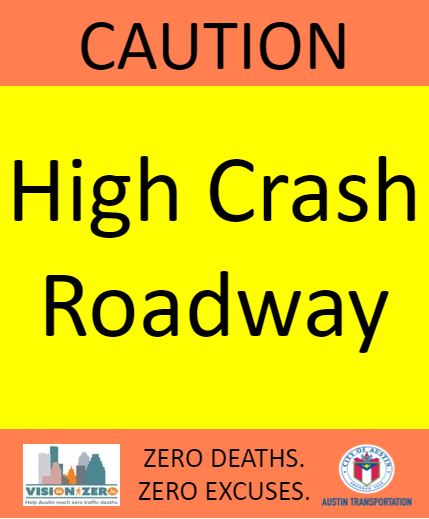
Re: The Stroad

#12

This feels like saying that we should only have supercomputers and low-power embedded devices, and nothing in between such as regular desktop computers.

Bad analogy is like a diagonal frog.

Re: The Stroad

#13
I'm not sold. I live on a so-called road, it's comprised of a single lane of paved dirt that stretches on for 3/4ths of a mile. On top of that, the very first line is just utterly comical:

> If we want to build towns that are financially productive, we need to identify and eliminate stroads.

You're missing the point on why they're made. They're built to facilitate expansion in confined areas. I'd argue that it's more dangerous and less financially productive to have a street there, and incredibly more dangerous to put a road there. So, what's the solution?

Re: The Stroad

#14
Anytime I leave the city and spend a few days getting around by car I’m amazed at just how completely exhausting it is to go shopping or run errands in suburbia. I am not sure why exactly, after all I’m just sitting there, but I think all the stop-and-go and waiting 10 minutes at lights trying to get across a stroad intersection to a shop I can see the whole time is a big contributor.

Re: The Stroad

#15
Another article that may be useful:

> Americans do not understand the difference between a road and a street.

[...]

> The value of a road is in the speed and efficiency that it provides for movement between places. Anything that is done that reduces the speed and efficiency of a road devalues that road. If we want to maximize the value of a road, we eliminate anything that reduces the speed and efficiency of travel.

> The value of a street comes from its ability to support land use patterns that create capturable value. The street with the highest value is the one that creates the greatest amount of tax revenue with the least amount of public expense over multiple life cycles. If we want to maximize the value of a street, we design it in such a way that it supports an adjacent development pattern that is financially resilient, architecturally timeless and socially enduring.

[...]

> In the United States, we’ve built a 45 mile per hour world for ourselves. It is truly the worst of all possible approaches. Our neighborhoods are filled with STROADS (a street/road hybrid) that spread investment out horizontally, making it extremely difficult to capture the amount of value necessary for the public to sustain the transportation systems that serve them.

* https://www.strongtowns.org/journal/2011/11/21/a-45-mph-worl...

Re: The Stroad

#16

I'm not sold. I live on a so-called road, it's comprised of a single lane of paved dirt that stretches on for 3/4ths of a mile. On top of that, the very first line is just utterly comical: > If we want to build towns that are financially productive, we need to identify and eliminate stroads. You're missing the point on why they're made. They're built to facilitate expansion in confined areas. I'd argue that it's more…

You don't live on a road, you either live on a street or stroad. A road by definition does not have building access. Maybe your backyard faces a road, but you couldn't drive onto it with a car from there.

Re: The Stroad

#17

I'm not sold. I live on a so-called road, it's comprised of a single lane of paved dirt that stretches on for 3/4ths of a mile. On top of that, the very first line is just utterly comical: > If we want to build towns that are financially productive, we need to identify and eliminate stroads. You're missing the point on why they're made. They're built to facilitate expansion in confined areas. I'd argue that it's more…

> so-called road, it's comprised of a single lane of paved dirt

Note the verbiage on road from the article:

> […] where people board in one place, depart in another and there is a high speed connection between the two.

See specifically "high speed connection". I have a hard time believing that a paved dirt 'road' would allow for a "high speed connection".

There is the colloquial use of the word, and the 'technical' distinction that the article is trying to make between different types of way that vehicles can travel on.

Re: The Stroad

#18

This feels like saying that we should only have supercomputers and low-power embedded devices, and nothing in between such as regular desktop computers.

I can't think of a really good computer analogy to explain stroads, but if I were to attempt it I would say that it's analogous to forcing everyone to use a CLI, for _everything_.

Roads can move a lot of people and material long-distances, quickly. CLIs are powerful, but I've never seen an e-commerce application with a command-line interface. It'd be the wrong tool for the job.

Similarly, you shouldn't build multi-lane roads with wide lanes (which is all a great fit for highways) in places where you expect a lot of people to be, especially if they're shopping.

Re: The Stroad

#19

This feels like saying that we should only have supercomputers and low-power embedded devices, and nothing in between such as regular desktop computers.

Your argument seems like "why have phones, when laptops exist?"

Re: The Stroad

#20
post #16

I'm not sold. I live on a so-called road, it's comprised of a single lane of paved dirt that stretches on for 3/4ths of a mile. On top of that, the very first line is just utterly comical: > If we want to build towns that are financially productive, we need to identify and eliminate stroads. You're missing the point on why they're made. They're built to facilitate expansion in confined areas. I'd argue that it's more…

You don't live on a road, you either live on a street or stroad. A road by definition does not have building access. Maybe your backyard faces a road, but you couldn't drive onto it with a car from there.

That isn't the popular definition of a road, at least not in the US.
Post reply on HN