Earlier quoted context omitted.
Couldn't agree more. Exactly what I think every time I see our cities here in France.
Fair enough if you don't like Brutalism, but please tell me that you have at least as much dislike for some of the abombinations that have replaced some brutalist buildings: https://en.wikipedia.org/wiki/File:Library_of_Birmingham_(32... https://stjamesquarter.com/
Le Corbusier as I Knew Him (1977)
11–20 of 36 posts
Re: Le Corbusier as I Knew Him (1977)
#12Earlier quoted context omitted.
Fair enough if you don't like Brutalism, but please tell me that you have at least as much dislike for some of the abombinations that have replaced some brutalist buildings: https://en.wikipedia.org/wiki/File:Library_of_Birmingham_(32... https://stjamesquarter.com/
My problem with Le Corbusier is not the architectural style of Brutalism - some of my favourite buildings are in that style. It was the iconoclasm and outright hostility to existing architecture he promoted. It reminds me of Mao's cultural revolution - he and his followers seemed to delight more in the frenzied destruction of existing architecture than in the act of creation and invention.
Edit:typos due to posting while phone is in a waterproof bag
Re: Le Corbusier as I Knew Him (1977)
#13Le Corbusier had one of the most impactful influence on the so-called modern architecture of the post-war period. He initiated a school of borderline religious and dogmatic followers who are still active this day. The existence of Le Corbusier and his school is, in my opinion, the worst thing that happened to architecture, ever. We're still paying his mistakes.
Re: Le Corbusier as I Knew Him (1977)
#14Le Corbusier dreamed of "cleaning and purging cities of disorder" with "calm and powerful architecture." (his words) His plan for Paris was never realized, though his ideals are apparent internationally, unfortunately. He was addicted to a certain kind of untested, abstract knowledge.
I tried to articulate some of my distaste for the forces that propelled him and others, here: https://simonsarris.substack.com/p/in-praise-of-the-gods
Re: Le Corbusier as I Knew Him (1977)
#15> His view of life was moral. He was loyal to mathematics, to order, to living the life he thought worth living. Le Corbusier dreamed of "cleaning and purging cities of disorder" with "calm and powerful architecture." (his words) His plan for Paris was never realized, though his ideals are apparent internationally, unfortunately. He was addicted to a certain kind of untested, abstract knowledge. I tried to articulate…
> Le Corbusier dreamed of "cleaning and purging cities of disorder" with "calm and powerful architecture." (his words) His plan for Paris was never realized
I can't help but point out that today's Paris is very much the product of a 19th C. rationalisation with broadly similar motivations and goals (including a desire for abundant parkland)
Re: Le Corbusier as I Knew Him (1977)
#16Earlier quoted context omitted.
My problem with Le Corbusier is not the architectural style of Brutalism - some of my favourite buildings are in that style. It was the iconoclasm and outright hostility to existing architecture he promoted. It reminds me of Mao's cultural revolution - he and his followers seemed to delight more in the frenzied destruction of existing architecture than in the act of creation and invention.
This was a facet of many post war movements. Architects imagined they could design buildings that solved social problems as if people are that easily manipulated. Semi officially the end of their line of reasoning came with the demolition of the Pruitt Igoe complexes in st Louis in the 70s although it was clear these architectural social Interventions were utter failures well before then. Edit:typos due to posting wh…
This was a typical early 20th century worker housing project. It was pretty successful for the time - so much so it's now expensive and gentrified.
https://www.google.co.uk/maps/@51.5114036,-0.2416956,3a,75y,...
Most people want to live in low-density human-scale housing with plenty of greenery. There's nothing complicated or difficult about this. The problem is that architects want to Make A Statement, and you don't do that by giving ordinary people what they want.
Re: Le Corbusier as I Knew Him (1977)
#17Earlier quoted context omitted.
This was a facet of many post war movements. Architects imagined they could design buildings that solved social problems as if people are that easily manipulated. Semi officially the end of their line of reasoning came with the demolition of the Pruitt Igoe complexes in st Louis in the 70s although it was clear these architectural social Interventions were utter failures well before then. Edit:typos due to posting wh…
Architects can design buildings that solve social problems. But they can't use Le Corbusier's authoritarian methods - or any derivative of that mindset - to do it. This was a typical early 20th century worker housing project. It was pretty successful for the time - so much so it's now expensive and gentrified. https://www.google.co.uk/maps/@51.5114036,-0.2416956,3a,75y,... Most people want to live in low-density huma…
The problems that architects solve are much simpler.
Disclaimer - I studied architecture in university and then engineering, and I have a fine appreciation of art and good design but a poor opinion of most architectural theories, including the ones where they give themselves super powers while designing balconies or laying out kitchens.
Re: Le Corbusier as I Knew Him (1977)
#18Earlier quoted context omitted.
This was a facet of many post war movements. Architects imagined they could design buildings that solved social problems as if people are that easily manipulated. Semi officially the end of their line of reasoning came with the demolition of the Pruitt Igoe complexes in st Louis in the 70s although it was clear these architectural social Interventions were utter failures well before then. Edit:typos due to posting wh…
Architects can design buildings that solve social problems. But they can't use Le Corbusier's authoritarian methods - or any derivative of that mindset - to do it. This was a typical early 20th century worker housing project. It was pretty successful for the time - so much so it's now expensive and gentrified. https://www.google.co.uk/maps/@51.5114036,-0.2416956,3a,75y,... Most people want to live in low-density huma…
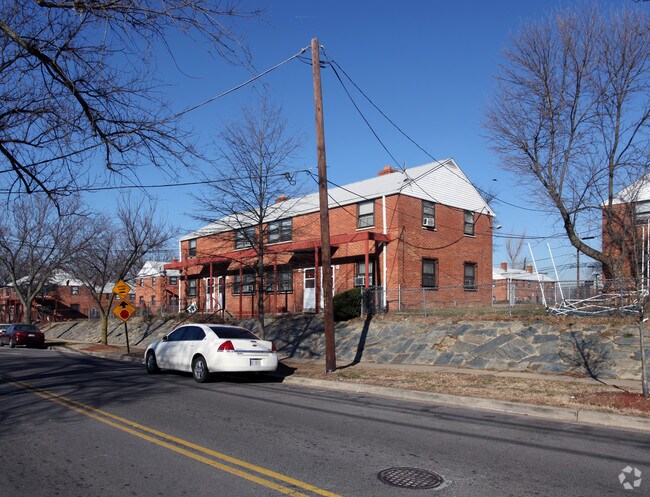
Edit: Here's an example, Highland Dwellings in DC.
https://images1.apartments.com/i2/ydNxyNvVCntpdglekPc48HV9vv...
https://livingnewdeal.org/wp-content/uploads/2020/08/Highlan...
Re: Le Corbusier as I Knew Him (1977)
#19Earlier quoted context omitted.
Fair enough if you don't like Brutalism, but please tell me that you have at least as much dislike for some of the abombinations that have replaced some brutalist buildings: https://en.wikipedia.org/wiki/File:Library_of_Birmingham_(32... https://stjamesquarter.com/
My problem with Le Corbusier is not the architectural style of Brutalism - some of my favourite buildings are in that style. It was the iconoclasm and outright hostility to existing architecture he promoted. It reminds me of Mao's cultural revolution - he and his followers seemed to delight more in the frenzied destruction of existing architecture than in the act of creation and invention.
But Le Corbusier tried to cancel every architectural movements before him.
Ecole de Royan is a nice example of an architecture that is also inspired by Brutalism and the Bauhaus movement, but done in a much more humane and artsy way.
Re: Le Corbusier as I Knew Him (1977)
#20With the recent googlemaps timeline feature (also featured in various geographical websites) it's interesting to revisit land use in the last century. After scanning my native area in the 50s I was staggered by the amount of fields in my now urban area. And basically every housing project (say 5+ building sets) was either an old forest block or a field. Also even though we're all hearing about how humanity is too big…