Live data from Hacker News

The Diolkos: an ancient Greek paved trackway enabling boats to be moved overland

en.wikipedia.org

11–20 of 29 posts

Re: The Diolkos: an ancient Greek paved trackway enabling boats to be moved overland

#11

I'm reminded of the movie https://en.wikipedia.org/wiki/Fitzcarraldo - based on a real story, the making of the movie was even more ambitious than the original event. "The film production was an incredible ordeal, and famously involved moving a 320-ton steamship over a hill. This was filmed without the use of special effects"

A really great movie. That was the movie that got me interested in https://en.wikipedia.org/wiki/Werner_Herzog.

He is one of my favorite directors now. I like his documentaries, and feature films. He has a distinctive style, and a great passion, which often comes through the documentaries where he interacts with the characters.

Re: The Diolkos: an ancient Greek paved trackway enabling boats to be moved overland

#12

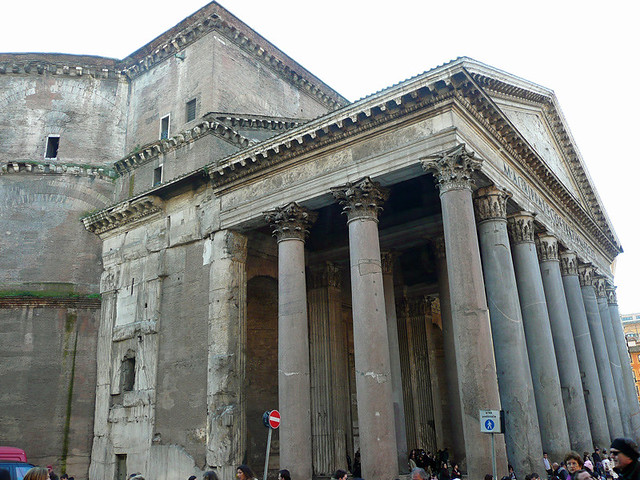
Engineering in the ancient world has quite a few examples of "megaprojects" like this one. Besides the well-known Egyptian Pyramids and Roman aqueducts, one interesting one I've recently learned about was about the columns in the Roman Pantheon were built: They were carved from single blocks of granite and then imported all the way from Egypt[0]: " The grey granite columns that were actually used in the Pantheon's pr…

Saw the Pantheon in May and it is very impressive the columns are massive. The inside is equally impressive. It's one of the only, if not the only Roman temple where the interior survived.

So much of the Ancient world impresses me the more I learn. Seeing it amazes me more.

It's sad a lot of Ancient buildings or knowledge was destroyed as the next ruling party or ideology came to power.

Re: The Diolkos: an ancient Greek paved trackway enabling boats to be moved overland

#13

Engineering in the ancient world has quite a few examples of "megaprojects" like this one. Besides the well-known Egyptian Pyramids and Roman aqueducts, one interesting one I've recently learned about was about the columns in the Roman Pantheon were built: They were carved from single blocks of granite and then imported all the way from Egypt[0]: " The grey granite columns that were actually used in the Pantheon's pr…

Ostia itself was an amazing ancient megaproject. How to bring the bounty of the empire to the opulent capital city?

http://www.ostia-antica.org/

Re: The Diolkos: an ancient Greek paved trackway enabling boats to be moved overland

#14

Engineering in the ancient world has quite a few examples of "megaprojects" like this one. Besides the well-known Egyptian Pyramids and Roman aqueducts, one interesting one I've recently learned about was about the columns in the Roman Pantheon were built: They were carved from single blocks of granite and then imported all the way from Egypt[0]: " The grey granite columns that were actually used in the Pantheon's pr…

Some Chinese projects: https://en.wikipedia.org/wiki/Dujiangyan_irrigation_system + https://en.wikipedia.org/wiki/Grand_Canal_(China)

In some of the ancient Chinese theories, Rome was sometimes seen as an opposite of China, a Yin to the Middle Kingdom's Yang.

Re: The Diolkos: an ancient Greek paved trackway enabling boats to be moved overland

#15
post #12

Engineering in the ancient world has quite a few examples of "megaprojects" like this one. Besides the well-known Egyptian Pyramids and Roman aqueducts, one interesting one I've recently learned about was about the columns in the Roman Pantheon were built: They were carved from single blocks of granite and then imported all the way from Egypt[0]: " The grey granite columns that were actually used in the Pantheon's pr…

Saw the Pantheon in May and it is very impressive the columns are massive. The inside is equally impressive. It's one of the only, if not the only Roman temple where the interior survived. So much of the Ancient world impresses me the more I learn. Seeing it amazes me more. It's sad a lot of Ancient buildings or knowledge was destroyed as the next ruling party or ideology came to power.

The interior didn't survive unscathed. The design of the upper walls was "fixed" during the renaissance, with one small section now restored to something more like its original design (based on paintings of the original, see top right of photo): https://userscontent2.emaze.com/images/9fd064fa-8fb9-409b-ac...

Additionally, Pope Urban VIII had the bronze ceiling of the portico melted down to make cannons in the 1600's.

On the left side of the portico, you'll also notice that some of the columns don't match. If I'm remembering right, these were taken from a nearby Roman bath complex to repair earthquake damage to the portico. https://upload.wikimedia.org/wikipedia/commons/3/35/Pantheon...

All that said, it's still in remarkably good condition for being close to 2000 years old.

Re: The Diolkos: an ancient Greek paved trackway enabling boats to be moved overland

#16
post #3
post #2

Reminds me of a maneuver performed by Mehmed the Conqueror during the Siege of Constantinople: "On 22 April, Mehmed transported his lighter warships overland, around the Genoese colony of Galata, and into the Golden Horn's northern shore; eighty galleys were transported from the Bosphorus after paving a route, little over one mile, with wood. Thus the Byzantines stretched their troops over a longer portion of the wal…

As this fascinating WW2 training film for US Combat Engineers demonstrates, improvised roads are still important for modern military operations: https://www.youtube.com/watch?v=u-FDY8uMlsI

I've travelled on a corduroy road in Alaska. Where the gravel was thin, the road was very rough. Slow going if you want to keep your truck together.

Re: The Diolkos: an ancient Greek paved trackway enabling boats to be moved overland

#17
post #11

I'm reminded of the movie https://en.wikipedia.org/wiki/Fitzcarraldo - based on a real story, the making of the movie was even more ambitious than the original event. "The film production was an incredible ordeal, and famously involved moving a 320-ton steamship over a hill. This was filmed without the use of special effects"

A really great movie. That was the movie that got me interested in https://en.wikipedia.org/wiki/Werner_Herzog . He is one of my favorite directors now. I like his documentaries, and feature films. He has a distinctive style, and a great passion, which often comes through the documentaries where he interacts with the characters.
He's coming out with a new movie about isolation in the digital age. I am very excited to see it.

Re: The Diolkos: an ancient Greek paved trackway enabling boats to be moved overland

#18

Engineering in the ancient world has quite a few examples of "megaprojects" like this one. Besides the well-known Egyptian Pyramids and Roman aqueducts, one interesting one I've recently learned about was about the columns in the Roman Pantheon were built: They were carved from single blocks of granite and then imported all the way from Egypt[0]: " The grey granite columns that were actually used in the Pantheon's pr…

...and someone probably got the order wrong as the columns are too short.

In the following picture we can see how tall the portico roof was expected to be and where it ended up:

https://c2.staticflickr.com/4/3496/3213951635_d21d3e5556_z.j...

Re: The Diolkos: an ancient Greek paved trackway enabling boats to be moved overland

#20

"remaining in regular and frequent service for at least 650 years" Amazing how long-lived many antique structures were. Apart from churches, I can't think of many 650 year old structures that are still used today.

Look in places where the city centre is more than 650 years old, hasn't been carpet bombed in WW2 and wasn't popular enough to be replaced by modern concrete or glass&steel highrises.

You will find hundreds if not thousands of towns in Europe with whole streets full of 13th/14th century timber frame/fachwerk houses in the city centre.

There are also dozens if not hundreds of 12th/13th/14th century stone bridges still in use - usually such bridges didn't fall down, but were taken down and replaced with bigger and better ones as cities expanded.

Though ultimately the only reason to keep around old bridges or houses - just like churches - is nostalgia. The modern version could replace the old constructions at very low costs and with much lower maintenance and better comfort characteristics. Like antique cars, it is the quaintness and historic significance that keeps them up rather than their actual infrastructural superiority.

Post reply on HN