Is there really no readily available technology to find locations of radio stations?
actually we do know of its former location, but they do tend to move them. checkout this page for a picture of where the pip was formerly broadcast:
11–20 of 26 posts
Is there really no readily available technology to find locations of radio stations?
Is there really no readily available technology to find locations of radio stations?
These shortwave transmissions do not have that convenient property. HF transmissions at high powers will duct through at the atmosphere, bounce off of the geography, and in general propagate in all sorts of strange ways that result in them arriving simultaneously via multiple paths to any given position. This means that standard direction finding methods will not be very effective. Because of the long wavelengths of these signals, very large antennas are also required to even attempt direction finding, usually circular structures hundreds to thousands of feet across, a common type being a Wullenweber antenna [2].
Very few organizations possess substantial HF direction-finding capability. The FCC has monitoring stations that can do this in many cases, and they use it for enforcement purposes, I believe primarily when public safety users report jamming problems. As a fun fact, one of these monitoring stations is located in Livermore, although I believe that station is remote-control and has no staff. The FCC is not very public about how these monitoring stations operate, I believe their positioning is based on differential analysis of the reports from all of their 14 stations across the country though. Most of what I know about them is from a rather outdated source [3] although their locations are listed in 47 CFR s. 0.121 since they are afforded special protections against interference.
On the international scale, if you looked at the Wikipedia article on Wullenwebers you may have noted that that was originally a code name. Various militaries and intelligence agencies operate large direction finding stations, but because of the challenges of locating HF signals even these large facilities have limited efficacy. Nonetheless, I assume that the NSA has confirmed transmitter locations for these signals (probably by a combination of direction-finding and good old fashioned on the ground tradecraft) and has simply chosen not to share.
[1] http://kn2c.us/ [2] https://en.wikipedia.org/wiki/Wullenweber [3] http://blackradios.terryo.org/documents/publications/e-FCC.p...
Is there really no readily available technology to find locations of radio stations?
actually we do know of its former location, but they do tend to move them. checkout this page for a picture of where the pip was formerly broadcast: http://priyom.org/military-stations/russia/the-pip
Never mind The Pip, The Woodpecker is far more interesting: https://vimeo.com/ondemand/therussianwoodpecker https://en.wikipedia.org/wiki/The_Russian_Woodpecker
There are lots of things more interesting than The Pip, but they're unrelated. Is there some connection between the Pip and the Russian Woodpecker that I'm missing?
Never mind The Pip, The Woodpecker is far more interesting: https://vimeo.com/ondemand/therussianwoodpecker https://en.wikipedia.org/wiki/The_Russian_Woodpecker
There are lots of things more interesting than The Pip, but they're unrelated. Is there some connection between the Pip and the Russian Woodpecker that I'm missing?
---
Location: Rostov-na-Donu, Russia, 47°17'58"N 39°40'25"E (72th communication hub, callsign Akaciya), South Military District main command network
Antenna (StreetView): https://www.google.com/maps/@47.2985646,39.6750428,3a,75y,32...
Occasionally voice messages are sent in various formats, main purpose is to send command messages for South Military District of Russia.
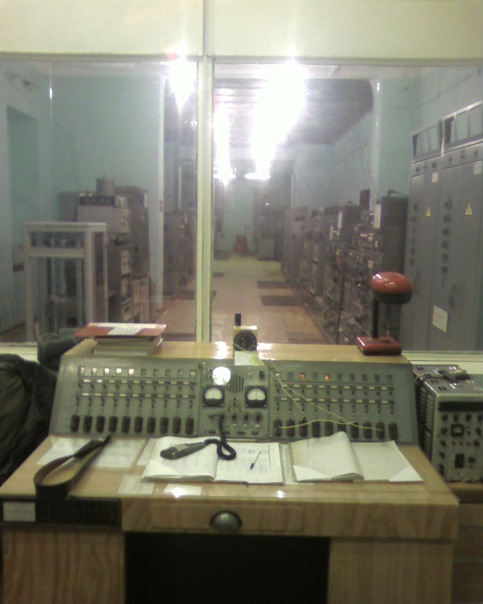
Here is what an operator station looks like:
http://priyom.org/media/124724/akaciya.jpg
And it uses the traditional Russian military Monolith format:
http://priyom.org/military-stations/russia/monolyth-messages...
More info about it (from priyom.org): --- Location: Rostov-na-Donu, Russia, 47°17'58"N 39°40'25"E (72th communication hub, callsign Akaciya), South Military District main command network Antenna (StreetView): https://www.google.com/maps/@47.2985646,39.6750428,3a,75y,32... Occasionally voice messages are sent in various formats, main purpose is to send command messages for South Military District of Russia. Here is wh…
If anyone of you have kids (6+) don't miss that one (and others from that author too)!