Solving physics-based initial value problems with unsupervised machine learning
1–10 of 11 posts
Re: Solving physics-based initial value problems with unsupervised machine learning
#2This paper is solving (basically) high-school-level problems by training neural networks on the "obvious" cost function. All of those problems can be solved much cheaper by standard numerical solvers for ordinary differential equations. They don't even compare to standard methods.
So what's the point? Riding the neural network hype?
Re: Solving physics-based initial value problems with unsupervised machine learning
#3This paper is solving (basically) high-school-level problems by training neural networks on the "obvious" cost function. All of those problems can be solved much cheaper by standard numerical solvers for ordinary differential equations. They don't even compare to standard methods. So what's the point? Riding the neural network hype?
It's a paper done by a phd, so it's part of a larger study that is probably more interesting than this paper.https://etheses.dur.ac.uk/15828/ (I'm not the author).
But the results and use cases seems to be legit to me. Agin, I'm not an expert on computer science and quantum physics.
Re: Solving physics-based initial value problems with unsupervised machine learning
#4This paper is solving (basically) high-school-level problems by training neural networks on the "obvious" cost function. All of those problems can be solved much cheaper by standard numerical solvers for ordinary differential equations. They don't even compare to standard methods. So what's the point? Riding the neural network hype?
I would imagine this research is the starting point to prove viability. It isn't about solving issues that haven't been solved, it is often a good point to find new techniques to improve upon current ones eventually that can then be applied to other issues.
(Plus yes, I expect funding was easy to get because of AI)
Re: Solving physics-based initial value problems with unsupervised machine learning
#5This paper is solving (basically) high-school-level problems by training neural networks on the "obvious" cost function. All of those problems can be solved much cheaper by standard numerical solvers for ordinary differential equations. They don't even compare to standard methods. So what's the point? Riding the neural network hype?
It would be nice to know if it can solve some hard equations like https://en.wikipedia.org/wiki/Stiff_equation
Re: Solving physics-based initial value problems with unsupervised machine learning
#6Today this front page post has a companion front page post probably worth reading in tandem:
Re: Solving physics-based initial value problems with unsupervised machine learning
#7[dead]
Re: Solving physics-based initial value problems with unsupervised machine learning
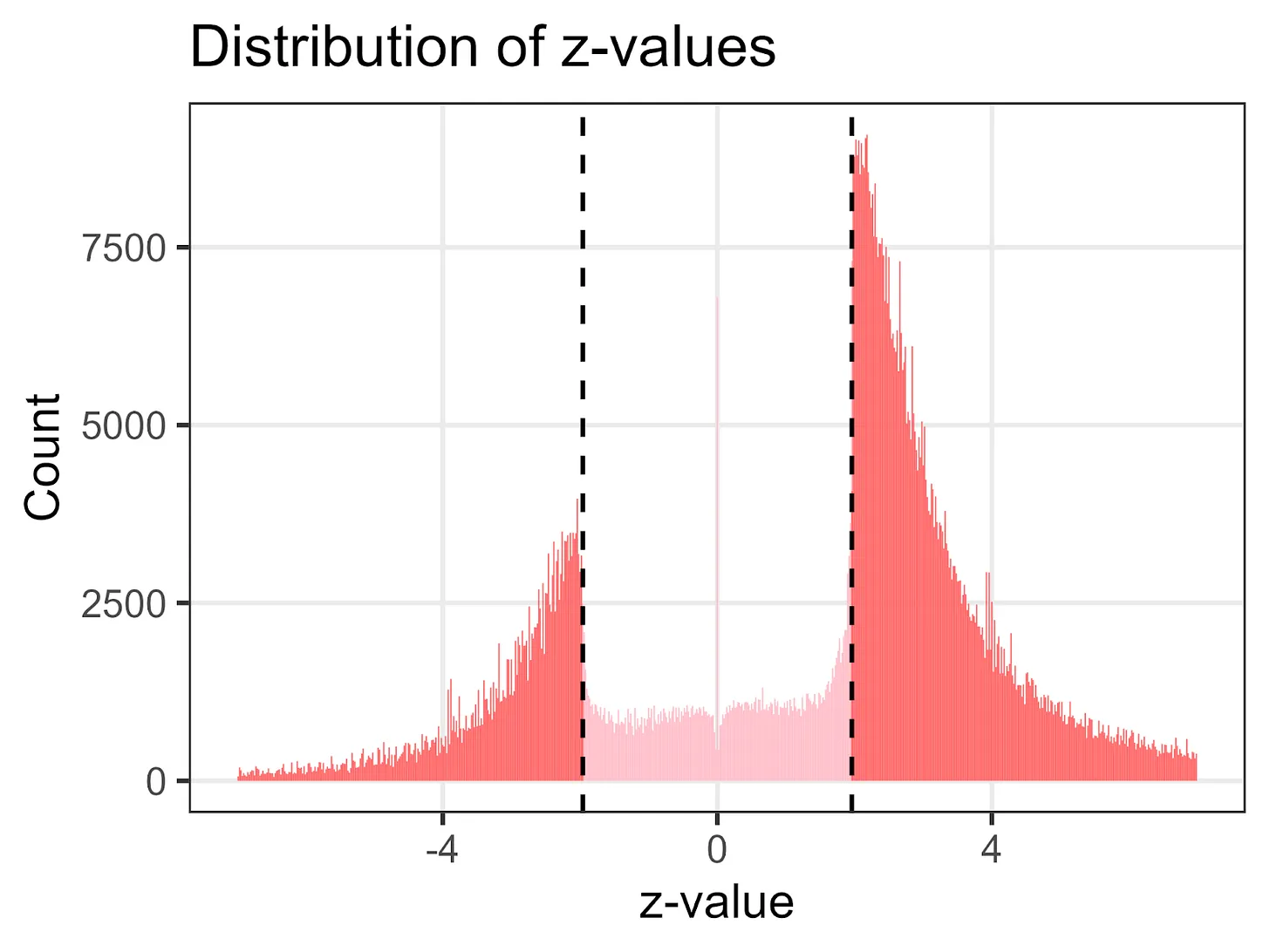
#8One of the points seems really important: Because AI researchers almost never publish negative results, AI-for-science is experiencing survivorship bias.
AI will accelerate greatly the survivorship bias crisis we have already seen. Because there are so many more reasons to reject an AI-driven result.
The distribution chart, which I assume was pre-AI, is really scary. It implies that 85-90% of results are never published. https://substackcdn.com/image/fetch/w_1456,c_limit,f_webp,q_...
Re: Solving physics-based initial value problems with unsupervised machine learning
#9[dead]
Re: Solving physics-based initial value problems with unsupervised machine learning
#10This paper is solving (basically) high-school-level problems by training neural networks on the "obvious" cost function. All of those problems can be solved much cheaper by standard numerical solvers for ordinary differential equations. They don't even compare to standard methods. So what's the point? Riding the neural network hype?
This is basically all work in the physics-informed ML literature. (As another commenter points out and links to, more and more people have been increasingly frustrated with the hype of this subcommunity).
What is more amazing is that they have conned their way into the funding agency priorities and have broadly affected hiring at universities.