MIT CSAIL network design principles
tig.csail.mit.edu
MIT CSAIL network design principles
1–10 of 30 posts
Re: MIT CSAIL network design principles
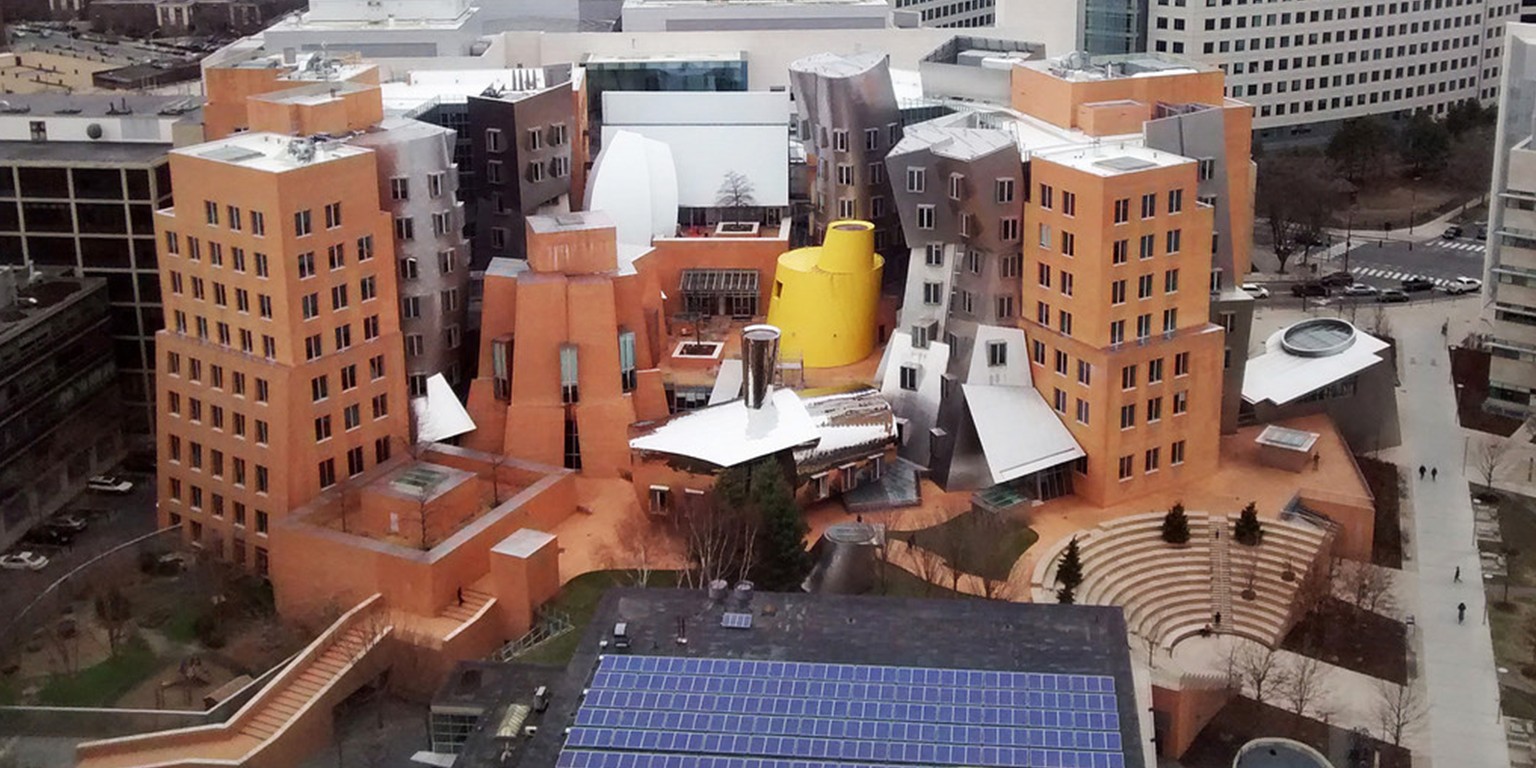
#2This is the building under discussion:
Re: MIT CSAIL network design principles
#3This article doesn't provide much context on the challenges of the building's architecture.
If the exterior[1][2] did not give any indication, the inside is quite difficult to navigate. Unless you're a grad student who lives and breathes this building (where most of the EECS department is located), you'd better allocate 10 minutes to finding the professor's office you intend to visit. I can't find great pics of the interior (only some floor plans[3][4]), but there's a variety of confusing stair cases, open atrium's spanning multiple floors, irregular floor plans and office layouts, and an abundance of cluttered spaces. No good flat surface goes unused.
I'd never considered that it would be impossible to provide comprehensive 2.4GHz coverage because of graph coloring problems. The point about certain 5GHz channels being effectively unreliable due to radar was also an interesting insight I'd never heard before.
[1]: https://files.catbox.moe/6z4ad2.jpeg
[2]: https://upload.wikimedia.org/wikipedia/commons/1/17/Stata_Ce...

[3]: https://csdl-images.computer.org/trans/tm/2018/05/figures/li...

[4]: https://i.pinimg.com/originals/80/f9/af/80f9af1c6cdc0c170cf6...

Re: MIT CSAIL network design principles
#4This article doesn't provide much context on the challenges of the building's architecture. If the exterior[1][2] did not give any indication, the inside is quite difficult to navigate. Unless you're a grad student who lives and breathes this building (where most of the EECS department is located), you'd better allocate 10 minutes to finding the professor's office you intend to visit. I can't find great pics of the i…
Most consumer mesh systems do not support those 5ghz channels that mandate DFS. I can’t think of one that does support them, although numerous non-mesh systems do support them.
If your router(s) do support those channels, they can be quite nice to have in a residential setting, as people I’ve observed tend to not have equipment operating in those channels. High traffic airports can be a problem, as you and the article mention, since DFS may get triggered with great frequency.
Nearby military bases in general (not just airfields) may also result in burdensome DFS triggering, although YMMV.
Re: MIT CSAIL network design principles
#5A key tool mentioned in the article is Ekahau Pro.
What are good alternatives for Ekahau? As I understand this require special hardware.
Most Macs support WiFi Monitor mode that should be possible to give the same functionality without extra hardware. And is only 5Ghz working on M1?
So I would expect that there is some Mac software with capability of doing the same.
Re: MIT CSAIL network design principles
#6A key tool mentioned in the article is Ekahau Pro. What are good alternatives for Ekahau? As I understand this require special hardware. Most Macs support WiFi Monitor mode that should be possible to give the same functionality without extra hardware. And is only 5Ghz working on M1? So I would expect that there is some Mac software with capability of doing the same.
Be interested to know the answer to this question. Also would having something like a cheap SDR make a difference to what is possible?
Re: MIT CSAIL network design principles
#7A key tool mentioned in the article is Ekahau Pro. What are good alternatives for Ekahau? As I understand this require special hardware. Most Macs support WiFi Monitor mode that should be possible to give the same functionality without extra hardware. And is only 5Ghz working on M1? So I would expect that there is some Mac software with capability of doing the same.
Be interested to know the answer to this question. Also would having something like a cheap SDR make a difference to what is possible?
Most (all?) cheap SDR don’t get close to the WiFi range. RTL2832U have one of the best price/range ratios and can detect 24-1766MHz and cost under $20.
LimeSDR is probably one of the better choices and cost $199 without casing as $299 with. I have been waiting for my LimeSDR close to one year now because of the shortage of chips.
You don’t get the raw data (SDR) on Mac like microwave and bluetooth, but you get all WiFi related data. Also broken packages and from other senders.
Re: MIT CSAIL network design principles
#8Earlier quoted context omitted.
Be interested to know the answer to this question. Also would having something like a cheap SDR make a difference to what is possible?
Most (all?) cheap SDR don’t get close to the WiFi range. RTL2832U have one of the best price/range ratios and can detect 24-1766MHz and cost under $20. LimeSDR is probably one of the better choices and cost $199 without casing as $299 with. I have been waiting for my LimeSDR close to one year now because of the shortage of chips. You don’t get the raw data (SDR) on Mac like microwave and bluetooth, but you get all Wi…
There was a thread recently, where some people mentioned confers about the limesdr[0].
Re: MIT CSAIL network design principles
#9Channel 144?! So, essentially most monitoring and survey equipment skip that, got it.
Re: MIT CSAIL network design principles
#10So in summary here's what we know:
1. The building's weirdly-shaped vertical spaces cause signal interference that cannot be mitigated by the 802.11 automatic mechanisms.
2. The building was not originally wired (or at least not wired properly) for ethernet.
3. The building is a Faraday cage, but not a useful one because it interferes with wifi penetration while exterior radar signals can still get in and block some wifi channels.
4. The building is hard to navigate for occasional visitors (personal experience and other comment herein).
5. The building leaks when it rains (private communications from residents).
Moral: Don't let Frank Gehry design your Computer Science and Engineering building. In fact, don't let Frank Gehry design any building if humans are expected to inhabit it.