This is such a natural use case for IPFS that commercial adoption seems inevitable; as first mover you can offer the concierge edition and optionally gain a ton of credibility by open sourcing some of the core bits! It sounds like your marketing will need to explain: 1. How updates work and how you guarantee staying universes away from NSFW/illegal content -- answered separately because nobody wants to find out what…
Is IPFS infamous for illegal content? My perception was that it's still much too easy to trace the origin of content on IPFS and therefore not suitable for illegal things.
Show HN: A Decentralized StatusPage on IPFS
81–90 of 130 posts
Re: Show HN: A Decentralized StatusPage on IPFS
#82Earlier quoted context omitted.
One word: IPNS. It's a DNS-like system, though much slower than DNS due to propagation delays. It points to the latest version (hash) of a document, much like a git branch.
The slowness of IPNS is something we're actively working on. Currently we have fixed so resolutions are faster after the first lookup, by using the libp2p feature pubsub. It being faster/slower than DNS depends on your case, but if you're close to the next node, it'll probably be faster. If you're offline, DNS won't work at all :) We also have more fixes for IPNS in general that will come soon. So, depends on your us…
(I ask this as someone very unfamiliar with IPFS, so please forgive if this is a stupid question.)
Re: Show HN: A Decentralized StatusPage on IPFS
#83Naive question: if data on IPFS is permanent, meaning it's hard or impossible to remove things from it, what mechanisms, if any, exists to prevent unlawful content from being uploaded to it?
You don't really upload things to IPFS, since it works like Bittorrent: you make files available by adding them, but that doesn't copy those files anywhere. They're only transferred via the network to clients that specifically request them, which makes this a non-issue. Now FileCoin, that's a different issue...
Re: Show HN: A Decentralized StatusPage on IPFS
#84Earlier quoted context omitted.
You don't really upload things to IPFS, since it works like Bittorrent: you make files available by adding them, but that doesn't copy those files anywhere. They're only transferred via the network to clients that specifically request them, which makes this a non-issue. Now FileCoin, that's a different issue...
Could you elaborate on why Filecoin is a different issue? Is it because I have to specifically download (or allow others to upload to me) the files so I can host them?
With plain IPFS that cannot happen, because you're only downloading what you're interested in. That's what I meant when I wrote that IPFS is like Bittorrent.
Re: Show HN: A Decentralized StatusPage on IPFS
#85Earlier quoted context omitted.
IPNS records have an optional and user-configurable expiry time, but more importantly, they contain a sequence counter. So unless an attacker can completely disconnect you from everybody else who's interested in a particular IPNS address (and in that case you're lost anyway), they can't hoodwink you into going back to an old version.
I see. So if they can disconnect you from everybody else (for example, if they control the internet connection you're connected to), you have no way of telling whether they're replaying IPNS records to you. The traditional internet solves the problem of not being able to trust your internet connection (say, in a coffee shop) with public key infrastructure so that the most a rogue internet provider can do is DoS you (…
The corresponding attack against IPNS would be if the attacker could make your perspective of the world go backwards, and that is prevented by the sequence number.
Re: Show HN: A Decentralized StatusPage on IPFS
#86One thing I'm missing (or misunderstanding) about IPFS is updates. In a centralized system, like HTTP, a site has a single address: something.example.com. Any new entry (e.g. blog post) I create gets its own entry address, but is also referenced from the main site address. As far as I understand, IPFS contains static copies of documents, so any document that would be the "front" page would have to be copied before up…
One word: IPNS. It's a DNS-like system, though much slower than DNS due to propagation delays. It points to the latest version (hash) of a document, much like a git branch.
Re: Show HN: A Decentralized StatusPage on IPFS
#87Earlier quoted context omitted.
Could you elaborate on why Filecoin is a different issue? Is it because I have to specifically download (or allow others to upload to me) the files so I can host them?
With FileCoin (the IPFS-related ICO with no implementation), the idea is that you're offering your storage space to others in exchange for a fee. So somebody could use your system to store, say, child porn. With plain IPFS that cannot happen, because you're only downloading what you're interested in. That's what I meant when I wrote that IPFS is like Bittorrent.
Re: Show HN: A Decentralized StatusPage on IPFS
#88Earlier quoted context omitted.
I see. So if they can disconnect you from everybody else (for example, if they control the internet connection you're connected to), you have no way of telling whether they're replaying IPNS records to you. The traditional internet solves the problem of not being able to trust your internet connection (say, in a coffee shop) with public key infrastructure so that the most a rogue internet provider can do is DoS you (…
I think it's a bit unfair to pretend that TLS replay would be the same as having a not entirely updated IPNS record. The threat models are very different. The corresponding attack against IPNS would be if the attacker could make your perspective of the world go backwards, and that is prevented by the sequence number.
Re: Show HN: A Decentralized StatusPage on IPFS
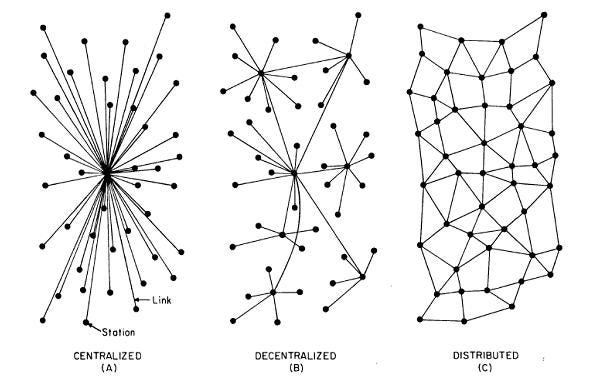
#89I love that the background image is a schematic of a centralized network. Look at that single point of failure! ^^ https://www.dstatuspage.net/decentralized.png
https://cdn-images-1.medium.com/max/600/1*nnpzTe1hx74WKICL3G...
Re: Show HN: A Decentralized StatusPage on IPFS
#90Earlier quoted context omitted.
Is IPFS infamous for illegal content? My perception was that it's still much too easy to trace the origin of content on IPFS and therefore not suitable for illegal things.
It's as much infamous for illegal content as hard disks are. That is, you can choose to host some, but you can also choose not to.
For anonymous content, you'd probably have to handle the encryption/decryption yourself and use IPFS as the distribution.