> #1 Photo to Art App
According to whom? There’s just that sentence, surrounded by laurel leaves, above five stars. Zero indication of where that award/rating came from. Did you make it up?
31–40 of 83 posts
According to whom? There’s just that sentence, surrounded by laurel leaves, above five stars. Zero indication of where that award/rating came from. Did you make it up?
Earlier quoted context omitted.
Have to send user notification in email, because the processing queue could be long.
A progress bar on the website would do. And if the user closes a browser tab, you can cancel their job.
My immediate issue, as the father of a mixed son who has just witnessed him spend hours trying to represent his own appearance accurately for an art task at school: This turns black and mixed people into white-presenting caricatures of themselves. E.g. compare [1] and [2] where the hairstyles of the black people are turned into distinctly "white" hairstyles. My son's hair is closer in texture to that of the man on th…
Tangentially related, I want to make a comic strip. I have some questions for people knowledgeable in "prompt engineering": 1. What's the style name for dilbert-like comic strips? Comic? Line art? 2. How do I produce consistent characters throughout the "comic box" and episodes? 3. How do I hint the generation of the comic? E.g. I draw a stick figure of someone sitting, and it generates my character with that pose. 4…
I don't think there's a clear settled name for that specific style, but I'd describe it as an American newspaper strip with low levels of detail and inspiration from "ligne claire" (Ligne claire is the style of Tintin etc. - focuses on strong, clear lines with a lot of details omitted, rarely shading very rarely hatching; e.g. hair in Ligne Claire is usually described by its borders - even messy hair is mostly hinted at by tufts sticking out, with the rest flat shaded).
American newspaper strips by no means always use simple line work, so describing it as that in isolation is unlikely to work, but it has other characteristics (which are by no means universal - this is a regular complication in categorizing this), such as often omitting backgrounds, or just hinting at backgrounds (e.g. with a picture hanging on a wall being all you see of the wall), and often using panels that change little or sometimes not at all during a conversational exchange (basically strips have a lot of characteristics around streamlining works for artists on a deadline that's often a major stress factor, so lots of simplification, but what requires simplification to same the artist time will vary greatly).
But there is variation there too, and especially very significant variation between the classic single-strip-a-day format and the Sunday format with a bigger panel, where you often end up seeing non-traditional layout or characters "bursting out" of individual frames in various ways where the single strips are often far more regimented. Many comics do both, and will sometimes look very different between the two.
E.g. Calvin and Hobbes strips are fairly regimented, usually four panels of near uniform size, while the Sunday panels were renowned for breaking "rules" with uneven, sometimes overlapping panels, and drawings bursting out of them - the last ever Calvin and Hobbes consists of 3 or 5 or 7 frames depending on how you count - the first frame contains another frame, which contains a drawing, which contains another frame with a drawing. The two top outer frames don't even align with the bottom outer frame... [1]
You almost certainly would need to try multiple things and add additional descriptors to get the specific feel you want.
[1] https://www.washingtonpost.com/arts-entertainment/2020/12/31...
My immediate issue, as the father of a mixed son who has just witnessed him spend hours trying to represent his own appearance accurately for an art task at school: This turns black and mixed people into white-presenting caricatures of themselves. E.g. compare [1] and [2] where the hairstyles of the black people are turned into distinctly "white" hairstyles. My son's hair is closer in texture to that of the man on th…
My immediate issue, as the father of a mixed son who has just witnessed him spend hours trying to represent his own appearance accurately for an art task at school: This turns black and mixed people into white-presenting caricatures of themselves. E.g. compare [1] and [2] where the hairstyles of the black people are turned into distinctly "white" hairstyles. My son's hair is closer in texture to that of the man on th…
Honestly, when I first started reading your comment I thought you were being over sensitive but I totally get it looking at pictures 3 and 4. Even 5 and 6 completely changes the hairstyle.
And one that is very likely underrepresented in the training set for no fault of theirs.
And this is why getting diversity "right" (so not the Gemini fiasco way) is hard - you can be extremely well meaning and just not have it register until someone for whom it's personal looks at it.
Tangentially related, I want to make a comic strip. I have some questions for people knowledgeable in "prompt engineering": 1. What's the style name for dilbert-like comic strips? Comic? Line art? 2. How do I produce consistent characters throughout the "comic box" and episodes? 3. How do I hint the generation of the comic? E.g. I draw a stick figure of someone sitting, and it generates my character with that pose. 4…
"style of Scott Adams."
When I was just starting out I made a similar app ( https://github.com/rmdocherty/buck3t ) using classic computer vision operations like k-means and Canny edge detection rather than (I assume) ML. It also lets you fill in the returned coloring page in the browser. It’s simple and works relatively well but is prone to fail on high frequency objects like foliage, where the ML approach appears to a) succeed and b) styli…
Earlier quoted context omitted.
Honestly, when I first started reading your comment I thought you were being over sensitive but I totally get it looking at pictures 3 and 4. Even 5 and 6 completely changes the hairstyle.
I had to look for multiple examples myself before I was sure I wasn't being oversensitive. As I said, I'm sure there's no ill intent, and in a way I'm not surprised either, because as my son himself found out, if you're going to draw line art - especially with clear, thick lines like this, then accurately representing black or mixed hair without it turning into a caricature that'd be even worse is a skill. And one th…
There are several modes (https://portraitart.app/portrait-art) - some of them are better at keeping people looking like they originally look, the "coloring page" mode seems to be the most "heavy-handed"...
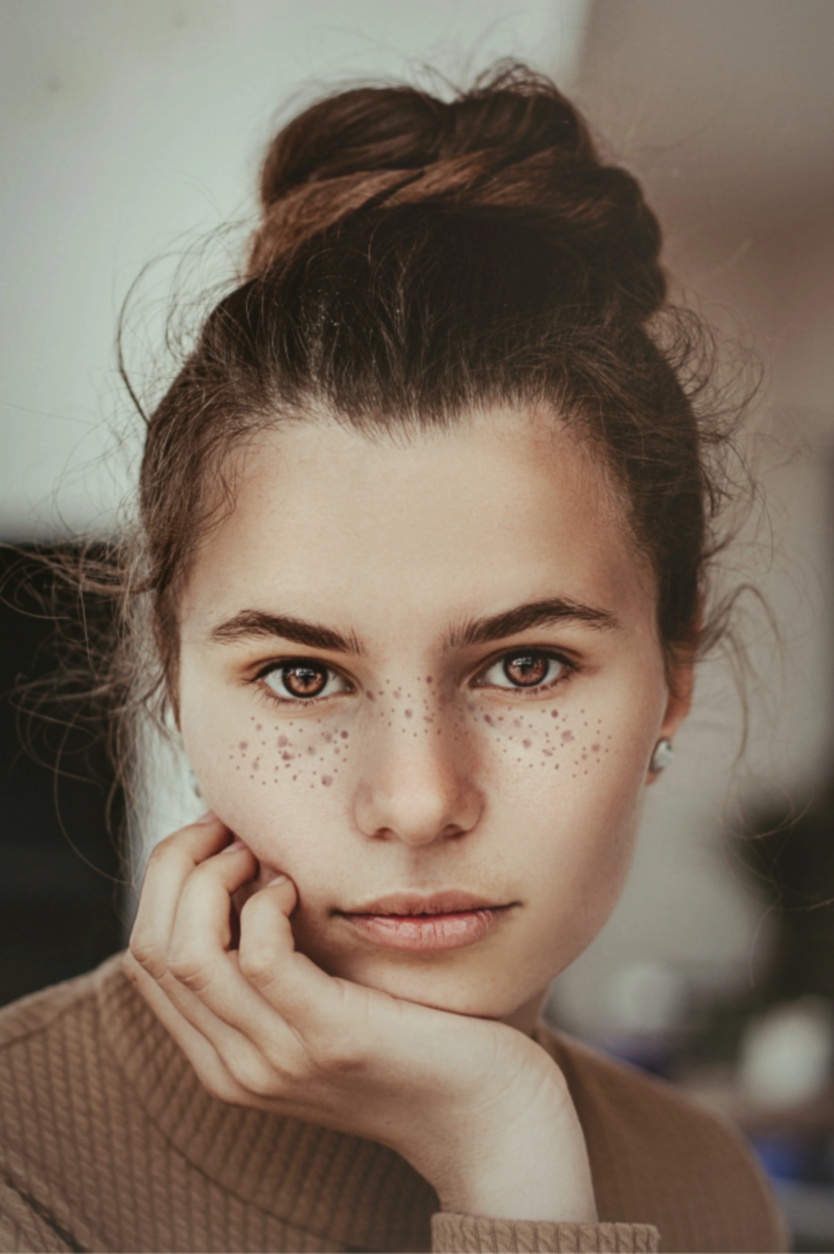
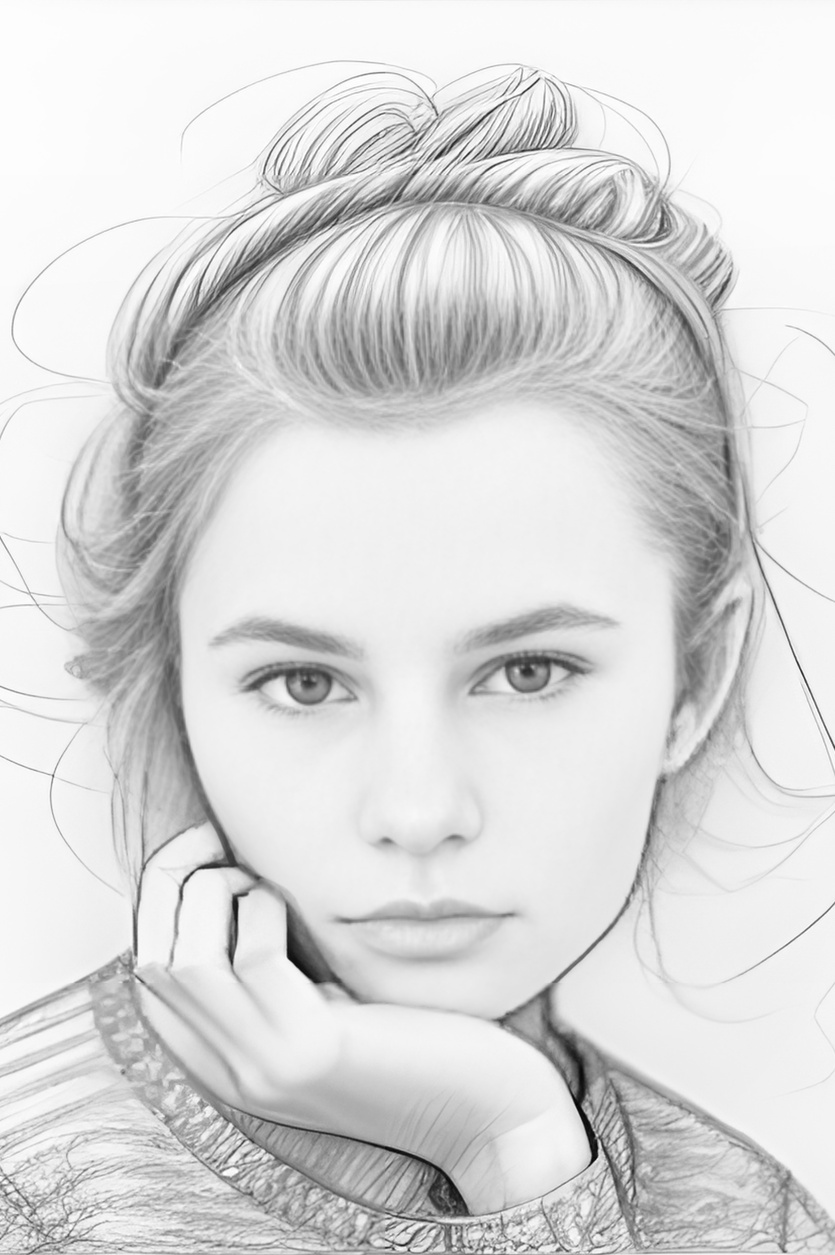
It also doesn't like freckles: https://portraitart.app/static/gallery/portrait6_original_10... -> https://portraitart.app/static/gallery/portrait6_pencilsketc...
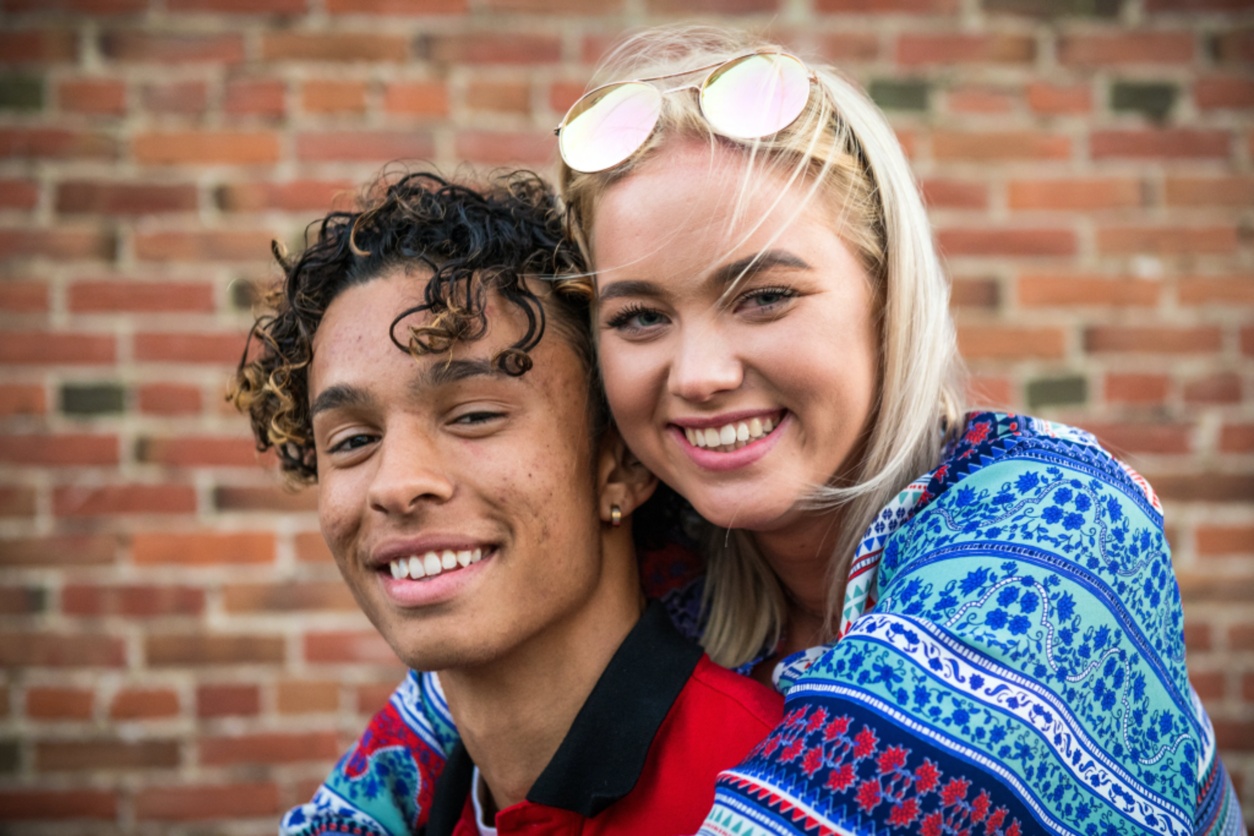
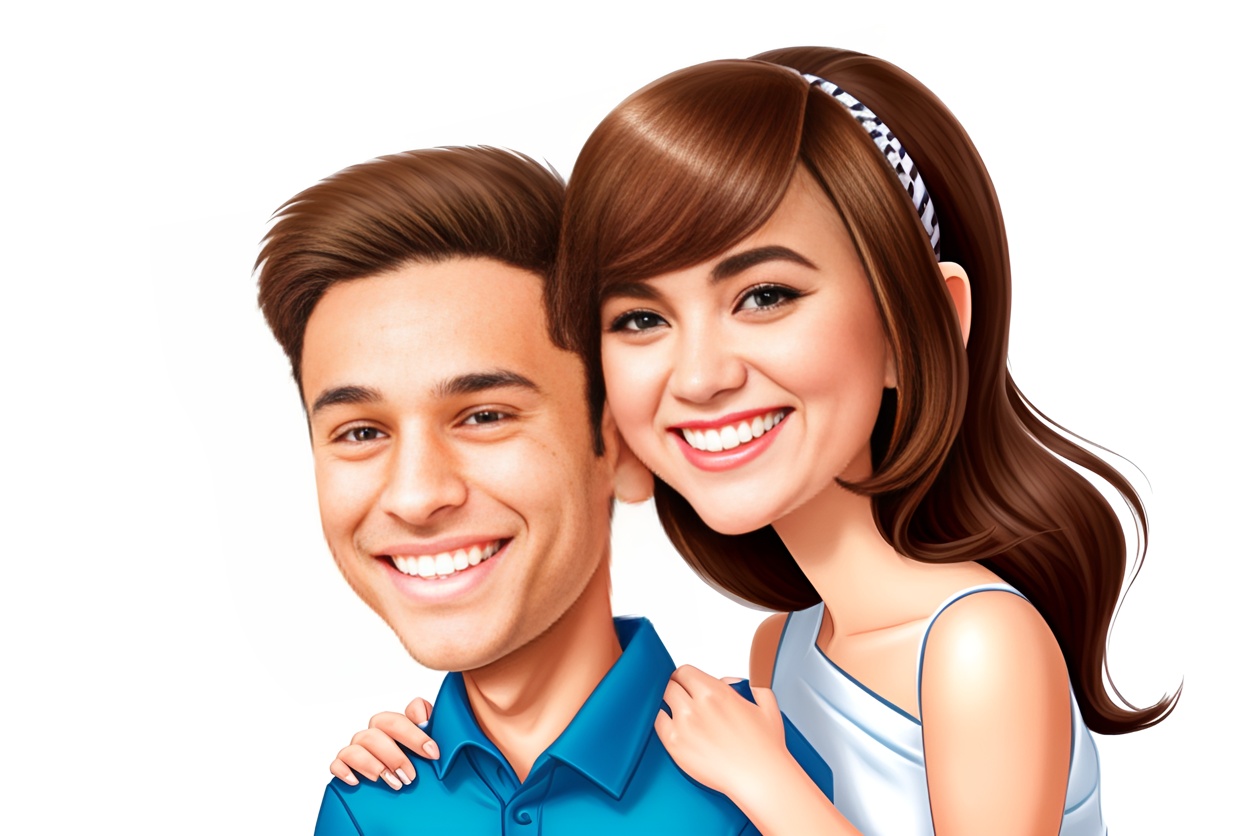
After some further browsing, the "caricature" mode seems to be the strangest - caricatures are supposed to take the characteristic traits of a person and exaggerate them in a humorous way, while these images sometimes lack even the slightest resemblance to the original. For example, this mixed race couple https://portraitart.app/static/gallery/couple1_original_1024... is not only turned into two brunettes https://portraitart.app/static/gallery/couple1_caricature_10..., but they also have a different pose, different hairstyle and wear completely different clothes...
Earlier quoted context omitted.
Honestly, when I first started reading your comment I thought you were being over sensitive but I totally get it looking at pictures 3 and 4. Even 5 and 6 completely changes the hairstyle.
I had to look for multiple examples myself before I was sure I wasn't being oversensitive. As I said, I'm sure there's no ill intent, and in a way I'm not surprised either, because as my son himself found out, if you're going to draw line art - especially with clear, thick lines like this, then accurately representing black or mixed hair without it turning into a caricature that'd be even worse is a skill. And one th…
Once a failure mode is known - like here - how do you fix it? The foundational problem is minorities are a minority of the training set. Good training data is expensive, so how can we practically boost representation without getting the Gemini fiasco?
One idea: start with the best coloring books. Presumably some human has mastered the art of “accurately representing black or mixed hair without it turning into a caricature”. Find them, and start buying their art. When they have drawings based on photos, use that training pair. When they have line art only, use a style transfer tool (like this one!) to convert to a photo. That gives you another pair for use in the other direction.
Another idea: make it easy to users to flag poor transfers. Add a “whitewashed” option to the standard mod report flow. Feed that into RLHF. Get better.
Another idea: focus dev cycles on this. Once you have a system to flag problems and address them, use all this fancy AI to identify input photos with black/mixed hair. Manually inspect how the model performs and push feedback into the next training cycle.
One tool for this is https://www.aquariumlearning.com/
The point is - once you identify a corner of feature space where things break, you can fix them.