Live data from Hacker News

Show HN: Elevators

john.fun

141–150 of 427 posts

Re: Show HN: Elevators

#141

> Destination Dispatch [...] are in general worse I wonder if this is an artifact of how the author used random destinations. I worked in a building that used Destination Dispatch, and the common travel pattern seemed to be: - Everyone who is not on the ground floor generally want to go to the ground floor. - People who are on the ground floor generally travel in large groups to the same destination. This happens bec…

Yeah, and definitely is not the right story for hotels. His premise of "morning traffic mostly from lobby to floors" is completely false in an hotel where you get it both ways due to people going down for breakfast and going back up and the down once again.

I see hotels with the kiosk model changing the UI depending on breakfast rush hour
Re: Show HN: Elevators

#142
One case not covered, I believe I saw at London Heathrow was where 4 cars essentially moved people across only 2 floors. With only 1 centralized button, only 1-point-something car was effectively moving people on average, because people had to wait for the currently filled car to have its doors closed and starting to move, before hitting the button to call the next car to pick them up. Imaging 100-200 people in line and, often, overly eager would-be elevator passengers hitting the button too early. Thus leading to halting the just filled car and doing an additional full open and close doors cycle. Fun stuff!

Re: Show HN: Elevators

#144

Earlier quoted context omitted.

That sounds like two separate things then. Could you not have people select a destination without locking in an elevator? (I've never encountered destination dispatch myself, so I'm not really sure how it works in practice)

The way I've seen it work is that there's a touch screen in the elevator lobby. You tap a floor, and then screen will say "Car C" (along with an audible message). The problem is that then the system can't reassign you to a different car after that. You'll typically have a bunch of different people going to a bunch of different floors, and there would be no reliable way to communicate to each individual their new assi…

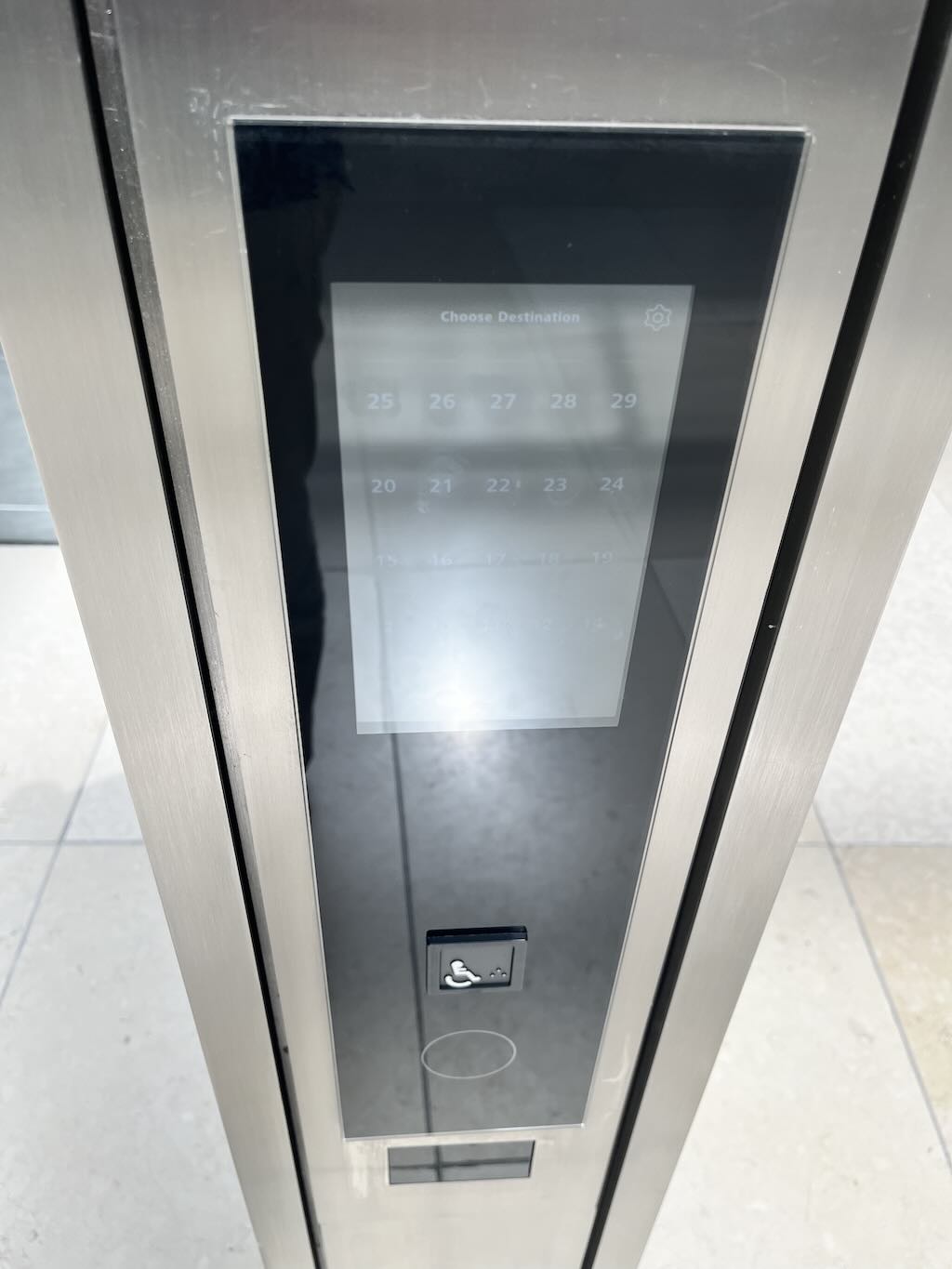
Little extra "fun" anecdote: my building has two banks of eight elevators, each servicing 20 or so floors, and has six destination dispatch kiosks: one at each end and the middle of each bank. The kiosks originally had nice metal buttons for each floor and you could easily tap yours as you walked by.

Sometime during Covid, the metal buttons were replaced with glass touch screens – which are totally unreadable on sunny days, because in our stunning glass-ceilinged atrium mezzanine they sit directly in sunbeams[0]. So now you have to walk up to the kiosk, shade it with your body, and squint at the screen to make out where to touch it.

[0] http://www.angel.net/~nic/photos/elevators.jpg

Re: Show HN: Elevators

#145
post #25

Earlier quoted context omitted.

And then when the elevator door opens, they ask the people inside: "Are you going up or down?" There's an arrow showing that, for Christ's sake.

"Questions are never indiscreet. Answers sometimes are."

"Have you stopped urinating in public?"

Re: Show HN: Elevators

#146

> Destination Dispatch [...] are in general worse I wonder if this is an artifact of how the author used random destinations. I worked in a building that used Destination Dispatch, and the common travel pattern seemed to be: - Everyone who is not on the ground floor generally want to go to the ground floor. - People who are on the ground floor generally travel in large groups to the same destination. This happens bec…

> - People who are on the ground floor generally travel in large groups to the same destination.

I also thought that this is one of the biggest reasons destination dispatch was better.

There are even articles about switching to destination dispatch in office buildings or hotels lead to dramatic reductions in wait time.

Re: Show HN: Elevators

#147
This is a fun simulation to play with. One variable I appreciate in efficient elevators is how the doors work. Usually they don't let you press the button to open a closing door - effectively delaying an already departing car

Re: Show HN: Elevators

#148
post #147

This is a fun simulation to play with. One variable I appreciate in efficient elevators is how the doors work. Usually they don't let you press the button to open a closing door - effectively delaying an already departing car

There are some awesome hacker talks about elevators on YouTube worth checking out

Re: Show HN: Elevators

#150

In a similar vein, there was an interesting discussion [0] a while back about elevator buttons [1] and how timing for door close/open works, along with a bit of the history and regulations that go into them. 0: https://news.ycombinator.com/item?id=35152341 1: https://computer.rip/2023-03-13-the-door-close-button.html

And there's still no adequate explanation for what "Korean lunch mode" is!
Post reply on HN