[1] https://codeberg.org/gudzpoz/Juicemacs/src/branch/main/elisp
[2] https://www.graalvm.org/latest/graalvm-as-a-platform/languag...
[3] https://www.gnu.org/software/emacs/manual/html_node/elisp/Bu...
171–180 of 1001 posts
[1] https://codeberg.org/gudzpoz/Juicemacs/src/branch/main/elisp
[2] https://www.graalvm.org/latest/graalvm-as-a-platform/languag...
[3] https://www.gnu.org/software/emacs/manual/html_node/elisp/Bu...
https://github.com/mikecarper/meshfirmware CLI Meshtastic flasher that works well. No internet mesh networking sounds awesome; just the bandwidth is extremely limited
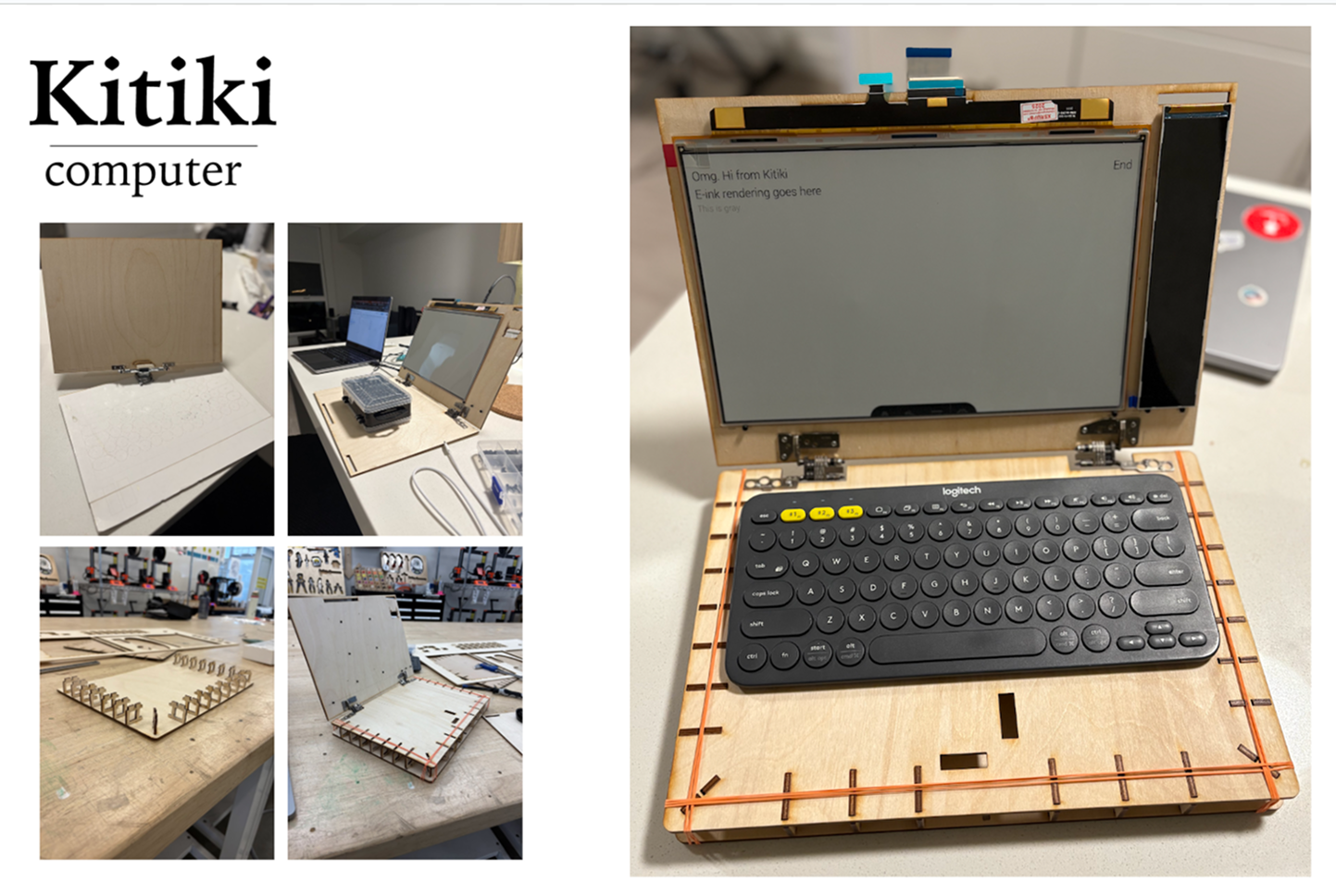
I'm designing everything from the chassis to the software OS. E-ink has its own design constraints. I'm building 5 apps for it: a browser, reader, mail, writer and code editor. It's still a ways to go. Here's a picture of what I have so far:
https://www.inclusivecolors.com/
No AI or autogeneration stuff, more like an advanced editor that lets you tweak large sets of colors to your liking and test they pass contrast checks in advance before you start using them in your UI/designs.
Think of it as a true drop in replacement for postgres that runs on multiple nodes. It internally does replication, sharding and leader election. Just add more nodes and you get to increase both read and write scale.
I personally am working on a few things like online major upgrades, async replication for DR, enhanced backup/restore/pitr/clone capabilities, and more recently supporting DocumentDB extension which provides a true Mongodb API.
Being a startup I also get to talk with large customers, help with marketing content, and participate in database conferences.
The retail site is 100% custom code built in Crystal (server) and Svelte (client). The only part that isn't running my own code is our checkout flow -- I let Shopify handle everything after "Add to Cart".
Our system backend is a separate Crystal app which handles inventory management, pricing research, and price prediction. I've developed an ML model to do price prediction and it kinda works?
What I'm actually working on: This is my full-time gig and probably 60% of my time is spent running the business (going to coin shows, buying coins, photographing new purchases, etc.) and 40% is spent writing code to make the 60% run more efficiently :). It seems I have an infinite list of things to do -- improvements to our retail site; Improvements in how to efficiently go from coin to retail listing (turns out you can send just photos of coins to Claude and with the right prompt it will actually give you a reasonably good description that doesn't sound toooooo AI slop-y); Next "big" project is adapting our ML model for paper currency. The taxonomy is similar but not the same and there's a whole world of notes out there that need to be priced.
Always happy to talk about this stuff so always feel free to email with any numismatic (or tech-numismatic) questions. noah@rarity7.com.
I got tired of missing deliveries, so now software answers the buzzer.
Using a mix of telephony, transcriptions, and websockets. Webserver is in C++.
A block-based TUI note/task application using the Charm tools. I know there’s a billion note apps out there, but none fit my mental model, so just hacking my own.
Goal is to have a system of dumping info in and letting organization naturally rise from tagging.
Each tag has its own page that aggregates all blocks tagged with it, and can have a custom page layout depending on the defined “type” of the tag I.e. a person, project, etc.
Tasks are also first class citizens and can be aggregated with dependencies on other tasks.